
www.foodpackautomation.com
16
'26
Written on Modified on
Meurer Develops Paper-Based Multipack Packaging Machines with Rockwell Automation
New solutions replace shrink-wrap with paper sleeves or low-material tape, cutting energy use up to 90% while maintaining speeds and efficiency.
www.rockwellautomation.com
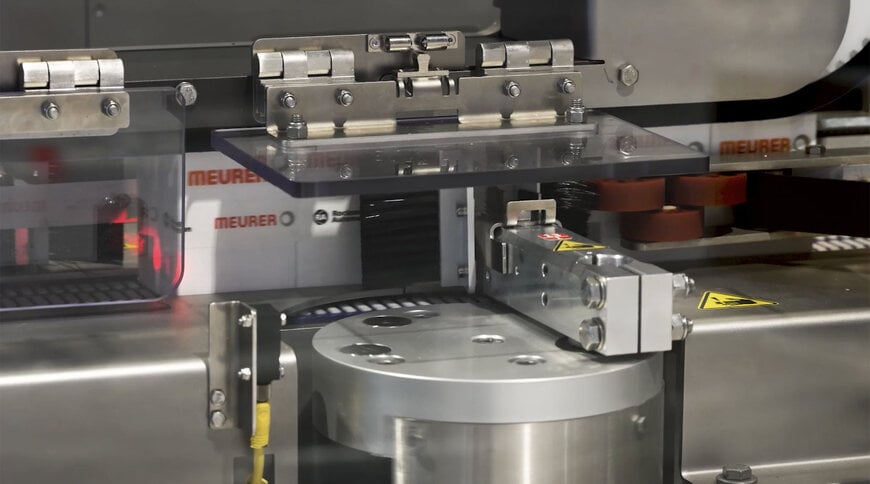
Application area: Secondary multipack packaging, motion control, and industrial automation
Industry sector: Packaging machinery manufacturing, food and consumer goods
Meurer Verpackungssysteme GmbH, a manufacturer of end-of-line packaging machinery, cartoners, and palletizing systems, has introduced two secondary packaging machine lines engineered to replace traditional plastic shrink-wrap with recyclable paper alternatives. Operating in the food and consumer packaged goods sector, the company designed these units to deliver sustainable secondary packaging formats while matching the production speeds, physical footprints, and reliability standards of legacy film-wrapping equipment.
Operational Challenges of Secondary Film Replacement
Conventional secondary multipack systems rely extensively on plastic shrink films processed through high-temperature heating tunnels. These heat-based processes consume significant amounts of electrical energy, creating an operational barrier for end users pursuing carbon reduction goals. Additionally, introducing paper-based substrates to end-of-line operations poses mechanical handling complexities. Paper lacks the stretch properties of film, requiring high-precision handling, tension management, and reliable adhesion to prevent tearing, jamming, or line stoppages at high packaging speeds. Food and consumer goods producers also required replacement equipment to fit within legacy line footprints without degrading upstream throughput.
Engineering Goals for Sustainable Multipacking
Meurer targeted several technical milestones during the development program:
- Eliminate heat shrink tunnels to drastically lower plant utility requirements.
- Achieve synchronized mechanical operation across multiple axes to match legacy machine cycle rates.
- Attain an overall machine operational efficiency rating exceeding standard contract thresholds of 98%.
- Deploy an open, standardized software architecture to accelerate machine prototyping and multi-axis commissioning.
- Provide real-time diagnostic visibility to line operators to minimize downtime during substrate transition.
Technical Motion and Visualization Architecture
Meurer engineered two distinct machine configurations based on a shared automation architecture: a fully enclosed paper sleeve system for premium brand presentation, and an adhesive tape unit utilizing minimal paper or plastic banding for material-sensitive production lines. Both machines integrate high-precision multi-axis motion control to coordinate mechanical knife cutting, tape and paper feeding, perforation, and adhesive sealing within millimeter tolerances across up to 18 synchronized motion axes.
The system utilizes modular programming aligned with the OMAC packaging standard to streamline code execution and standardize machine behavior. To deliver actionable operational analytics, the machine incorporates an industrial visualization and data platform that tracks performance metrics, facilitates localized fault finding, and isolates component anomalies.
Quantifiable Operational and Energy Improvements
Eliminating thermal shrink tunnels reduced packaging line energy consumption by up to 90% compared to traditional film-wrapping operations. During commissioning and continuous production verification, the paper-handling platforms achieved sustained machine efficiency rates above 99%, surpassing Meurer’s standard performance guarantee of 98%.
The machines achieved these operational benchmarks within the standard floor space of older shrink-wrap assets, enabling direct retrofits into existing production lines without requiring plant layout reconfigurations or sacrificing upstream operational capacity.
Edited by Natania Lyngdoh, Induportals Editor, with AI assistance.
www.rockwellautomation.com
Meurer engineered two distinct machine configurations based on a shared automation architecture: a fully enclosed paper sleeve system for premium brand presentation, and an adhesive tape unit utilizing minimal paper or plastic banding for material-sensitive production lines. Both machines integrate high-precision multi-axis motion control to coordinate mechanical knife cutting, tape and paper feeding, perforation, and adhesive sealing within millimeter tolerances across up to 18 synchronized motion axes.
The system utilizes modular programming aligned with the OMAC packaging standard to streamline code execution and standardize machine behavior. To deliver actionable operational analytics, the machine incorporates an industrial visualization and data platform that tracks performance metrics, facilitates localized fault finding, and isolates component anomalies.
Quantifiable Operational and Energy Improvements
Eliminating thermal shrink tunnels reduced packaging line energy consumption by up to 90% compared to traditional film-wrapping operations. During commissioning and continuous production verification, the paper-handling platforms achieved sustained machine efficiency rates above 99%, surpassing Meurer’s standard performance guarantee of 98%.
The machines achieved these operational benchmarks within the standard floor space of older shrink-wrap assets, enabling direct retrofits into existing production lines without requiring plant layout reconfigurations or sacrificing upstream operational capacity.
Edited by Natania Lyngdoh, Induportals Editor, with AI assistance.
www.rockwellautomation.com
