
www.foodpackautomation.com
17
'26
Written on Modified on
Optimizing Food Processing Through Hygienic Conveyor Equipment Design
Regal Rexnord integrates cleanable mechanical components into food processing facilities to cut washdown downtime and mitigate contamination risks.
www.regalrexnord.com
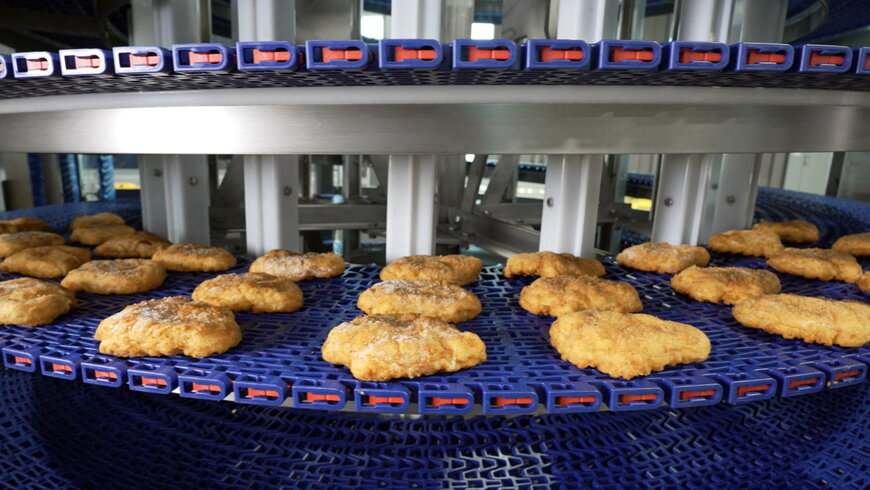
Industrial hygiene in food processing environments, such as bakery lines and poultry facilities, requires regular cleaning cycles to comply with strict safety mandates. However, these procedures directly affect production throughput by requiring intensive manual labor and recurring line shutdowns. In high-moisture and grease-heavy operations, cleaning regimens often consume up to eight hours per day, effectively converting a full production shift into planned downtime.
Beyond lost operating hours, conventional machinery designs present mechanical vulnerabilities. Equipment that relies on external lubrication, complex fasteners, and enclosed structural profiles tends to trap residues. Accumulated debris on chains and belts elevates friction, leads to uneven mechanical movement, and accelerates component wear. In severe cases, microbial harborage in inaccessible crevices presents cross-contamination risks, exposing facilities to regulatory scrutiny and costly product recalls.
Engineering Objectives for Line Productivity
To resolve these production bottlenecks, manufacturing facilities focus on three main operational goals:
- Reducing total cleaning cycle duration to recover scheduled operating hours.
- Eliminating mechanical lubrication points that introduce contaminant risks and require regular reapplication.
- Preventing component degradation caused by harsh chemical washdowns, high-pressure spray, and wide thermal shifts.
Deploying Cleanable Component Architecture
Addressing these operational demands requires implementing mechanical components engineered specifically for cleanability rather than retrofitting standard industrial parts. Facility engineers utilize components that feature open geometries, smooth profiles, and robust sealing systems to streamline sanitation procedures. Key mechanical solutions deployed include:
Addressing these operational demands requires implementing mechanical components engineered specifically for cleanability rather than retrofitting standard industrial parts. Facility engineers utilize components that feature open geometries, smooth profiles, and robust sealing systems to streamline sanitation procedures. Key mechanical solutions deployed include:
- Modular conveyor belting: Modular plastic systems facilitate rapid disassembly and reassembly without specialized tools, enabling direct washdown access to the conveyor sub-structure.
- Low-friction conveyance materials: Self-lubricating plastic spiral belts eliminate the need for external grease or oil, preventing residue accumulation and reducing chemical washdown frequency.
- Hermetically sealed washdown bearings: IP69K-rated corrosion-resistant bearing units protect internal elements against continuous high-pressure, high-temperature water ingress without requiring post-wash re-greasing.
- Hygienic drive units: Drive motors constructed with smooth external geometries and stainless steel or advanced polymer coatings withstand cleaning detergents across a broad pH spectrum.
Technical Rationale for Component Selection
Food manufacturers specify these specialized mechanical components because open, crevice-free geometries allow sanitation sprays and chemical agents to reach all surfaces directly, eliminating harbor points for bacteria. The use of captive parts and one-piece constructions prevents loose fasteners from vibrating free and entering the product stream.
Furthermore, replacing metal chains with self-lubricating modular plastics removes hydrocarbons from the processing zone. The chemical resistance of IP69K-rated housings and drive units avoids common mechanical failures such as bearing seizure and surface corrosion caused by aggressive caustic or acidic washdowns.
Operational Impact and Risk Mitigation
Deploying clean-by-design conveyor equipment directly reduces maintenance overhead and production variability. Eliminating lubrication requirements cuts maintenance intervals and mitigates chemical contamination hazards.
Minimizing hard-to-reach areas decreases water and sanitation chemical consumption while shortening washdown windows. Recovering line availability directly improves overall equipment effectiveness, protects mechanical drivetrains from premature wear, and shields manufacturers from the catastrophic financial and reputational liabilities associated with product safety incidents.
Edited by Evgeny Churilov, Induportals Media - Adapted by AI.
www.regalrexnord.com
Food manufacturers specify these specialized mechanical components because open, crevice-free geometries allow sanitation sprays and chemical agents to reach all surfaces directly, eliminating harbor points for bacteria. The use of captive parts and one-piece constructions prevents loose fasteners from vibrating free and entering the product stream.
Furthermore, replacing metal chains with self-lubricating modular plastics removes hydrocarbons from the processing zone. The chemical resistance of IP69K-rated housings and drive units avoids common mechanical failures such as bearing seizure and surface corrosion caused by aggressive caustic or acidic washdowns.
Operational Impact and Risk Mitigation
Deploying clean-by-design conveyor equipment directly reduces maintenance overhead and production variability. Eliminating lubrication requirements cuts maintenance intervals and mitigates chemical contamination hazards.
Minimizing hard-to-reach areas decreases water and sanitation chemical consumption while shortening washdown windows. Recovering line availability directly improves overall equipment effectiveness, protects mechanical drivetrains from premature wear, and shields manufacturers from the catastrophic financial and reputational liabilities associated with product safety incidents.
Edited by Evgeny Churilov, Induportals Media - Adapted by AI.
www.regalrexnord.com
