
Parker’s BEVPOR Filters Redefine Process Reliability
Engineered for aggressive CIP regimes, the BEVPOR Caustic Stable filter combines chemical resistance, microbiological safety, and application-specific design to meet evolving F&B challenges.
www.parker.com
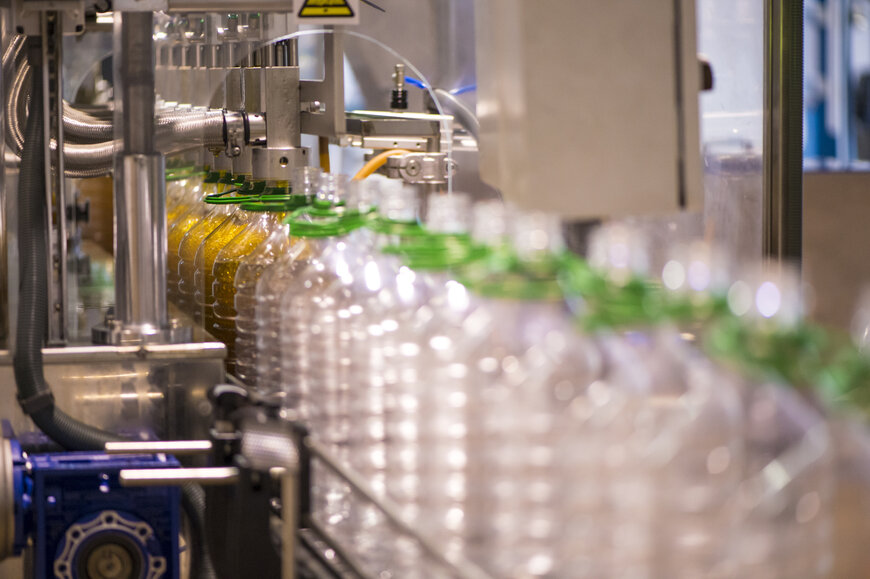
Filtration technology in the food and beverage (F&B) industry has long been a cornerstone for ensuring product safety, quality, and process efficiency. While the core principles of filtration technology have remained largely unchanged, innovation continues to flourish through the design of filter elements tailored to specific applications, responding to evolving industry challenges and regulatory demands. A prime example of this dynamic innovation is Parker’s BEVPOR Caustic stable filter range, which exemplifies how targeted engineering and close collaboration with industry stakeholders create practical, high-performance filtration solutions.
The Challenge: Filter Blockages and Operational Inefficiencies
In bottled water processing and many other F&B sectors, filter blockages are a persistent operational challenge. Blocked filters lead to process stoppages, production delays, increased expenditure on consumables, and costly downtime. In response, manufacturers rely heavily on effective Clean-In-Place (CIP) regimes to maintain filter performance and extend filter life. CIP regimes remove accumulated fouling and blockage materials in-situ, can vary from process to process, and are typically tailored to product-specific blockage materials.
The Role of Caustic CIP in Filter Regeneration
A foundation of CIP in the F&B processing industry is the use of sodium hydroxide (caustic soda) washes. Sodium hydroxide is highly effective at dissolving the multitude of possible organic blocking materials, such as proteins, fats, and other organics commonly encountered in both bottled water, beer, and wine filtration. Its solubility and stability at high temperatures make it ideal for cleaning filters with hot soaks and dynamic flush.
However, sodium hydroxide’s effectiveness comes with a caveat: higher concentrations or prolonged exposure can damage filters, especially those not designed for aggressive cleaning regimes. Some manufacturers face high levels of fouling materials that require higher sodium hydroxide concentrations, or they may have rigid site-wide CIP protocols that can’t be tailored to individual filter lines. These aggressive CIP conditions can degrade filter membranes, causing them to fail integrity tests and necessitate more frequent replacements, which escalates costs and risks production delays.
Innovation in Filter Design: BEVPOR Caustic Stable
Recognizing these challenges, Parker collaborated closely with the F&B beverage processing industry to develop the BEVPOR Caustic Stable filter, a solution designed specifically to withstand the rigors of aggressive CIP regimes without compromising microbiological retention or filter throughput.
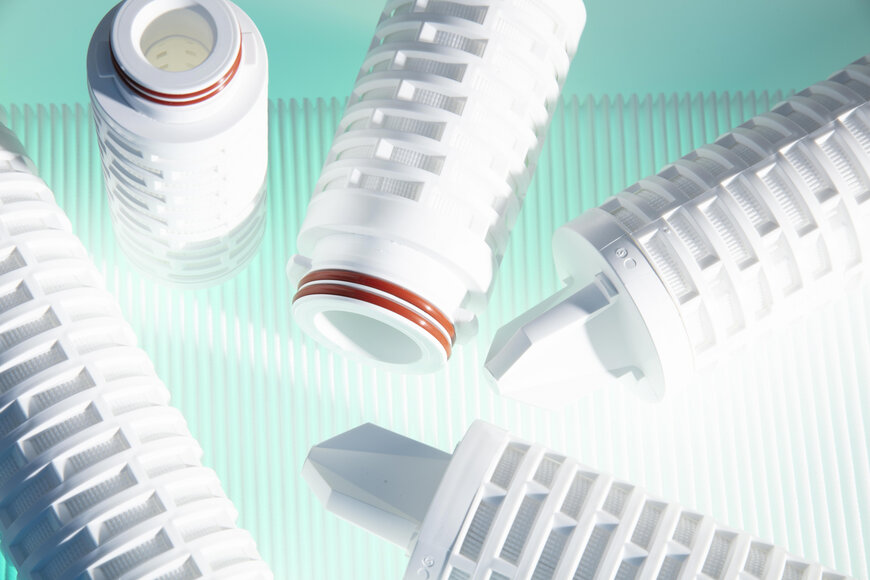
The BEVPOR Caustic Stable filter features a high-performance asymmetric polyethersulfone (PES) membrane partnered with a caustic-optimized design that balances wettability and chemical robustness. It offers four times the resistance of traditional PES filters, enabling manufacturers to adopt more aggressive cleaning protocols, when necessary, without risking filter failure.
Designed for the final stabilization of beverages prior to packaging, the BEVPOR Caustic Stable filter delivers fully validated bacterial retention against industry-regulated organisms. It also supports easy integrity testing through Parker’s BEVCHECK Plus system: a fully automated, portable device that uses compressed gas to measure pressure decay or diffusional flow, providing a clear pass/fail result on filter fitness.
By combining chemical resistance, microbiological assurance, and high throughput, the BEVPOR Caustic Stable filter offers a cost-effective, efficient filtration solution that reduces total cost of ownership over its lifetime, while supporting uninterrupted production.
Maintaining Filter Integrity: The Importance of Technical Support
Frequent filter blockages not only increase operational expenditure but also reduce production efficiency due to time-consuming filter replacements. Therefore, pre-emptive design and process optimization are vital to maintain filter health and process reliability.
While product innovation is crucial, technical support and collaboration with manufacturers are equally important to ensure optimal filter performance and longevity. Given the risks posed by CIP chemicals and process conditions, manufacturers should always seek expert guidance before implementing new CIP regimes or introducing new filter types.
Parker’s Technical Support Group provides compatibility testing for filters against CIP chemicals and water temperatures, helping operators tailor cleaning protocols that maintain filter integrity and minimize damage. This proactive approach reduces the risk of unexpected failures, protects product safety, and supports operational efficiency.
Innovation Beyond Core Technology: Application-Specific Filter Design
The core filtration technology—mechanical retention of particulates and microorganisms—has remained consistent for decades. However, innovation in the F&B sector is increasingly focused on designing filter elements tailored to specific applications and process challenges.
For example, the BEVPOR range is not just a generic filter, but a product designed with:
- Material robustness to withstand aggressive cleaning chemicals, varying pH levels and raised temperatures – all whilst under physical stress from high flow rates and extensive use.
- Membrane architecture to optimize for high throughput and microbial retention. The balance between retention and throughputs is the defining factor in a value proposition for filter design. Not all filters are the same, and Parker’s bespoke PES membranes offer the required balance of security and efficiency.
- Ease of integrity testing to ensure ongoing process safety and reliability in performance. Integrity testing is a key principle in any Hazard Analysis Critical Control Point (HACCP) regime, and filters need to support these vital F&B safety controls.
- Compatibility with CIP regimes to suit specific process needs. The variance in blockage materials across F&B products means that a bottled water plant will have different concerns from those of a brewery.
This approach reflects a broader industry trend where solutions are co-developed with manufacturers, ensuring filters meet emerging regulatory requirements and evolving product formulations and process innovations.
Responding to New Market Trends: Low- and No-Alcohol Beverages
A notable trend in the F&B industry is the rise of no- and low-alcohol beverages, driven by consumer demand for healthier options. These products pose unique filtration challenges because the antimicrobial effects of alcohol are reduced or absent, increasing the risk of microbial spoilage.
Packaging processes designed for traditional alcoholic beverages may not suffice for these newer products. As a result, manufacturers must reconsider filtration strategies, often requiring filters with tighter micron ratings or enhanced microbial retention to ensure product stability.
This shift underscores the importance of application-specific filter design and flexible filtration solutions, like the BEVPOR range, which can be adapted to new product lines without compromising safety or efficiency.
The Future of Filtration Innovation in F&B
Innovation in F&B filtration will continue to evolve along these lines:
- Customization and modularity: Filters designed for specific fluids, fouling challenges, and cleaning protocols.
- Material science advances: Development of membranes and housings resistant to harsher chemicals and extreme conditions.
- Process integration: Filters that facilitate easier integrity testing, monitoring, and automation.
- Sustainability: Focus on reducing waste, extending filter life, and enabling more environmentally friendly cleaning processes.
Parker’s BEVPOR filter range exemplifies these trends, demonstrating that while the fundamentals of filtration remain stable, real innovation lies in tailoring solutions to meet the precise needs of modern F&B manufacturing.
Conclusion
Filtration remains a fundamental technology in the food and beverage industry, critical to ensuring product safety, quality, and efficient production. Although the core technology of filtration has not dramatically shifted, innovation thrives in the design and application of filter elements tailored to specific industry challenges. The BEVPOR Caustic Stable filter illustrates how targeted design, which combines chemical resistance, microbiological control, and process compatibility, can address the evolving needs of beverage manufacturers. Coupled with expert technical support, such innovations help manufacturers minimize downtime, reduce costs, and maintain the highest standards of product safety.
As the industry adapts to new market demands, such as low- and no-alcohol beverages, filtration innovation will increasingly focus on application-specific solutions. This approach ensures that filtration technology continues to deliver value, reliability, and safety in a changing F&B product landscape.
By-line Author: Mark Richardson, Processing Product Manager, Parker Hannifin Manufacturing Limited - Bioscience Filtration
www.parker.com
