

www.foodpackautomation.com
16
'26
Written on
Modified on
JBT Marel News
Wenger, Extru-Tech integrate under JBT Marel at Petfood Forum 2026
Unified extrusion, high-pressure, and thermal systems support flexible production of minimally processed pet food across multiple formulations and formats.
marel.com
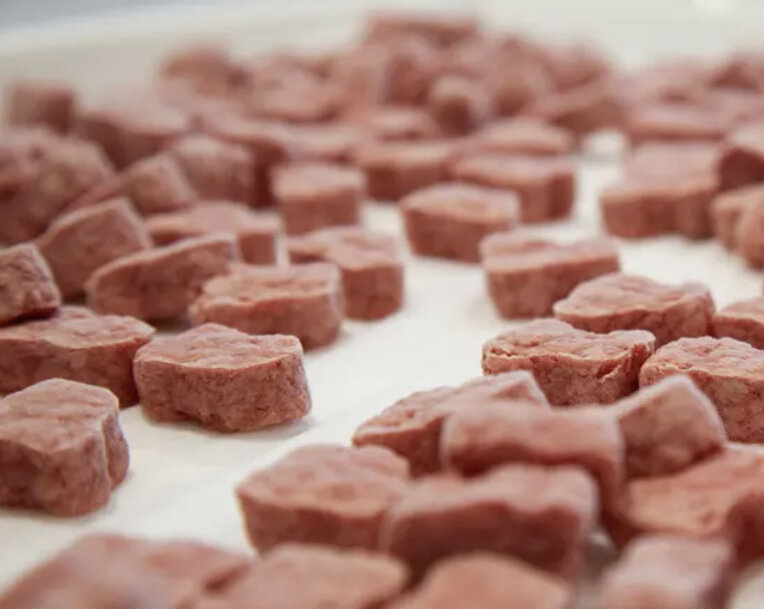
The pet food industry, particularly in premium nutrition, high-meat formulations, and functional diets, is moving toward minimally processed products that retain nutritional value while ensuring safety and scalability. In this context, Wenger and Extru-Tech presented their combined processing capabilities under JBT Marel at Petfood Forum 2026, held in Kansas City from April 27–29 at Booth #1614, bringing together extrusion, high-pressure processing, and thermal treatment technologies within a single production framework.
This joint presentation marked the first time both extrusion specialists exhibited together under JBT Marel, combining more than 90 years of extrusion expertise with complementary technologies in protein processing and preservation.
Minimally processed pet food line for multiple product categories
The system presented at the event focused on a minimally processed pet food production line designed to handle a wide range of product types, including gently cooked, air-dried, fresh, and baked formats.
Unlike conventional kibble lines optimized for fixed recipes, this integrated approach enables manufacturers to produce different product categories on a single line. This reduces the need for parallel production systems while maintaining control over process parameters such as temperature, moisture, and product structure.
The line was demonstrated through a virtual immersive environment, allowing visitors to visualize the complete process flow from raw material input to finished product.
Twin-screw extrusion for variable formulations
At the core of the system is a twin-screw extrusion platform designed to process both traditional dry kibble and formulations with higher fresh meat inclusion.
This configuration allows processors to switch between different recipes without significant hardware modification. In practical terms, this supports the production of specialized formulations such as high-protein diets, limited-ingredient recipes, or products tailored to specific dietary sensitivities.
The ability to adapt formulations on the same extrusion platform is particularly relevant for manufacturers addressing smaller batch sizes and increased product differentiation in premium segments.
High-pressure processing for pathogen control
To ensure microbiological safety in minimally processed and fresh products, the system integrates high-pressure processing (HPP). This method applies ultra-high-pressure water to inactivate pathogens without the use of elevated temperatures.
Compared to thermal sterilization, HPP enables the preservation of heat-sensitive nutrients and maintains the original texture of raw or lightly processed ingredients. It also contributes to shelf-life extension, which is critical for fresh and refrigerated pet food categories.
Steam tunnel technology for controlled cooking
The processing line also incorporates steam tunnel technology for gentle thermal treatment. This method uses controlled steam exposure to cook products evenly while limiting nutrient degradation.
Such controlled heating is used to achieve specific textures and visual characteristics, including structured pieces required in premium pet food applications. It also ensures repeatability across production batches, which is essential for maintaining consistent product quality.
Applications in premium and flexible manufacturing
The integrated system is designed for industrial pet food manufacturers seeking to expand product portfolios without duplicating equipment. It is particularly suited to applications involving:
- High fresh meat inclusion products
- Minimally processed or “fresh-like” pet food
- Customized or small-batch production
- Premium and functional nutrition segments
By combining extrusion, preservation, and cooking technologies into a single processing line, manufacturers can reduce equipment redundancy while maintaining flexibility across different product categories.
Edited by Natania Lyngdoh, Induportals Editor — Adapted by AI.
www.jbtmarel.com
Edited by Natania Lyngdoh, Induportals Editor — Adapted by AI.
www.jbtmarel.com
