
Predictive Maintenance in Food Production
How AI and IoT sensors enable failure prevention without compromising hygiene or compliance.
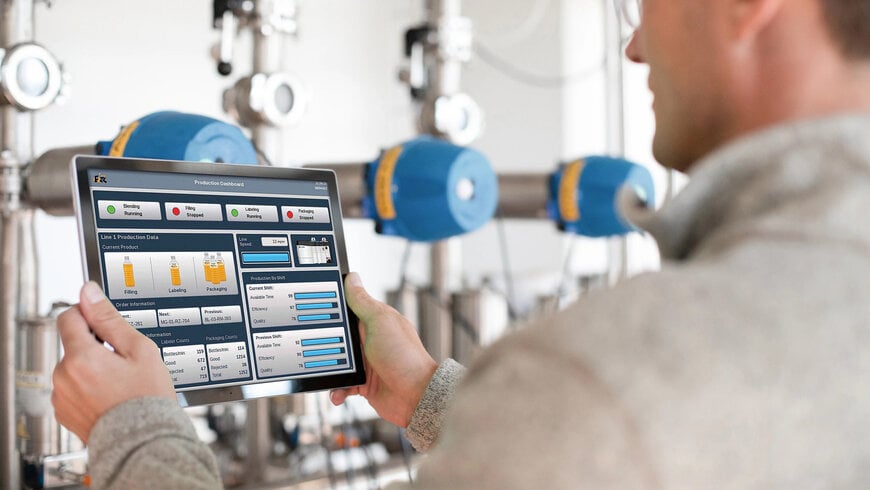
Most of the food consumed globally today undergoes some form of processing or other, even if it is just cleaning and packaging. On the other hand, there are ultra processed foods like snacks and ready to eat meals which comprise the majority of calories consumed in most developed countries. All this processing of food – ranging from minimal to ultra processing – happens in various types of food processing units or plants, which are mechanised, and increasingly, automated.
Thanks to the requirements of uncompromising hygiene, and regulatory compliance, food production is among the most demanding industrial environments, where operational efficiency alone is not a measure of success. A single equipment failure can halt production, trigger contamination risks, and lead to costly recalls or regulatory penalties. Amidst such a scenario, traditional maintenance strategies – whether reactive (run-to-failure) or time-based preventive maintenance – are simply not adequate with the stakes stacked so high.
The solution is in Predictive maintenance (PdM), powered by Artificial Intelligence (AI) and facilitated by the Internet of Things (IoT). The adoption of these technologies is transforming how food manufacturers manage equipment reliability. By continuously monitoring asset health and forecasting failures before they occur, PdM enables proactive intervention without disrupting production or compromising sanitation standards.
The role of predictive maintenance
The importance of safety in food production can never be overstated. It is vital to protect public health, prevent foodborne illnesses, and maintain consumer trust. It prevents severe outbreaks caused by biological, chemical, or physical hazards. Contaminated food creates a vicious cycle of illness and malnutrition, making strict hygiene and regulatory protocols essential throughout the global supply chain. According to the World Health Organization, an estimated 600 million – almost 1 in 10 people in the world – fall ill after eating contaminated food and 4,20,000 die every year. Hence it is safe practices – from farm to table – that sustain economies by reducing healthcare costs and preventing costly product recalls.
As a result, the entire process of food manufacturing and packaging operates under unique constraints. These include:
- Strict hygiene and food safety regulations (HACCP, FSMA, FSSAI equivalents)
- Continuous production cycles with minimal downtime tolerance
- Harsh environments involving moisture, chemicals, and temperature fluctuations, and
- High risk of contamination from equipment failure.
PdM addresses these challenges by shifting maintenance from reactive and schedule-based approaches to condition-based, data-driven decision-making.
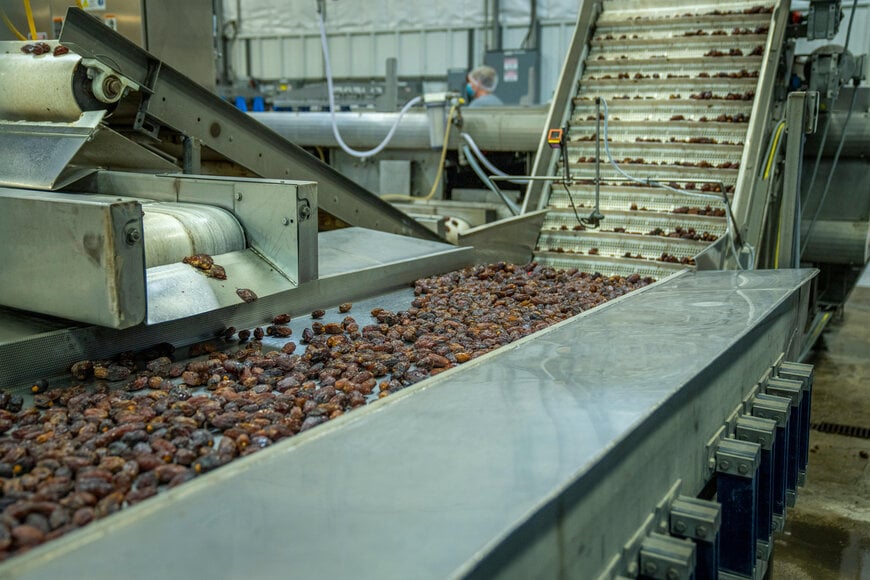
Predictive maintenance with AI and IoT
PdM in general, and in food production in particular, depend heavily on digital technologies that comprise IoT sensors, data infrastructure, and AI-driven analytics. There are four main steps in this process:
1. Sensing trouble before it appears
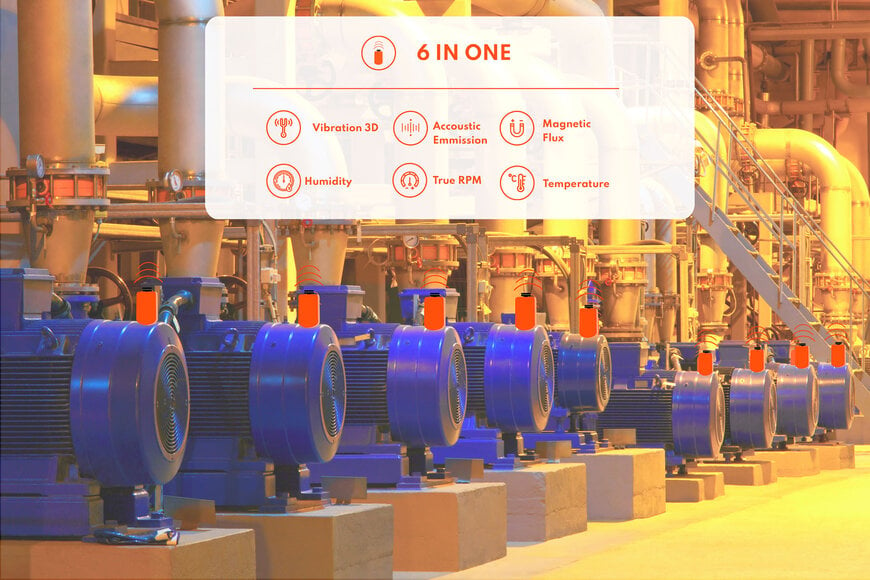
When it comes to maintenance, prevention is better than cure should be the mantra and the IoT provides just that – the sensor layer that acquires data continuously from plant machinery. These sensors monitor all critical equipment like conveyors, mixers, pumps, compressors, and refrigeration systems for real time operational data of the following parameters:
- Vibration (detects imbalance, misalignment, bearing wear)
- Temperature (monitors overheating or thermal anomalies)
- Current and power consumption (identifies motor degradation)
- Pressure and flow rates (assesses pump and fluid system health), and
- Environmental conditions (humidity, air quality, ambient temperature).
2. Processing the data
Data thus collected by various sensors is then processed in either of the two ways:
- At the edge (local gateways) for real-time anomaly detection, or
- In the cloud for deeper analytics and model training.
3. Analysing the data
Machine learning algorithms analyse historical and real-time data to identify patterns that precede failures. This works in the following ways:
- Establish baseline operating conditions
- Detect anomalies or deviations from normal behaviour, and
- Predict failure probabilities and remaining useful life (RUL).
4. Making maintenance decisions
The fourth and final step integrates predictive insights into maintenance workflows:
- Automated work order generation
- Prioritisation of critical interventions
- Integration with CMMS, SCADA, and PLC systems, and
- Real-time dashboards for plant operators.
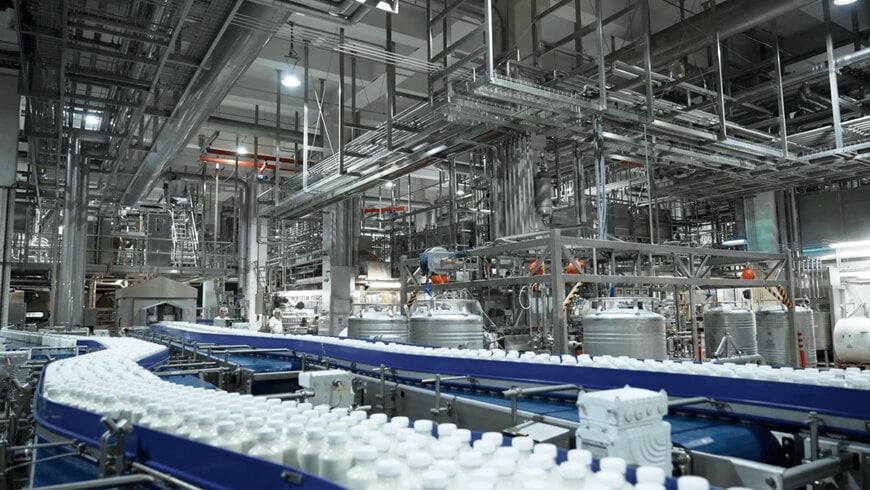
Hygiene matters in sensor design and deployment
As mentioned right at the beginning, one of the key challenges in food production is deploying sensors without compromising hygiene.
Unlike conventional industrial environments, food plants require washdown-resistant equipment, i.e., machinery and hardware designed to withstand intense, frequent cleaning with high-pressure water, steam, and harsh sanitising chemicals. The installation again has to be non-invasive in order to avoid contamination risks, and of hygienic design to prevent harbouring any bacteria.
Modern predictive maintenance systems address these requirements through:
- Non-invasive sensor installation: Clamp-on sensors can be mounted externally on motors, bearings, and pipelines without modifying equipment or interrupting production.
- Food-grade materials and sealing: Sensors are designed to withstand: Daily Clean-in-Place (CIP) processes; temperature extremes (from freezing to high-heat processing); and corrosive cleaning agents.
- Wireless connectivity: Wireless sensor networks eliminate the need for extensive cabling, reducing contamination points and simplifying installation. These innovations ensure that predictive maintenance enhances visibility without introducing hygiene risks.
When it comes to food production, the role of AI extends beyond equipment maintenance into hygiene monitoring and sanitation management. AI revolutionises food safety by transforming hygiene and sanitation management into proactive, data-driven systems. It goes well beyond equipment maintenance to automate environmental monitoring, enforce Good Manufacturing Practices (GMP), and ensure exact cleaning compliance.
Key AI sanitation & hygiene applications include:
- Automated visual inspections: AI-powered computer vision analyses production lines and surfaces in real time to detect bio-residues, foreign objects, and contamination before packaging.
- Zone & environmental monitoring: Smart sensors track humidity, temperature, and microbial markers to identify high-risk areas in real time, triggering instant alerts when hygiene thresholds are breached.
- Sanitation operations optimisation: AI software manages Clean-in-Place (CIP) and Clean-out-of-Place (COP) operations, tracking whether sanitation standard operating procedures (SSOPs) are accurately executed by analysing data from both the factory and shift-end verifications.
Advantages of PdM in food production
By transitioning from reactive to data-driven PdM, producers can safeguard product quality, minimise waste, and maintain strict industry compliance, besides avoiding potential failures that cause costly disruptions. Key benefits include:
- Drastic reduction in unplanned downtime: By detecting early anomalies in vibration, temperature, or pressure, maintenance teams can schedule repairs during planned sanitation or low-load windows.
- Prevention of product spoilage: PdM prevents temperature failures (especially in refrigeration, freezing, or pasteurisation lines), protecting raw materials and finished goods from going to waste.
- Lower operational and repair costs: Fixing a part that is actually degrading eliminates ‘over-maintenance’. Catching a minor issue early avoids catastrophic secondary damage, preventing a minor part replacement from escalating into an entire motor rebuild.
- Improved regulatory & food safety compliance: By ensuring equipment functions consistently within exact operating parameters, producers can better manage hygiene protocols and avoid contamination hazards.
- Extended asset lifespan: Continually monitoring equipment for wear and tear prevents machines from running under excessive stress, which helps costly assets (like ovens, homogenisers, and packaging lines) last much longer.
- Optimised labour: Maintenance teams can work from scheduled, planned task lists rather than rushing to fix emergency breakdowns, which reduces costly overtime and improves staff morale.
- Sustainability gains: Avoiding sudden failures reduces energy waste, product losses, and environmental impact.
The PdM segment comprises hardware (sensors & sensing, imaging & inspection devices, edge monitoring, and connectivity hardware), as well as software (APM, IIoT, digital twin, AI-driven predictive models). A recent report by MarketsandMarkets titled ‘Predictive Maintenance Market By Monitoring Infrastructure – Global Forecast to 2031’, predicts the market to grow from USD 13.89 billion in 2026 to USD 23.79 billion by 2031, reflecting a CAGR of 11.4% during the forecast period. Some other reports indicate different figures, but the CAGR is more or less the same in each case.
Top players in the PdM for food production market include industrial automation giants as well as specialised AI/IoT companies. These include:
1. Siemens: A market leader in industrial AI and automation, their cloud-based MindSphere and Senseye solutions are deployed extensively in large-scale food manufacturing.
2. IBM: Through the Maximo Application Suite, IBM utilises industrial IoT data and AI to build failure-prediction models that integrate directly with enterprise supply chains.
3. Rockwell Automation (Fiix): Provides an AI-powered CMMS that blends work order management with predictive insights to reduce maintenance costs.
4. ABB: Offers the ABB Ability platform, a suite of sensors, drives, and control systems designed for asset performance management and predictive diagnostics.
5. Schneider Electric: Focuses heavily on smart food solutions, integrating production process data with PdM capabilities to optimise energy efficiency and equipment lifespan.
6. Honeywell: Delivers deep-tier industrial IoT software and wireless sensors that are used to monitor operational conditions and prevent systemic failures in processing lines.
7. Nanoprecise: Specialises in hyper-accurate, AI-driven PdM solutions explicitly designed for the hygiene-sensitive, moisture-rich environments of food and beverage plants.
8. Uptake: Provides an advanced Industrial AI and analytics platform that turns sensor data into actionable failure warnings, preventing spoilage and line shutdowns.
9. TRACTIAN: Uses AI and machine learning combined with smart vibration sensors to recognize failure signatures across a wide array of industrial food processing machinery.
10. Augury: A prominent player that utilises AI, continuous machine data, and diagnostic platforms to identify machine anomalies and prevent disruptions to food manufacturing.
Future trends
PdM in food production is evolving rapidly, with several emerging trends:
- Edge AI expansion: More analytics will move to edge devices, enabling faster and more autonomous decision-making.
- Digital twins: Virtual replicas of production systems will simulate equipment behavior and predict failures with higher accuracy.
- Integration with quality control: Predictive maintenance will increasingly link with quality assurance systems to ensure both equipment and product integrity.
- Autonomous maintenance systems: AI-driven systems may eventually trigger automated corrective actions without human intervention.
- Sustainability-driven maintenance: Predictive maintenance will align with energy optimisation and carbon reduction goals.
Predictive maintenance represents a paradigm shift in food production, enabling manufacturers to move from reactive problem-solving to proactive, data-driven operations. By leveraging AI and IoT sensors, food plants can forecast equipment failures well in advance, schedule maintenance efficiently, and maintain continuous production without compromising hygiene or compliance.
Crucially, modern predictive maintenance solutions are designed specifically for food-grade environments – featuring non-invasive installation, washdown-resistant sensors, and compliance-ready documentation systems. This ensures that operational reliability and food safety are not competing priorities but complementary outcomes.
As regulatory pressures intensify and production demands increase, predictive maintenance is no longer a competitive advantage – it is becoming a necessity for resilient, efficient, and compliant food manufacturing operations.
Article contributed by Milton D’Silva, a freelance technical writer, and former editor of Industrial Products Finder, India.
