
www.foodpackautomation.com
05
'26
Written on Modified on
Vacuum Conveying Systems Improve Hygienic Bulk Material Handling
Hapman outlines how enclosed pneumatic conveying supports flexible routing, reduced maintenance, and dust-controlled transport of powders and granules in food processing.
hapman.com
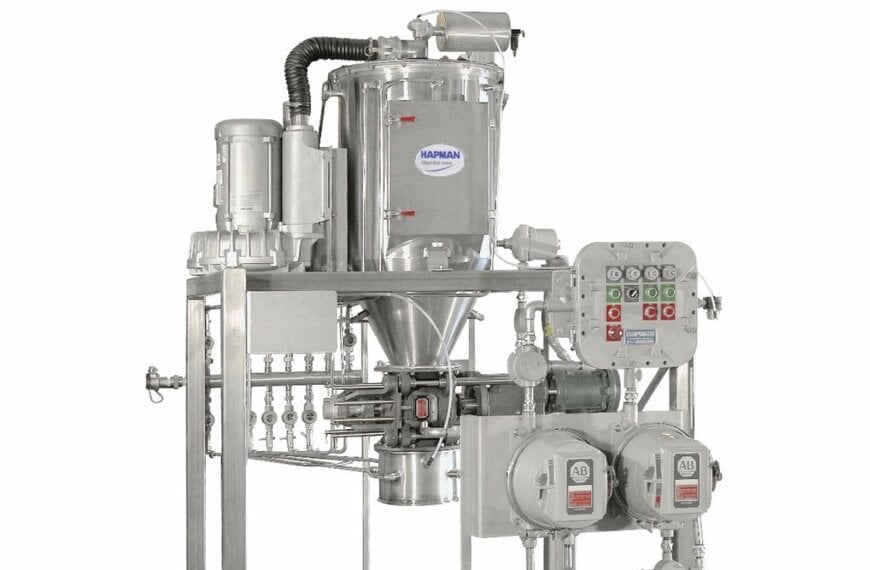
Clean in place system.
Bulk material handling in food processing facilities must balance hygiene, efficiency, and limited production space. Transporting powders, granules, and other dry ingredients without contamination or downtime is critical for maintaining product quality and throughput. In this context, Steve Grant, Product Manager - Pneumatic Conveying at Hapman, highlights the role of vacuum conveying systems as an alternative to traditional mechanical conveyors in modern material handling environments.
Enclosed Transport for Powders and Granular Materials
Vacuum conveyors move bulk materials using negative pressure within sealed pipelines. A blower or pump generates suction that draws material from a pickup point and carries it through enclosed piping to a receiving vessel. At this stage, filtration separates the conveyed product from the airflow, allowing the material to discharge into downstream equipment such as mixers, processing units, or packaging lines.
Unlike mechanical conveying systems that depend on belts, screws, or chains, vacuum conveyors contain fewer moving parts. This configuration reduces mechanical wear and simplifies maintenance. The enclosed design also prevents material leakage and limits the formation of airborne dust, which is particularly relevant in food processing operations where hygiene and worker safety are tightly regulated.
Because system leaks occur inward under negative pressure, the risk of product contamination and dust release into the plant environment is reduced.
Flexible Routing in Constrained Production Layouts
Vacuum conveying systems are commonly used in facilities where production lines must operate within limited space or complex layouts. The pipeline-based configuration allows material transport vertically, horizontally, or around obstacles, supporting installation in areas where conventional conveyors are difficult to integrate.
This routing flexibility is particularly useful during plant retrofits or production line expansions, where new equipment must connect to existing processing stages without major structural changes.
The systems are also modular, which can simplify installation and allow capacity adjustments as production requirements evolve.
Design Features Supporting Continuous Operation
Several technical features have expanded the range of materials and processes supported by vacuum conveying systems.
One development is the adoption of regenerative blower technology. These blowers operate independently of plant compressed air systems, helping reduce demand on facility air infrastructure and lowering operating costs.
Another feature is reverse-pulse filter cleaning, which periodically releases bursts of air through filters to remove accumulated dust. This mechanism helps maintain airflow and reduces the frequency of manual filter maintenance during extended operation.
Inlet and discharge configurations have also evolved. Components such as rotary valves and metering devices allow controlled material feeding and discharge, enabling the handling of materials ranging from fragile granules to more abrasive particulate solids.
Application in Food Processing Operations
In the food industry, conveying systems must comply with hygiene requirements while maintaining production throughput. Vacuum conveyors provide an enclosed, dust-tight method for transporting dry ingredients such as flour, sugar, and powdered additives between storage, mixing, processing, and packaging stages.
Because materials are conveyed through sealed pipelines under negative pressure, exposure to airborne contaminants is minimized. This configuration supports regulatory compliance and product integrity in food manufacturing environments.
Maintenance and sanitation are also important considerations. Vacuum conveyors often incorporate tool-less access for filters and may support clean-in-place (CIP) procedures, enabling faster cleaning between production batches. These features help reduce downtime and support allergen control in facilities processing multiple product formulations.
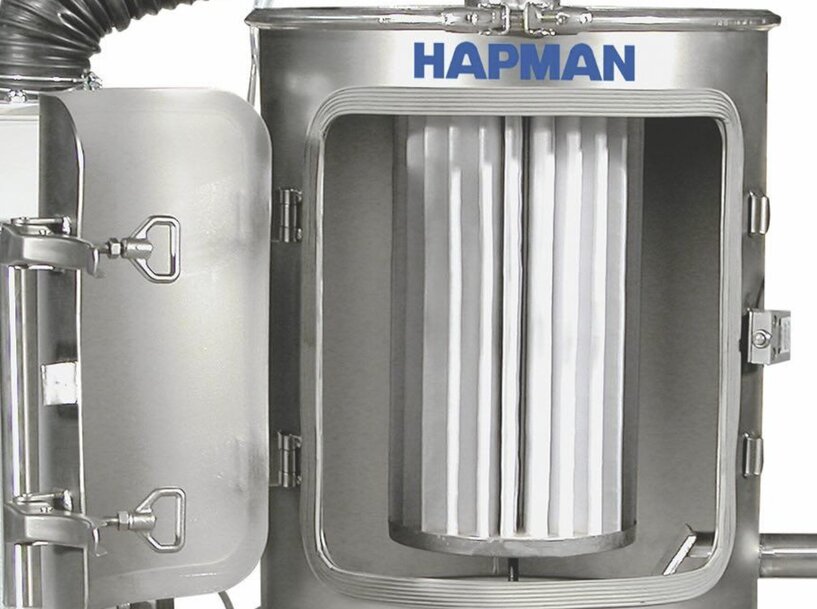
Close-up view of side access door.
System Planning and Material Evaluation
Successful integration of vacuum conveying equipment typically begins with evaluating the facility layout and the properties of the materials to be transported.
Although the pipeline configuration allows flexible routing, excessive bends or elevation changes can reduce conveying efficiency and increase power requirements. Direct routing paths generally provide more efficient system performance.
Material characteristics such as bulk density, flowability, and chemical reactivity also influence system design. Testing these properties helps determine the appropriate inlet design, filtration method, and discharge configuration.
Manufacturers offer different system configurations to address varying operational needs. Compact systems can support installations with limited space, while higher-capacity conveyors handle longer transfer distances. Specialized configurations are available for combustible dust environments, incorporating pressure-rated receivers compatible with explosion venting or suppression systems.
Hapman provides several vacuum conveying systems designed for these conditions. The MiniVac system supports flexible routing across multiple levels, while the LP Series is designed for installations with limited space. For facilities handling combustible dust, the E-Line model incorporates pressure-rated filter receivers suitable for integration with explosion protection systems.
Selecting Conveying Systems for Long-Term Operation
Choosing an appropriate vacuum conveying system involves evaluating operational priorities such as cleanliness, maintenance requirements, and long-term scalability.
Facility layout constraints influence pipeline routing, while material properties determine compatible feed and discharge configurations. In food processing environments, systems that offer tool-less cleaning access or clean-in-place functionality can support sanitation procedures and regulatory compliance.
Energy consumption is another factor. Systems that operate independently of compressed plant air and incorporate automated filter cleaning can reduce operating costs over time. Modular configurations can also support production growth by allowing incremental expansion of conveying capacity.
Conveying Technology in Evolving Production Environments
Vacuum conveying systems are increasingly used in production environments that require controlled material transport, hygienic processing conditions, and flexible equipment layouts. In sectors such as food processing, these systems support consistent ingredient movement while limiting dust exposure and simplifying maintenance.
As manufacturing environments continue to adopt more integrated and automated production systems, conveying technologies that combine flexible routing, enclosed transport, and reduced mechanical complexity are likely to remain an important part of modern bulk material handling infrastructure.
Bulk material handling in food processing facilities must balance hygiene, efficiency, and limited production space. Transporting powders, granules, and other dry ingredients without contamination or downtime is critical for maintaining product quality and throughput. In this context, Steve Grant, Product Manager - Pneumatic Conveying at Hapman, highlights the role of vacuum conveying systems as an alternative to traditional mechanical conveyors in modern material handling environments.
Enclosed Transport for Powders and Granular Materials
Vacuum conveyors move bulk materials using negative pressure within sealed pipelines. A blower or pump generates suction that draws material from a pickup point and carries it through enclosed piping to a receiving vessel. At this stage, filtration separates the conveyed product from the airflow, allowing the material to discharge into downstream equipment such as mixers, processing units, or packaging lines.
Unlike mechanical conveying systems that depend on belts, screws, or chains, vacuum conveyors contain fewer moving parts. This configuration reduces mechanical wear and simplifies maintenance. The enclosed design also prevents material leakage and limits the formation of airborne dust, which is particularly relevant in food processing operations where hygiene and worker safety are tightly regulated.
Because system leaks occur inward under negative pressure, the risk of product contamination and dust release into the plant environment is reduced.
Flexible Routing in Constrained Production Layouts
Vacuum conveying systems are commonly used in facilities where production lines must operate within limited space or complex layouts. The pipeline-based configuration allows material transport vertically, horizontally, or around obstacles, supporting installation in areas where conventional conveyors are difficult to integrate.
This routing flexibility is particularly useful during plant retrofits or production line expansions, where new equipment must connect to existing processing stages without major structural changes.
The systems are also modular, which can simplify installation and allow capacity adjustments as production requirements evolve.
Design Features Supporting Continuous Operation
Several technical features have expanded the range of materials and processes supported by vacuum conveying systems.
One development is the adoption of regenerative blower technology. These blowers operate independently of plant compressed air systems, helping reduce demand on facility air infrastructure and lowering operating costs.
Another feature is reverse-pulse filter cleaning, which periodically releases bursts of air through filters to remove accumulated dust. This mechanism helps maintain airflow and reduces the frequency of manual filter maintenance during extended operation.
Inlet and discharge configurations have also evolved. Components such as rotary valves and metering devices allow controlled material feeding and discharge, enabling the handling of materials ranging from fragile granules to more abrasive particulate solids.
Application in Food Processing Operations
In the food industry, conveying systems must comply with hygiene requirements while maintaining production throughput. Vacuum conveyors provide an enclosed, dust-tight method for transporting dry ingredients such as flour, sugar, and powdered additives between storage, mixing, processing, and packaging stages.
Because materials are conveyed through sealed pipelines under negative pressure, exposure to airborne contaminants is minimized. This configuration supports regulatory compliance and product integrity in food manufacturing environments.
Maintenance and sanitation are also important considerations. Vacuum conveyors often incorporate tool-less access for filters and may support clean-in-place (CIP) procedures, enabling faster cleaning between production batches. These features help reduce downtime and support allergen control in facilities processing multiple product formulations.
Close-up view of side access door.
System Planning and Material Evaluation
Successful integration of vacuum conveying equipment typically begins with evaluating the facility layout and the properties of the materials to be transported.
Although the pipeline configuration allows flexible routing, excessive bends or elevation changes can reduce conveying efficiency and increase power requirements. Direct routing paths generally provide more efficient system performance.
Material characteristics such as bulk density, flowability, and chemical reactivity also influence system design. Testing these properties helps determine the appropriate inlet design, filtration method, and discharge configuration.
Manufacturers offer different system configurations to address varying operational needs. Compact systems can support installations with limited space, while higher-capacity conveyors handle longer transfer distances. Specialized configurations are available for combustible dust environments, incorporating pressure-rated receivers compatible with explosion venting or suppression systems.
Hapman provides several vacuum conveying systems designed for these conditions. The MiniVac system supports flexible routing across multiple levels, while the LP Series is designed for installations with limited space. For facilities handling combustible dust, the E-Line model incorporates pressure-rated filter receivers suitable for integration with explosion protection systems.
Selecting Conveying Systems for Long-Term Operation
Choosing an appropriate vacuum conveying system involves evaluating operational priorities such as cleanliness, maintenance requirements, and long-term scalability.
Facility layout constraints influence pipeline routing, while material properties determine compatible feed and discharge configurations. In food processing environments, systems that offer tool-less cleaning access or clean-in-place functionality can support sanitation procedures and regulatory compliance.
Energy consumption is another factor. Systems that operate independently of compressed plant air and incorporate automated filter cleaning can reduce operating costs over time. Modular configurations can also support production growth by allowing incremental expansion of conveying capacity.
Conveying Technology in Evolving Production Environments
Vacuum conveying systems are increasingly used in production environments that require controlled material transport, hygienic processing conditions, and flexible equipment layouts. In sectors such as food processing, these systems support consistent ingredient movement while limiting dust exposure and simplifying maintenance.
As manufacturing environments continue to adopt more integrated and automated production systems, conveying technologies that combine flexible routing, enclosed transport, and reduced mechanical complexity are likely to remain an important part of modern bulk material handling infrastructure.
www.hapman.com
