
www.foodpackautomation.com
28
'26
Written on Modified on
Manual override systems for resilient dairy automation
Technidrive highlights the importance of manual overrides in three-phase dairy systems to ensure operational continuity, animal welfare and compliance during automation failures.
www.technidrive.co.uk
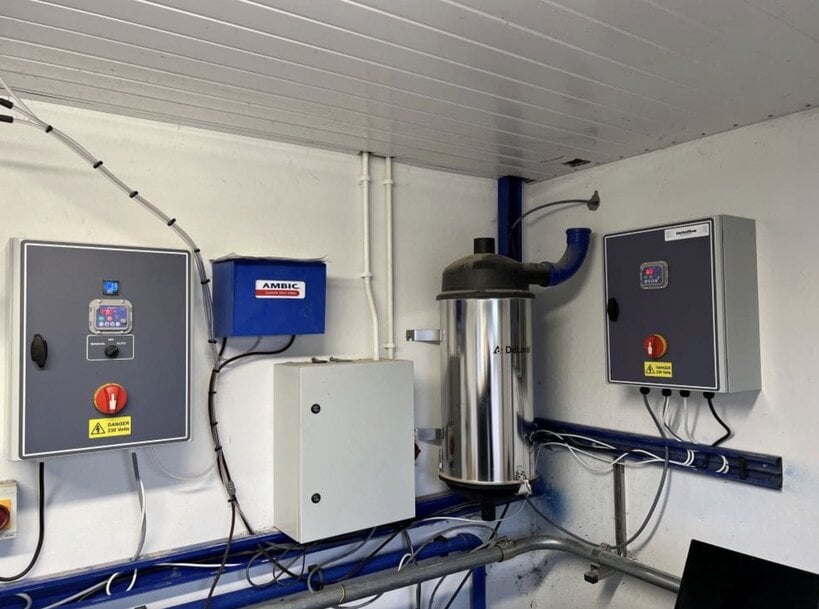
In dairy operations, even a one per cent loss of raw milk can exceed €2.6 million annually, accounting not only for reduced output but also for potential animal welfare implications. While modern dairies rely heavily on automation to deliver efficiency and process consistency, system resilience remains critical when failures occur. Andrew Ritchie, Technical Sales Manager at dairy systems integrator Technidrive, outlines why manual override functionality in three-phase systems is an essential safeguard for the sector.
Designing for Reliability and Resilience
Designing for high availability and minimising downtime is the primary objective in any automated dairy installation. Milking parlours should be engineered with robust, well-maintained systems, supported by properly configured monitoring and control architectures to mitigate faults. However, even highly optimised systems are susceptible to unexpected failures. In such instances, manual override capability provides a vital fallback, enabling continued operation without compromising animal welfare, milk quality or regulatory compliance.
The Role of Three-Phase Systems in Milking Operations
Milking parlours depend on three-phase motors to drive vacuum pumps, automation systems and cleaning processes. Three-phase power has become the standard in modern dairy environments due to its ability to support high-load, multi-motor applications while ensuring stable and efficient operation. In the event of a system fault or power disturbance, operational disruption is immediate. Delayed milking can result in udder discomfort and increase the risk of mastitis. Manual override mechanisms allow operators to restore functionality rapidly, even in the absence of automated control, thereby maintaining animal welfare standards.
Protecting Milk Quality Post-Harvest
Post-harvest, milk requires continuous cooling and agitation to inhibit bacterial growth. Any interruption to refrigeration or stirring processes can lead to spoilage, product loss and significant financial impact. Manual override switches enable operators to bypass failed automation systems and maintain critical processes until corrective action is taken, ensuring food safety and protecting revenue streams.
Managing Power Instability in Rural Environments
Grid instability remains a challenge in many rural dairy locations, where power outages and voltage fluctuations can disrupt automated operations. Manual override systems allow operators to isolate affected circuits, transition to backup generation or directly control essential motors. This capability supports operational continuity during power disturbances, reducing downtime and maintaining herd management schedules.
Supporting Maintenance and Fault Recovery
Automated dairy systems incorporate sensors, timers and programmable logic controllers (PLCs), all of which are vulnerable to environmental conditions and power quality variations. In the absence of manual override functionality, even minor faults can render systems inoperative until technical intervention is available. By enabling direct motor control, manual overrides facilitate continued operation of essential processes while allowing time for fault diagnosis and remediation.
Ensuring Hygiene and Regulatory Compliance
Compliance with stringent food safety regulations necessitates the reliable execution of cleaning-in-place (CIP) procedures. These systems, typically powered by three-phase pumps, depend on automation to maintain hygiene cycles. In the event of control system failure, manual override capability ensures that cleaning processes can still be executed, preventing hygiene breaches and maintaining regulatory compliance.
A Critical Safeguard in Modern Dairy Systems
Three-phase systems underpin core dairy operations, supporting the pumps, motors and refrigeration infrastructure essential to daily production. However, system resilience is determined not only by automation sophistication but also by the availability of effective fail-safe mechanisms. Manual overrides provide a dependable contingency, safeguarding animal welfare, product integrity and compliance in the face of technical disruption.
While sustainability and efficiency continue to dominate industry priorities, operational resilience is equally critical. Manual override functionality represents a simple yet indispensable safeguard, ensuring continuity and reliability in modern dairy operations.
Edited by Romila DSilva, Induportals Editor, with AI assistance.
www.technidrive.co.uk
