
www.foodpackautomation.com
28
'26
Written on Modified on
Manufacturing Strategies for Scalable Food Innovation
Bluegrass Ingredients highlights how early production team integration ensures culinary concepts translate efficiently into commercial successes.
bluegrassingredients.com
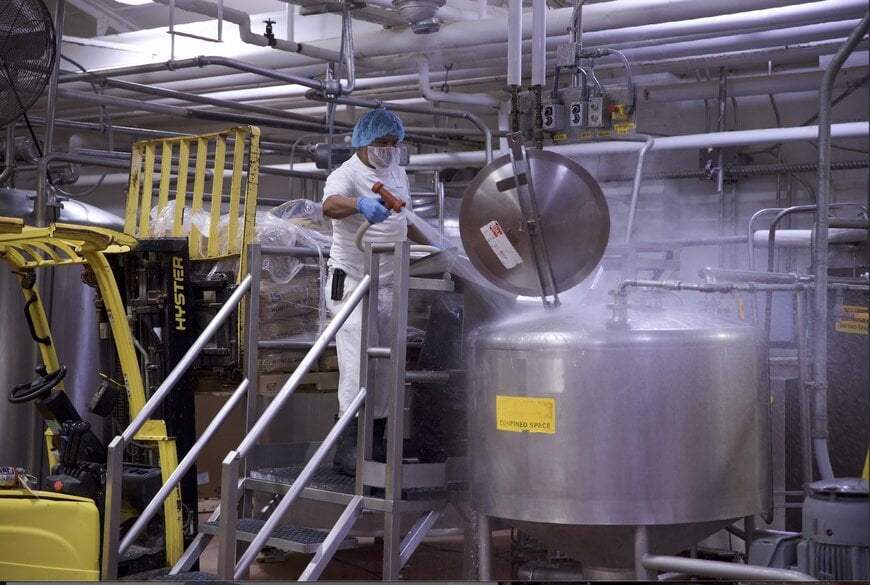
A successful food product requires more than just culinary creativity; it must be manufactured safely, consistently, and efficiently at scale. When a bench formulation transitions to commercial production, it faces operational pressures such as heat, shear, moisture variations, and strict sanitation constraints. Integrating manufacturing teams early in the product development lifecycle prevents costly post-formulation fixes. By assessing how ingredients flow through equipment and how changeovers affect scheduling, plant operators can ensure that a culinary concept is designed with scale in mind, preventing supply chain or quality issues before they reach the plant floor.
Cross-functional collaboration among R&D, quality, safety, and production teams is essential to turn a good formula into a scalable product. Balancing cost control, labor constraints, and consumer demand for variety often necessitates reformulation, but simplifying a product should not sacrifice its unique sensory qualities. Strategic partners like Bluegrass Ingredients assist food manufacturers at this intersection of product vision and production reality. By providing tailored ingredient solutions—such as powders, concentrates, and seasoning blends—that account for thermal processing, viscosity, and application-specific performance, manufacturers can optimize costs while delivering a consistent eating experience across snacks, sauces, and frozen meals.
Additional Context
This section provides technological and market background not explicitly detailed in the original release.
The transition from a laboratory bench to industrial-scale production introduces a phenomenon known in food engineering as the "scale-up effect." For example, moving from a 5-liter benchtop mixer to a 5,000-liter industrial blender drastically alters shear rates, heat transfer coefficients, and mixing times. Ingredients that remain perfectly suspended or emulsified in a lab setting might separate, clump, or experience thermal degradation of volatile flavor compounds at scale. Furthermore, under stringent global food safety frameworks like FSMA (Food Safety Modernization Act) or HACCP (Hazard Analysis and Critical Control Point), allergen segregation and equipment clean-in-place (CIP) turnaround times are critical operational metrics. When manufacturing engineers are involved during the R&D phase, they can design formulations that utilize highly functional, versatile ingredients, minimizing the number of changeovers required and mitigating the risk of cross-contamination in multi-SKU facilities.
Edited by Lekshman Ramdas, Induportals editor – adapted by AI.
www.bluegrassingredients.com
