
www.foodpackautomation.com
17
'26
Written on Modified on
Alfa Laval Enhances Inline Carbonation Efficiency with CarboSet Mini
CarboSet Mini increases CO₂ utilization to 95–99% and supports scalable beverage production through modular inline carbonation technology.
www.alfalaval.com
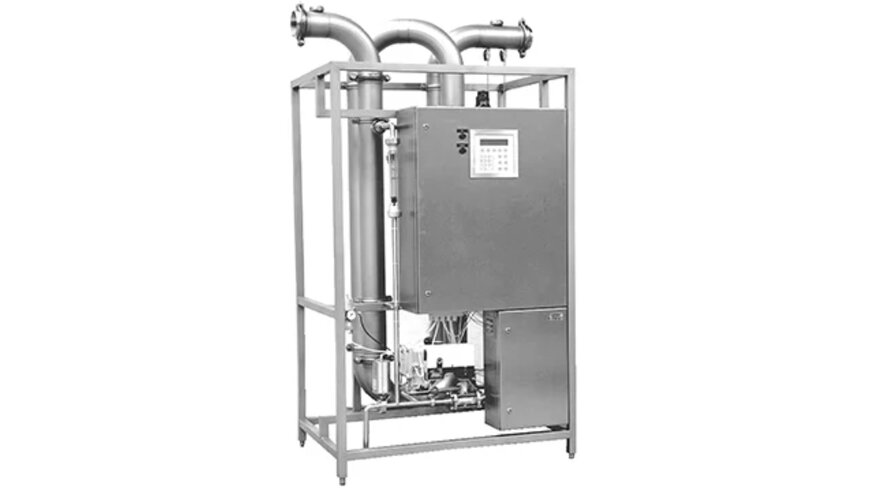
For beverage producers handling frequent product launches and multiple recipes, carbonation accuracy directly affects product quality, operational safety and production margins. Canman, a contract beverage manufacturer managing up to 10 new product launches per month — including soft drinks, energy drinks, still wines and sparkling wines — upgraded its carbonation process by implementing the Alfa Laval CarboSet™ Mini inline carbonation system.
The solution replaces conventional in-tank carbonation with a controlled inline process integrated directly into the existing canning line. Equipped with Alfa Laval ThinkTop sensing and control units, the CarboSet Mini enables automated, precise CO₂ dosing while maintaining compatibility with high-speed production environments.
Transition from in-tank to inline carbonation
Previously, Canman relied on in-tank carbonation, a method that can limit throughput and introduce variability due to gas losses and process fluctuations. CO₂ utilization rates ranged between 50% and 80%, reducing efficiency and increasing operating costs.
With the inline configuration, beverages move directly from blending to filling under controlled carbonation conditions. This approach increases CO₂ utilization to between 95% and 99%, representing an overall efficiency improvement of up to 90% compared with the previous process. Precise automated control ensures that target carbonation levels are consistently achieved, reducing waste and minimizing manual intervention.
Modular design supporting scalable capacity
The CarboSet Mini features a modular architecture that allows stepwise capacity expansion. This enables producers to align capital investment with market demand while maintaining continuous operations.
Following the transition to inline carbonation, Canman gradually expanded its production capacity from approximately 3,000 liters per day to more than 26,000 liters per day. The increased output was achieved while improving carbonation consistency and reducing CO₂ consumption across multiple beverage categories.
Operational impact in high-mix production environments
In production settings characterized by frequent changeovers and diverse product formulations, stable and reproducible carbonation control is essential. The inline system supports rapid adjustments between recipes, enabling high product flexibility without compromising accuracy.
By integrating inline carbonation into its existing process, Canman established a scalable production platform that combines higher throughput, reduced CO₂ losses and improved process consistency. For beverage manufacturers operating in competitive, high-variation markets, optimized CO₂ utilization contributes directly to lower operational costs and improved production margins.
www.alfalaval.com
