
www.foodpackautomation.com
14
'26
Written on Modified on
DS Smith replaces 10 million plastic tomato packages in Romania with recyclable cardboard
Fibre-based corrugated punnets support circular economy goals, cutting CO₂ emissions versus PET while improving line packing efficiency for fresh produce.
www.dssmith.com
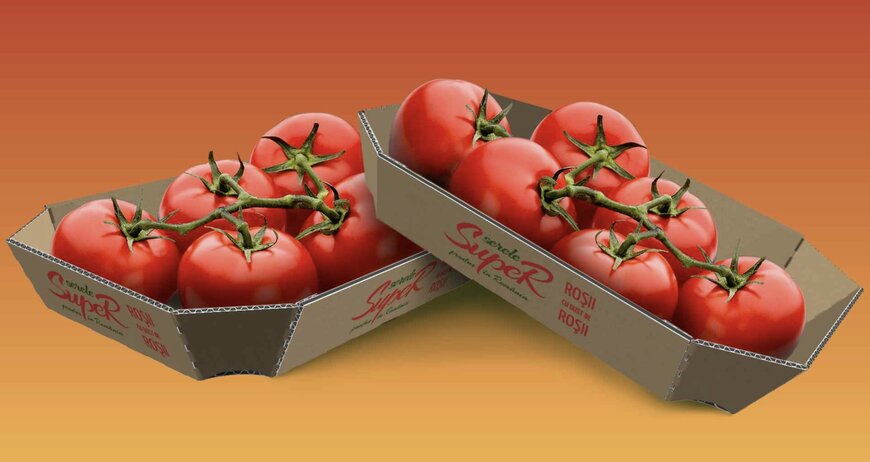
DS Smith has developed fibre-based corrugated cardboard punnets for Romania’s Serele SupeR agricultural cooperative to replace single-use plastic packaging used for fresh tomato products. The redesign targets retail-ready produce packaging and supply chain handling, with the core update being the introduction of four recyclable punnet formats created by DS Smith.
Moving fresh produce away from PET trays
Serele SupeR previously used single-use plastic packaging for fresh tomatoes, including cherry tomato varieties. DS Smith’s design team evaluated multiple existing pack types and replaced them with corrugated cardboard punnets made from 100% renewable, FSC®-certified fibre-based materials.
The new punnet formats are intended to support produce packing operations in a hybrid production environment while also meeting modern retail requirements such as shelf presentation and logistics performance.
Punnet geometry designed for cherry tomato handling
A key design feature is the angled corner structure, developed to hold specific cherry tomato varieties with different dimensional requirements. The geometry is intended to reduce unused internal space while maintaining product containment.
For shelf presentation, the corrugated punnets are wrapped in a recyclable flexible film, intended to protect the product while maintaining visibility and in-store appeal.
Measured impact during a three-year trial
During a three-year trial period, Serele SupeR reported the following outcomes from switching to the DS Smith corrugated punnet solution: The cooperative replaced 10 million plastic trays with fibre-based punnets. It also reported a 46% lower CO₂ footprint compared with PET packaging, and up to 21% material consumption optimisation without reducing product protection. The project also aimed to improve logistics efficiency for contemporary retail distribution.
This positions the project as a practical example of circular packaging design applied to horticulture supply chains, supporting a broader circular economy packaging shift in food retail.
Circular Design Metrics used to quantify sustainability performance
DS Smith applied its Circular Design Principles and its Circular Design Metrics (CDM) tool to quantify the packaging design’s sustainability performance across eight indicators. These include carbon footprint, reuse, supply chain optimisation, recyclability, materials utilisation, and recycled content, among other measures used to assess design impact beyond recyclability alone.
Regulatory alignment and supply chain positioning
Serele SupeR’s packaging transition is aligned with EU sustainability requirements, including targets linked to the PPWR (Packaging and Packaging Waste Regulation), which aims to reduce packaging waste and standardise packaging rules across EU member states.
The new packaging is also positioned as a differentiator in Romania’s local fresh produce market, particularly as retailers and end customers increasingly apply sustainability requirements across the supply chain. DS Smith’s involvement sits under its broader sustainability strategy, Redefining Packaging for a Changing World, which focuses on replacing hard-to-recycle packaging formats with fibre-based solutions where feasible.
www.dssmith.com
