
Unifying control in modern packaging lines
Beckhoff Automation outlines how PC-based control enables flexible, standardised and personalised packaging production.
www.beckhoff.com
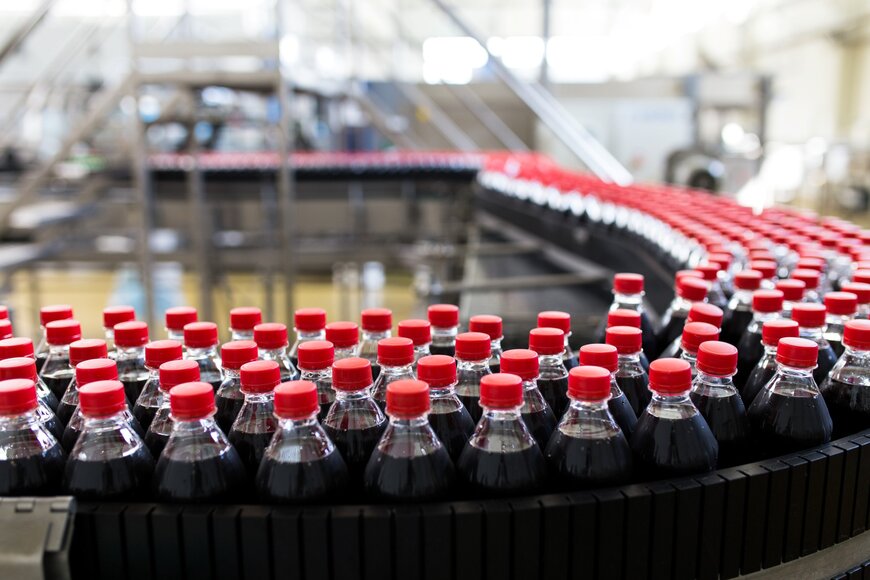
The packaging industry is undergoing rapid change. Consumer demand is shifting from uniform mass production to personalisation, seasonal editions and premium presentation. From festive gift packs to customised beverage labels, production lines must now switch formats quickly and reliably. According to Simon Hall, Global Market Technical Sales for Food, Beverage & CPG at Beckhoff Automation, unifying control architectures is key to meeting these expectations.
Fragmented automation creates complexity
Many packaging lines operate as a collection of machines from different OEMs—fillers, cappers, labellers and case packers—each with its own PLC, software platform and interface. While diversifying suppliers can reduce supply chain risks, it often increases operational complexity.
Operators must navigate multiple HMIs, maintenance teams manage differing upgrade cycles, and automation engineers support a mix of programming environments. Although all major vendors support IEC 61131-3 languages such as Ladder Diagram (LD), Function Block Diagram (FBD), Structured Text (ST) and Sequential Function Chart (SFC), implementation styles vary widely. This inconsistency complicates diagnostics, changeovers and long-term support.
Standardisation without vendor lock-in
Unifying control does not mean selecting a single automation vendor. Instead, it involves standardising interfaces, machine states and data structures so equipment from multiple suppliers can operate seamlessly.
Frameworks such as Packaging Machine Language (PackML) define consistent machine states, modes and data tags, simplifying integration and troubleshooting. The Weihenstephan Standards (WS) establish uniform naming conventions for PLC variables, enabling faster data acquisition and consistent reporting across heterogeneous systems.
At the communication level, open real-time fieldbuses like EtherCAT allow deterministic synchronisation between modules. Features such as HotConnect and advanced diagnostics help detect cable faults or EMC interference quickly, reducing unplanned downtime.
Enabling lot size one and serialisation
For consumer goods manufacturers, the long-term objective is often “lot size one”—producing a single customised unit with the efficiency of batch production. Personalisation initiatives such as Coca-Cola’s “Share a Coke” campaign illustrate how packaging can strengthen brand loyalty and consumer engagement.
Achieving true lot size one requires serialisation, assigning unique identifiers to each product. Already standard in pharmaceutical and food sectors, serialisation is expanding into broader consumer markets. However, it demands high-frequency data exchange, precise machine synchronisation and intuitive recipe-based changeovers.
Packaging systems must allow operators to switch formats via touchscreen interfaces rather than manual adjustments, while still managing complex SKU variations. This requires unified data structures and real-time coordination across the entire line.
The role of PC-based control
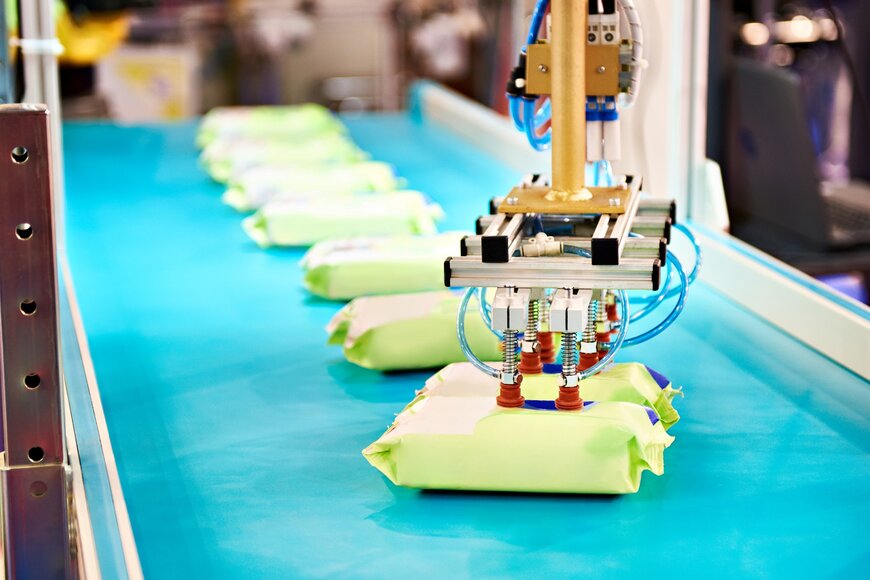
Beckhoff Automation promotes PC-based control as a flexible foundation for modern packaging systems. Industrial PCs (IPCs) combine real-time control performance with open operating systems, enabling integration with MES, ERP and cloud platforms using protocols such as OPC UA, MQTT and REST APIs.
Software platforms like TwinCAT support PackML libraries and OPC UA nodeset configuration, simplifying the implementation of standardised machine states and data exchange. By virtualising control functions into modular software runtimes, PC-based architectures reduce hardware dependency and improve scalability.
EtherCAT networks complement this model with precise timing and advanced diagnostics, automatically identifying node failures, cable breaks or interference issues before they escalate into costly production interruptions.
Building the packaging line of the future
As packaging lines become more modular, PC-based control supports easier reconfiguration and expansion. Labellers, fillers and conveyors can be integrated or upgraded with minimal disruption, while maintaining consistent data visibility across the line.
Flexibility, efficiency and personalisation define the future of packaging. Achieving these goals requires unified control frameworks, open communication standards and real-time data transparency. By combining vendor-agnostic standards, modular design and PC-based automation, manufacturers can deliver rapid changeovers, complex SKU management and scalable personalisation without sacrificing operational stability.
www.beckhoff.com
