
www.foodpackautomation.com
03
'26
Written on Modified on
Citrus Juice Powders for Scalable Food Formulation
Bluegrass Ingredients creates citrus powder systems for stable flavor delivery and efficient processing across diverse food applications.
bluegrassingredients.com
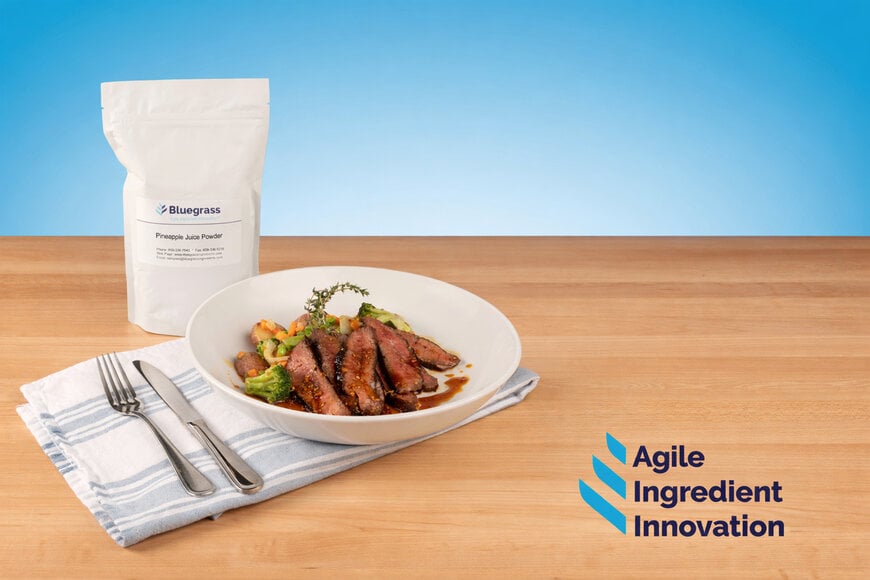
Bluegrass Ingredients has introduced a portfolio of citrus juice powders designed to deliver consistent fruit flavor while improving storage, handling, and formulation efficiency in food manufacturing applications such as snacks, baked goods, dressings, and desserts.
Addressing formulation and supply chain constraints
Citrus flavors are widely used across food categories but present formulation challenges due to the perishability and variability of fresh juice. Liquid citrus ingredients require cold storage, have limited shelf life, and can introduce inconsistency in taste and acidity across batches.
The powder-based format provides an alternative by stabilizing citrus flavor compounds through spray drying and controlled blending processes. This enables longer shelf life and reduces waste associated with spoilage, supporting a more efficient digital supply chain in ingredient sourcing and inventory management.
Flavor retention and process stability
The powders are designed to preserve key sensory attributes associated with citrus fruits, including acidity, aroma, and brightness. By encapsulating flavor compounds, the system maintains flavor integrity during processing steps such as mixing and thermal treatment.
Consistent particle composition supports repeatable dosing, allowing manufacturers to maintain uniform flavor profiles across production batches. This is particularly relevant for large-scale operations where variability in raw ingredients can affect product standardization.
Multi-application functionality
The ingredient system is engineered for use across multiple food categories, including:
- Baked goods, where controlled acidity influences texture and leavening
- Snack seasonings, where dry blending compatibility is required
- Dressings and sauces, where solubility and dispersion affect mouthfeel
- Desserts, where balanced citrus notes contribute to flavor contrast
This cross-category functionality allows R&D teams to use a single ingredient platform across different formulations, reducing complexity in product development pipelines.
Operational advantages in powder format
Compared to liquid citrus juice, the dry format offers measurable logistical benefits. Powdered ingredients reduce shipping weight and eliminate the need for refrigerated transport, lowering distribution costs. Storage is simplified, and on-demand usage reduces dependency on just-in-time delivery of perishable inputs.
From a manufacturing perspective, powders integrate more easily into dry or semi-dry processing lines, improving dosing accuracy and minimizing handling steps.
Customization and formulation control
The system supports customization through adjustments in pH, acidity, and flavor intensity, enabling formulators to tailor citrus profiles to specific product requirements. This level of control is important for applications where acidity impacts not only taste but also product stability and preservation.
Collaboration with application specialists allows manufacturers to align flavor development with consumer trends while maintaining technical feasibility during scale-up.
Product positioning and compliance
The citrus powder portfolio is available in both conventional and organic variants and meets multiple dietary and certification requirements, including vegan, gluten-free, and Kosher standards. This enables manufacturers to address diverse market segments without reformulating core ingredients.
Role in modern food ingredient systems
Powdered flavor systems such as these reflect a broader shift toward modular, stable ingredients that support scalable manufacturing and flexible product development. By combining flavor consistency with logistical efficiency, citrus juice powders contribute to more resilient and adaptable food production systems.
Edited by an industrial journalist Sucithra Mani with AI assistance.
www.bluegrassingredients.com
Operational advantages in powder format
Compared to liquid citrus juice, the dry format offers measurable logistical benefits. Powdered ingredients reduce shipping weight and eliminate the need for refrigerated transport, lowering distribution costs. Storage is simplified, and on-demand usage reduces dependency on just-in-time delivery of perishable inputs.
From a manufacturing perspective, powders integrate more easily into dry or semi-dry processing lines, improving dosing accuracy and minimizing handling steps.
Customization and formulation control
The system supports customization through adjustments in pH, acidity, and flavor intensity, enabling formulators to tailor citrus profiles to specific product requirements. This level of control is important for applications where acidity impacts not only taste but also product stability and preservation.
Collaboration with application specialists allows manufacturers to align flavor development with consumer trends while maintaining technical feasibility during scale-up.
Product positioning and compliance
The citrus powder portfolio is available in both conventional and organic variants and meets multiple dietary and certification requirements, including vegan, gluten-free, and Kosher standards. This enables manufacturers to address diverse market segments without reformulating core ingredients.
Role in modern food ingredient systems
Powdered flavor systems such as these reflect a broader shift toward modular, stable ingredients that support scalable manufacturing and flexible product development. By combining flavor consistency with logistical efficiency, citrus juice powders contribute to more resilient and adaptable food production systems.
Edited by an industrial journalist Sucithra Mani with AI assistance.
www.bluegrassingredients.com
