
www.foodpackautomation.com
07
'26
Written on Modified on
Portion cutting system improves poultry yield
Geflügelspezialitäten Steinfeld deploys JBT Marel’s I-Cut 122 TrimSort to expand into retail markets with higher yield, precision, and flexible portioning.
marel.com
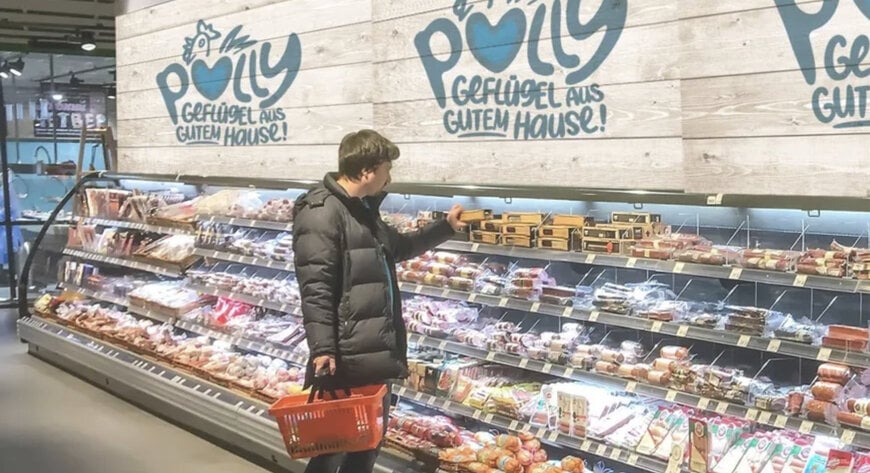
Geflügelspezialitäten Steinfeld (GFS), an independent poultry processor, traditionally supplied large foodservice markets. As demand shifted toward retail products, the company needed to diversify its output to include formats such as medallions, strips, and cubes. This transition introduced new technical constraints, particularly the need for consistent portion quality and improved raw material utilization.
Reducing trim losses and maximizing the value of poultry breast meat became central objectives. To address these challenges, GFS implemented an automated portion cutting solution using the JBT Marel I-Cut 122 TrimSort.
Solution selection and validation
Before investing, GFS and JBT Marel carried out application-specific trials using the processor’s target end products. These tests confirmed that the system could deliver the required cutting precision while maintaining high yield and operational efficiency.
The decision was not only based on technical performance but also on the system’s ability to support evolving production needs. The established working relationship between both companies also contributed to the final selection.
Deployment and integration
The I-Cut 122 TrimSort was initially deployed as a standalone unit, enabling GFS to introduce portion cutting without immediately redesigning the full production line. This approach allowed the company to control investment while quickly responding to market demands.
In operation, the system processes poultry breast meat prepared upstream and runs up to eight hours per day, five days a week, with a throughput of up to 1,000 kilograms per hour. Its design allows gradual integration into a larger automated line as production volumes increase.
Technical relevance of the solution
The system enables precise portioning while ensuring that trim is not lost but redirected into secondary high-value products. For example, when fillets are cut into medallions or strips, remaining pieces can be automatically processed into nuggets. This improves the overall utilization of raw materials.
At the same time, the solution supports multiple product formats within the same workflow, which is essential for retail-oriented production. Its scalability ensures that the system can evolve from a single machine into a fully integrated processing line without requiring a complete replacement of equipment.
Results: Yield optimization and production flexibility
The implementation has improved both efficiency and product value. GFS can now process up to 1,000 kg of poultry per hour while maintaining consistent portion quality. More importantly, trim is no longer treated as waste or downgraded to low-value applications. Instead, it is converted into retail-ready products, increasing overall yield and profitability.
The system also enables flexible production, allowing GFS to switch between different product types depending on customer demand. This adaptability is essential for serving both existing and new retail clients.
Operational impact and future outlook
The introduction of portion cutting technology marks a structural shift in GFS’s production strategy. By starting with a standalone system and planning gradual expansion, the company retains flexibility while preparing for higher volumes and broader product portfolios.
With ongoing support from JBT Marel, GFS is reconfiguring its production line to integrate additional automation modules. This approach ensures that the processing setup can continue to evolve alongside market requirements.
Conclusion
The deployment of the I-Cut 122 TrimSort at Geflügelspezialitäten Steinfeld demonstrates how targeted automation can support a transition to retail-focused production. By improving yield, reducing waste, and enabling flexible portioning, the solution strengthens both operational efficiency and long-term competitiveness.
Edited by an industrial journalist Sucithra Mani with AI assistance.
www.jbtmarel.com
