
www.foodpackautomation.com
09
'26
Written on Modified on
Sanitary Drainage Design for Food Processing Facilities
FoodSafe Drains outlines engineering principles to reduce contamination risk through hygienic drainage design in food and beverage production environments.
globaldraintech.com
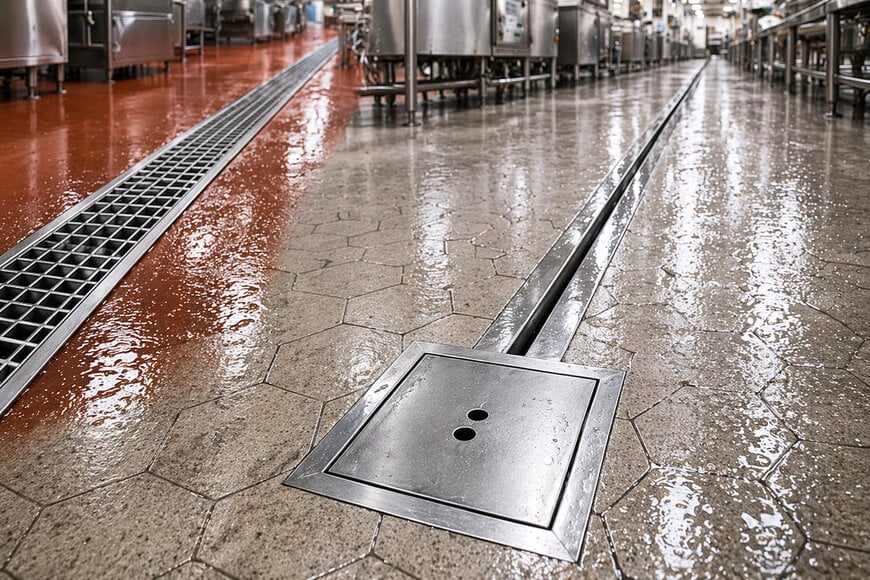
Sanitary drainage systems in food and beverage facilities are increasingly recognized as critical control points for contamination prevention. Engineering design, material selection, and installation practices directly influence microbial risk, operational efficiency, and regulatory compliance across processing environments.
Drains as a critical contamination control point
Floor drains are exposed to persistent moisture, organic residues, and temperature variation, creating conditions suitable for microbial growth. Industry investigations have linked a significant proportion of contamination events to drains and adjacent floor areas, particularly where stagnant water or biofilm formation occurs.
Regulatory frameworks such as the Food Safety Modernization Act (FSMA), alongside oversight from FDA and USDA, increasingly evaluate hygienic infrastructure as part of overall food safety systems. This shifts drainage systems from passive utilities to active components within a facility’s hygienic design strategy.
Facility-specific drainage requirements
Drainage performance must align with process-specific conditions and zoning within the facility. High-risk areas, including processing and washdown zones, require systems capable of handling large volumes of liquid, solids, and frequent high-pressure cleaning cycles. In contrast, low-risk zones such as packaged goods storage may require minimal drainage capacity.
Key engineering parameters include:
- Production characteristics: High-moisture processes such as beverage production differ significantly from dry or particulate-heavy operations like bakery or protein processing.
- Waste composition: The presence of fats, oils, greases, or solids influences drain sizing and configuration.
- Thermal and chemical exposure: Cleaning cycles often involve hot, acidic, or caustic fluids, requiring corrosion-resistant materials and thermal stability.
- Mechanical load: Areas with forklift or pallet traffic require drains with appropriate load ratings.
- Cleaning integration: Compatibility with Clean-in-Place (CIP) systems and sanitation protocols is essential to prevent accumulation and overflow.
A standardized drainage approach is therefore unsuitable; systems must be engineered according to operational and hygienic requirements.
Layout optimization and flow efficiency
Drainage layout significantly impacts both construction complexity and long-term performance. Efficient designs prioritize direct flow paths, reduced underground piping, and accessible maintenance points.
Traditional area drain systems often rely on extensive buried piping networks, which are difficult to inspect and prone to clogging due to inadequate slope or solids accumulation. In contrast, linear drainage systems reduce underground infrastructure and improve accessibility for cleaning.
Floor geometry is another critical factor. Area drains typically require multi-directional slopes, increasing construction complexity and creating uneven surfaces. Linear systems reduce slope requirements, improving safety and facilitating movement of personnel and equipment.
Comparative performance of drainage types
Drain selection should be aligned with flow characteristics and hygiene requirements:
Layout optimization and flow efficiency
Drainage layout significantly impacts both construction complexity and long-term performance. Efficient designs prioritize direct flow paths, reduced underground piping, and accessible maintenance points.
Traditional area drain systems often rely on extensive buried piping networks, which are difficult to inspect and prone to clogging due to inadequate slope or solids accumulation. In contrast, linear drainage systems reduce underground infrastructure and improve accessibility for cleaning.
Floor geometry is another critical factor. Area drains typically require multi-directional slopes, increasing construction complexity and creating uneven surfaces. Linear systems reduce slope requirements, improving safety and facilitating movement of personnel and equipment.
Comparative performance of drainage types
Drain selection should be aligned with flow characteristics and hygiene requirements:
- Area drains: Suitable for localized collection but associated with complex piping and maintenance challenges.
- Grated trench drains: Capable of handling high flow and debris but introduce cleaning challenges due to removable grates and potential bacterial retention.
- Slot drains: Designed with narrow openings and continuous channels, reducing bacterial harborage points and simplifying cleaning.
Slot drain configurations eliminate removable grates, reducing physical hazards and enabling continuous cleaning along the channel. This supports faster sanitation cycles and improved hygiene consistency in high-risk zones.
Hygienic engineering and material selection
Sanitary drain performance depends on adherence to hygienic design principles. Stainless steel is widely used due to its non-porous surface, corrosion resistance, and compatibility with aggressive cleaning agents.
Design features that reduce microbial risk include smooth internal surfaces, rounded corners, and seamless welds that eliminate crevices where contaminants can accumulate. These principles align with established hygienic standards such as 3-A, NSF, and EHEDG guidelines.
Pre-sloped construction is also essential to maintain continuous flow and prevent standing water, a primary contributor to microbial growth and odor formation.
Installation quality and system integration
Installation is a critical determinant of long-term performance. Improper slope, poor sealing at floor interfaces, or inadequate material bonding can create persistent contamination risks and structural issues.
The interface between the drain and surrounding floor must be mechanically stable and chemically resistant. Techniques such as keyed channel designs, reinforced coating transitions, and surface pretreatment of stainless steel improve adhesion and durability under thermal and mechanical stress.
Coordinated installation across drainage, concrete, and floor coating systems reduces failure risk and ensures compatibility with sanitation processes. This is particularly important in retrofit projects, where limited downtime and existing infrastructure constrain design options.
Role within the digital supply chain of food safety
Modern sanitary drainage systems are part of a broader digital supply chain approach to food safety, where infrastructure design, process control, and sanitation procedures are integrated. Properly engineered drainage reduces contamination risk at the source, supporting traceability and compliance across production workflows.
By treating drainage as engineered equipment rather than commodity hardware, facilities can reduce unplanned downtime, improve cleaning efficiency, and maintain consistent hygienic performance.
Conclusion
Sanitary drainage systems play a central role in maintaining food safety and operational reliability. Engineering decisions related to layout, materials, and installation directly influence contamination risk and maintenance requirements.
Facilities that prioritize hygienic drainage design as part of their overall infrastructure strategy can improve regulatory compliance, reduce operational risk, and support long-term production efficiency.
Edited by an industrial journalist Sucithra Mani with AI assistance.
www.globaldraintech.com
Hygienic engineering and material selection
Sanitary drain performance depends on adherence to hygienic design principles. Stainless steel is widely used due to its non-porous surface, corrosion resistance, and compatibility with aggressive cleaning agents.
Design features that reduce microbial risk include smooth internal surfaces, rounded corners, and seamless welds that eliminate crevices where contaminants can accumulate. These principles align with established hygienic standards such as 3-A, NSF, and EHEDG guidelines.
Pre-sloped construction is also essential to maintain continuous flow and prevent standing water, a primary contributor to microbial growth and odor formation.
Installation quality and system integration
Installation is a critical determinant of long-term performance. Improper slope, poor sealing at floor interfaces, or inadequate material bonding can create persistent contamination risks and structural issues.
The interface between the drain and surrounding floor must be mechanically stable and chemically resistant. Techniques such as keyed channel designs, reinforced coating transitions, and surface pretreatment of stainless steel improve adhesion and durability under thermal and mechanical stress.
Coordinated installation across drainage, concrete, and floor coating systems reduces failure risk and ensures compatibility with sanitation processes. This is particularly important in retrofit projects, where limited downtime and existing infrastructure constrain design options.
Role within the digital supply chain of food safety
Modern sanitary drainage systems are part of a broader digital supply chain approach to food safety, where infrastructure design, process control, and sanitation procedures are integrated. Properly engineered drainage reduces contamination risk at the source, supporting traceability and compliance across production workflows.
By treating drainage as engineered equipment rather than commodity hardware, facilities can reduce unplanned downtime, improve cleaning efficiency, and maintain consistent hygienic performance.
Conclusion
Sanitary drainage systems play a central role in maintaining food safety and operational reliability. Engineering decisions related to layout, materials, and installation directly influence contamination risk and maintenance requirements.
Facilities that prioritize hygienic drainage design as part of their overall infrastructure strategy can improve regulatory compliance, reduce operational risk, and support long-term production efficiency.
Edited by an industrial journalist Sucithra Mani with AI assistance.
www.globaldraintech.com
