
www.foodpackautomation.com
17
'26
Written on Modified on
Frimesa scales pork processing with automation and robotics
JBT Marel delivers fully automated processing lines to increase capacity, yield and product consistency.
marel.com
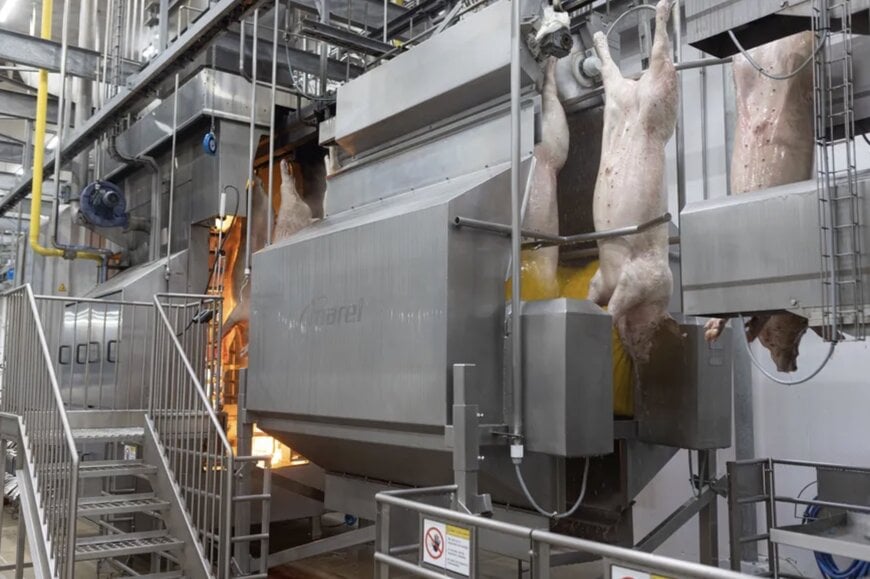
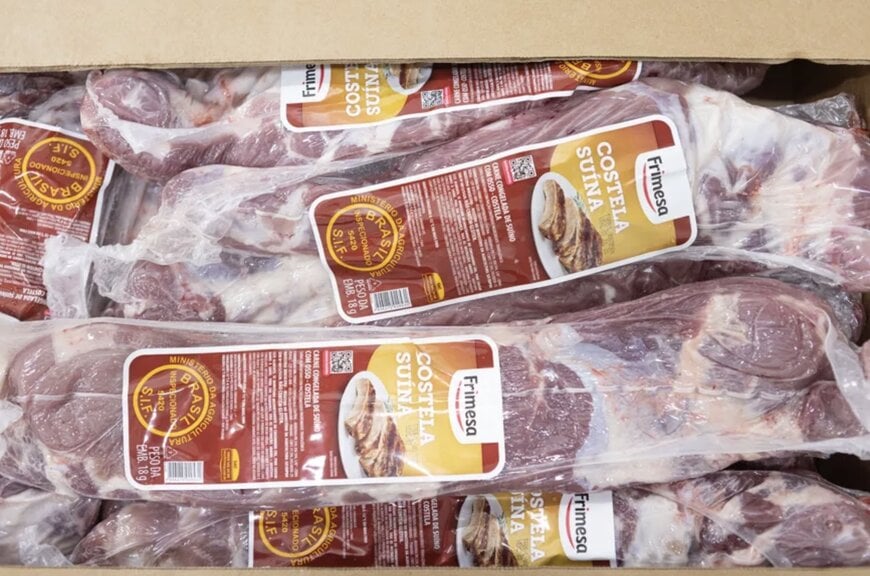
Frimesa, one of the largest pork processing companies in southern Brazil, has commissioned a new greenfield facility in Assis Chateaubriand to expand production capacity and improve operational efficiency.
The plant was designed to handle 12,000 slaughters per day in its initial phase, with plans to increase to 15,000 by 2026 and 23,000 by 2032. To achieve this scale while maintaining quality and consistency, Frimesa implemented fully automated processing lines supplied by JBT Marel.
The objective was not only to increase throughput but also to standardize cuts, improve yields and meet evolving consumer demand for portioned and customized products.
From manual processes to fully integrated automation
Prior to the expansion, scaling production posed challenges in maintaining consistency and traceability across processes. Manual operations introduced variability in cuts, yield losses and higher labor demands, particularly for repetitive and physically intensive tasks.
The new facility addresses these limitations by connecting all production stages—from slaughter to dispatch—through integrated automation and real-time software. This ensures predictable output, consistent quality and continuous process control.
Enhancing animal welfare and product quality
A key technological upgrade was the implementation of a CO₂ stunning system, replacing traditional electrical methods. This change significantly improved both animal welfare and product quality.
The system reduces physical stress during processing and minimizes defects such as PSE (pale, soft, exudative meat). It also eliminates splattering and fractures, resulting in cleaner carcasses and improved yield. Vertical bleeding further enhances product presentation and processing efficiency.
Robotic processing improves yield and hygiene
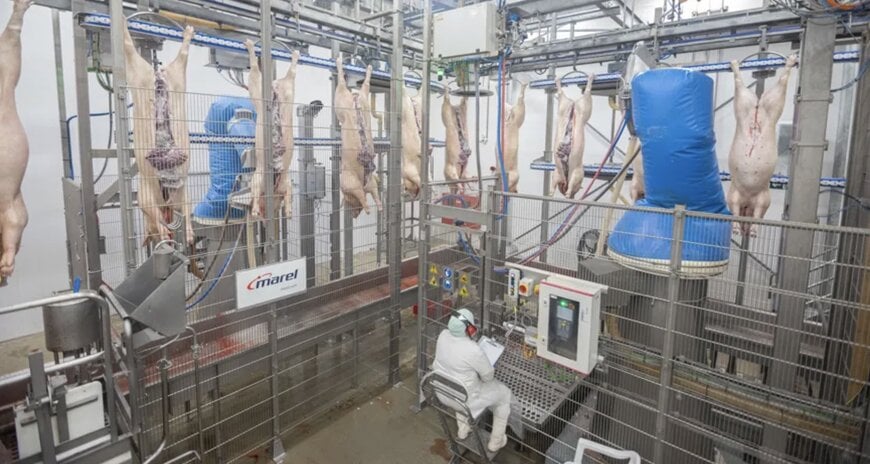
Automation is central to the slaughter line, where robotic systems perform tasks such as abdominal opening, neck cutting, carcass splitting and fat removal.
These robots deliver:
- Consistent and symmetrical cuts
- Reduced trimming and higher yield, especially in high-value sections
- Near-zero contamination levels, compared to up to 1% in manual processes
By standardizing operations, the system improves hygiene, reduces variability and increases the proportion of usable meat.
Precision cutting and improved ergonomics
The introduction of vertical cutting systems for primary processing enhances precision in sections such as belly and ribs. This reduces rework and improves downstream deboning efficiency.
At the same time, automation improves working conditions by reducing physically demanding and repetitive tasks. Employees benefit from more ergonomic workflows, faster training and improved operational stability.
Real-time data and full traceability
Production is coordinated through AXIN software, which connects all stages of the process and provides real-time visibility into performance.
The system enables:
Precision cutting and improved ergonomics
The introduction of vertical cutting systems for primary processing enhances precision in sections such as belly and ribs. This reduces rework and improves downstream deboning efficiency.
At the same time, automation improves working conditions by reducing physically demanding and repetitive tasks. Employees benefit from more ergonomic workflows, faster training and improved operational stability.
Real-time data and full traceability
Production is coordinated through AXIN software, which connects all stages of the process and provides real-time visibility into performance.
The system enables:
- Immediate detection of yield deviations
- Optimization of cutting and processing flows
- Full traceability of each batch back to its origin
This level of data integration supports compliance with international standards and improves decision-making across the plant.
Supporting long-term growth and scalability
The new facility represents the largest expansion in Frimesa’s history and establishes a scalable foundation for future growth. The company plans to further expand automation, increase software integration and introduce AI-driven capabilities in the coming years.
With automation enabling higher capacity, improved quality and reduced waste, Frimesa is positioning itself to increase exports and strengthen its presence in global markets.
Automation as a strategic enabler
The project demonstrates how integrated automation, robotics and software can transform large-scale food processing operations. By combining high-throughput systems with precise control and traceability, Frimesa has created a production environment that balances efficiency, quality and sustainability.
Edited by Romila DSilva, Induportals Editor, with AI assistance.
Supporting long-term growth and scalability
The new facility represents the largest expansion in Frimesa’s history and establishes a scalable foundation for future growth. The company plans to further expand automation, increase software integration and introduce AI-driven capabilities in the coming years.
With automation enabling higher capacity, improved quality and reduced waste, Frimesa is positioning itself to increase exports and strengthen its presence in global markets.
Automation as a strategic enabler
The project demonstrates how integrated automation, robotics and software can transform large-scale food processing operations. By combining high-throughput systems with precise control and traceability, Frimesa has created a production environment that balances efficiency, quality and sustainability.
Edited by Romila DSilva, Induportals Editor, with AI assistance.
