
www.foodpackautomation.com
28
'26
Written on Modified on
Horizontal X-Ray Inspection Technology for Dense and Tall Packaging
Minebea Intec has developed side-view inspection systems to overcome the physical limitations of top-down scanning in food and beverage production.
www.minebea-intec.com
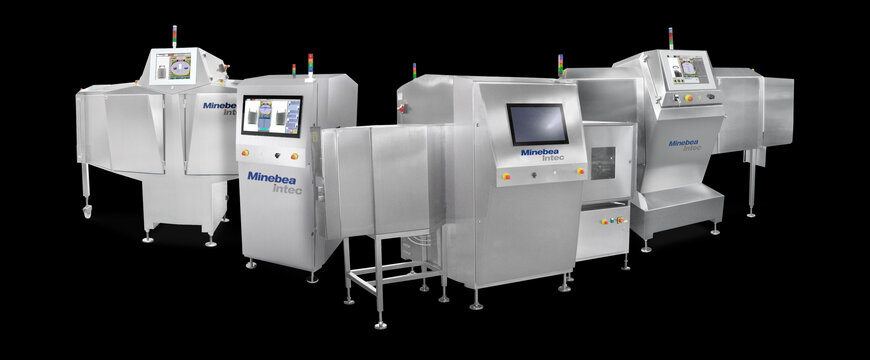
In industrial quality control, inspecting tall, densely packed, or geometrically complex containers presents significant physical challenges for conventional top-down X-ray systems. To address these limitations, manufacturers in the food and beverage sectors are deploying horizontal, or sideshooter, X-ray inspection technology to verify fill levels, packaging integrity, and product completeness directly within the production line.
The Physical Limitations of Vertical Inspection
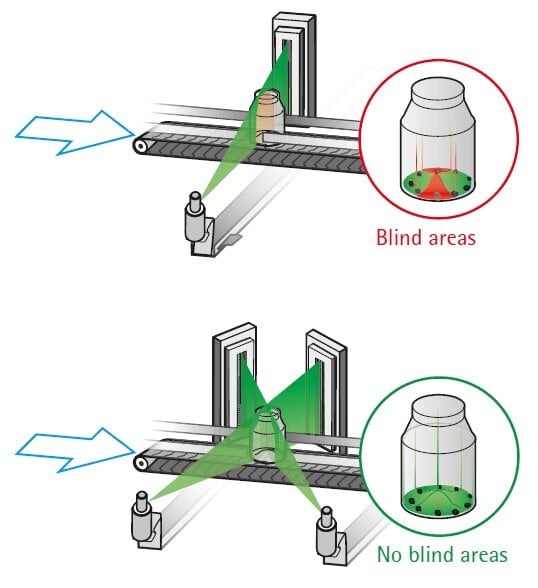
Traditional top-shooter X-ray systems are the established standard for inspecting flat, homogeneous products by projecting X-rays vertically. However, when inspecting tall containers, the vertical penetration path extends significantly. Product overlaps, multi-layered packaging materials, and dense contents result in contrast loss and the formation of blind spots, particularly in the base and sidewall areas of the packaging. This geometric constraint complicates the reliable detection of foreign bodies such as glass, metal, stone, or dense plastics during high-speed operations.
Principles of Horizontal X-Ray Inspection
Sideshooter X-ray systems resolve the limitations of vertical scanning by altering the inspection geometry. Instead of a top-down projection, the inspection beam travels horizontally across the product. This approach reduces the effective material thickness that the X-ray beam must penetrate, mitigating the effects of overlapping contents and improving image contrast. The horizontal configuration provides an unobstructed view of critical areas, ensuring that the resulting X-ray images are stable and analyzable, even when processing dense or composite packaging materials.
Real-Time Detection and System Architecture
Minebea Intec has engineered a portfolio of sideshooter X-ray inspection systems designed for specific industrial parameters. During operation, these systems continuously scan passing products while detectors and integrated image processing software analyze the density variations in real time. Depending on the application requirements, operations utilize single-beam configurations for standard packaging or multi-view and double-beam architectures to further reduce blind spots and increase detection reliability at continuous high line speeds.
Application-Specific Configurations
The equipment portfolio addresses varying throughput rates and material densities across the packaging sector. Compact systems, such as the Dylight S, are engineered for lighter packaging including pouches, flow packs, and small folding cartons, allowing direct integration into existing production layouts. For liquid products and deeper containers—such as bottles, jars, cans, and multipacks—advanced units like the Dymond S and Dymond DSV execute in-line quality checks for fill level and completeness alongside foreign body detection. For highly dynamic operations involving glass-in-glass detection or metal packaging, high-capacity systems like the Dymond D accommodate the required density parameters. All configurations adhere to current hygienic design guidelines and utilize digital interfaces to support process transparency and traceability.
Additional Context: This section details technical specifications and competitive benchmarking not included in the original product announcement.
In the broader landscape of industrial non-destructive testing, horizontal sideshooter X-ray systems are structurally benchmarked against high-power top-down systems or dual-energy X-ray absorptiometry (DEXA) units. While dual-energy configurations excel at material discrimination, sideshooter architectures specifically address the physical challenge of material depth in the beam path. For tall containers such as glass bottles or metal cans, standard vertical scanning requires higher kilovoltage (kV) generators to penetrate the vertical axis, which correspondingly increases energy consumption and radiation shielding requirements. By scanning horizontally, sideshooter equipment can operate using lower-power generators while achieving higher spatial resolution in the critical base curvature of the container. This geometric advantage measurably reduces false reject rates (FRR) in automated bottling and canning lines while maintaining consistent inspection stability.
Edited by an industrial journalist, Lekshman Ramdas, with AI assistance.
www.minebea-intec.com
