
www.foodpackautomation.com
23
'26
Written on Modified on
Industrial Scale Dry Molded Fiber Production Upgrades Sustainable Packaging
Hébert Group and ANDRITZ collaborated to optimize mill-to-web forming technology, enabling high-throughput manufacturing of certified plastic-free cellulose packaging solutions.
www.andritz.com
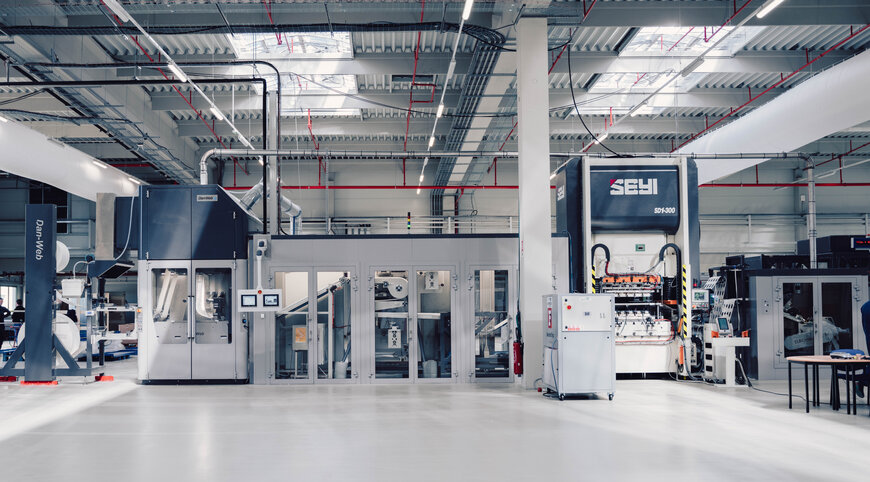
Hébert Group teamed with ANDRITZ to scale up and stabilize Dry Molded Fiber production at an industrial facility in Orgelet, France. The technical partnership utilizes airlaid forming and nonwoven converting technology to deploy energy-efficient, plastic-free packaging alternatives for the European consumer goods market.
Technical Integration and Operational Challenges
Transitioning from traditional single-use polymers to natural cellulose fibers required overcoming significant process consistency and contamination risks. To mitigate cross-contamination with fossil-fuel-based polymers, Hébert Group constructed a separate, dedicated facility under its Herpulp business unit.
The primary operational challenge centered on stabilizing product parameters and ensuring line repeatability across multiple first-generation forming lines. Cooperation between the machinery developer and the packaging manufacturer was necessary to bridge specialized mill-to-web forming knowledge with high-volume industrial molding operations.
Airlaid Process and Production Stabilization
The engineering solution integrates ANDRITZ Dan-Web mill-to-web web forming technology with industrial thermo-forming systems. The unified mechanical sequence operates without water, processing raw natural cellulose fibers into dense, high-stiffness packaging components.
To optimize the digital infrastructure of the production lines, ANDRITZ deployed an expert technical team to execute parameter optimization, mechanical upgrades, and system validation. This process stabilization led toward a Site Acceptance Test to certify reliable continuous operation and precise component finishing.
Industrial Applications and Resource Efficiency
The deployment targets high-volume consumer sectors, specifically producing trays and lids for food, dairy, and cosmetics applications. By utilizing airlaid web forming rather than conventional wet molding techniques, the manufacturing process achieves significant water and energy reduction.
The resulting packaging outputs provide premium surface aesthetics and structural integrity suitable for automated filling lines. This targeted technological shift expands the company's manufacturing capabilities to fulfill shifting brand expectations and strict sustainable development requirements.
Validation and Value Chain Impact
The combined implementation successfully transitioned the raw fiber lines from commissioning phases to stable, continuous manufacturing. Process upgrades and mold co-development directly lower overall market entry costs while securing continuous line performance.
By validating the technology under an active industrial environment, the partners established a scalable blueprint for the wider dry molded fiber ecosystem, allowing brand owners to fulfill regulatory mandates regarding single-use plastics without sacrificing mechanical packaging speed.
Edited by Sucithra Mani, Induportals editor – adapted by AI.
www.andritz.com
