
www.foodpackautomation.com
21
'26
Written on Modified on
Real-Time Quality Control Software Integration for Food Processing Plants
JBT Marel introduces AXIN Quality Control to centralize inspection data and streamline compliance in food production environments.
marel.com
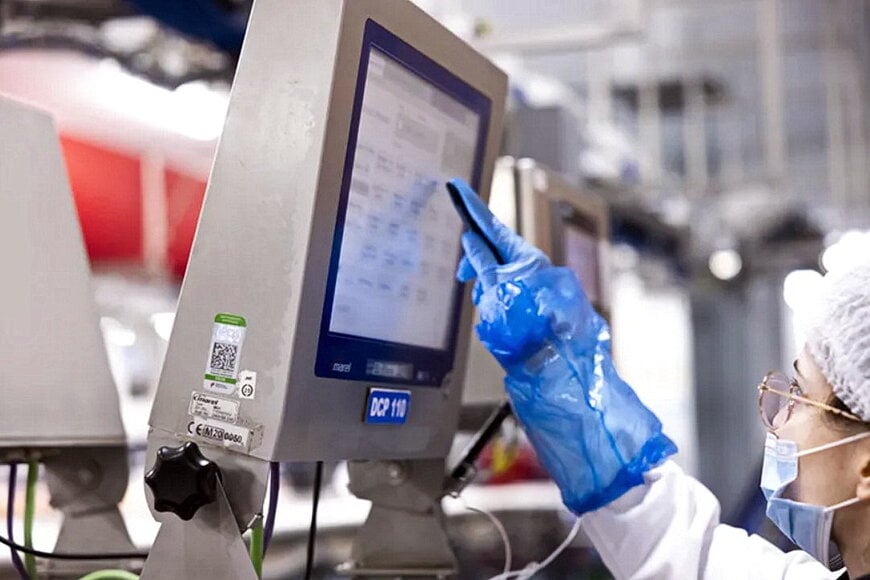
AXIN Quality Control establishes a unified digital framework for food processing facilities, replacing paper-based inspection logs with real-time data capture across the production line. The software integrates directly with existing plant machinery, thermal sensors, weighing scales, and optical inspection equipment to automate quality assurance in meat, poultry, seafood, dairy, and pet food manufacturing.
Technical Context and Regulatory Compliance Frameworks
Food safety management relies on continuous monitoring across multiple operational zones, including receiving, primary processing, secondary fabrication, thermal processing, chilling, and packaging. Traditional paper-based quality assurance methods create time lags between inspection events and management awareness, increasing the risk of non-compliant product dispersion.
AXIN Quality Control addresses these delays by linking every inspection log directly to raw material lots, livestock batches, and finished product inventory. The system natively supports parameters required by international food safety and quality management standards, including:
- Hazard Analysis and Critical Control Points (HACCP)
- ISO 22000
- BRC Global Standards for Food Safety
- International Featured Standards (IFS) Food
- Global Food Safety Initiative (GFSI) benchmarks
By recording measurements digitally at the point of inspection via handheld mobile devices, the platform removes manual transcription tasks and centralizes siloed records into a single dashboard.
Architectural Data Flow and Existing Hardware Utilization
The platform functions without requiring supplementary hardware installations. It connects natively to operational JBT Marel equipment, including thermal probes, automated vision systems, inline scales, and programmable logic controller (PLC) machine interfaces.
When a technician conducts core temperature verifications, pathogen intervention checks, or raw material defect scoring, the data points enter the central database instantly. Graphical interfaces display real-time statuses across all plant sectors, allowing quality managers to identify process deviations, evaluate vendor compliance through raw material scoring, and halt non-conforming lots before final dispatch.
End-to-End Traceability and Long-Term Trend Analytics
Auditing procedures require clear documentation linking incoming raw material suppliers to final customer shipments. AXIN Quality Control maps each completed quality checklist to specific batch numbers, carcass IDs, flock indicators, processing parameters, and dispatch pallets. This structural linkage enables complete backward and forward traceability within minutes during regulatory reviews or recall exercises.
Beyond real-time monitoring, the software stores historical inspection metrics for trend evaluation. Quality teams can generate custom analytical reports using histogram distributions, cross-tabulated charts, and trend graphs to:
Architectural Data Flow and Existing Hardware Utilization
The platform functions without requiring supplementary hardware installations. It connects natively to operational JBT Marel equipment, including thermal probes, automated vision systems, inline scales, and programmable logic controller (PLC) machine interfaces.
When a technician conducts core temperature verifications, pathogen intervention checks, or raw material defect scoring, the data points enter the central database instantly. Graphical interfaces display real-time statuses across all plant sectors, allowing quality managers to identify process deviations, evaluate vendor compliance through raw material scoring, and halt non-conforming lots before final dispatch.
End-to-End Traceability and Long-Term Trend Analytics
Auditing procedures require clear documentation linking incoming raw material suppliers to final customer shipments. AXIN Quality Control maps each completed quality checklist to specific batch numbers, carcass IDs, flock indicators, processing parameters, and dispatch pallets. This structural linkage enables complete backward and forward traceability within minutes during regulatory reviews or recall exercises.
Beyond real-time monitoring, the software stores historical inspection metrics for trend evaluation. Quality teams can generate custom analytical reports using histogram distributions, cross-tabulated charts, and trend graphs to:
- Track recurring equipment or process deviations before critical thresholds are breached.
- Benchmark supplier consistency over prolonged delivery periods.
- Provide verified audit trails for third-party compliance reviews.
By consolidating hardware data, manual shop-floor entries, and regulatory compliance logs into a single platform, AXIN Quality Control reduces error rates and optimizes quality management workflows across food processing plants.
Additional Context
This section details technical specifications and competitive benchmarking not included in the original product announcement.
Within the food processing software market, quality management systems (QMS) generally fall into two categories: general manufacturing enterprise quality management systems (EQMS) adapted for food, and purpose-built food safety and quality assurance (FSQA) platforms such as AXIN Quality Control.
Specialized FSQA platforms provide real-time sensor and PLC edge integration to achieve minimal data capture latency, whereas general manufacturing EQMS solutions typically rely on batch processing or manual synchronization. In terms of traceability granularity, purpose-built platforms execute mapping down to the specific lot, batch, carcass, and pallet level, compared to the broader work-order or SKU-level mapping found in standard systems.
Compliance frameworks in specialized food software include pre-configured presets for HACCP, GFSI, IFS, and BRC standards, while generic EQMS platforms generally offer standard ISO 9001 frameworks or configurable templates that require manual setup. Furthermore, direct hardware integration in purpose-built FSQA platforms utilizes native connectivity for food processing machinery and industrial scales, avoiding the need for the custom APIs or middleware required by general manufacturing software to interface with plant equipment.
Edited by Evgeny Churilov, Induportals Media - Adapted by AI.
www.jbtmarel.com
Additional Context
This section details technical specifications and competitive benchmarking not included in the original product announcement.
Within the food processing software market, quality management systems (QMS) generally fall into two categories: general manufacturing enterprise quality management systems (EQMS) adapted for food, and purpose-built food safety and quality assurance (FSQA) platforms such as AXIN Quality Control.
Specialized FSQA platforms provide real-time sensor and PLC edge integration to achieve minimal data capture latency, whereas general manufacturing EQMS solutions typically rely on batch processing or manual synchronization. In terms of traceability granularity, purpose-built platforms execute mapping down to the specific lot, batch, carcass, and pallet level, compared to the broader work-order or SKU-level mapping found in standard systems.
Compliance frameworks in specialized food software include pre-configured presets for HACCP, GFSI, IFS, and BRC standards, while generic EQMS platforms generally offer standard ISO 9001 frameworks or configurable templates that require manual setup. Furthermore, direct hardware integration in purpose-built FSQA platforms utilizes native connectivity for food processing machinery and industrial scales, avoiding the need for the custom APIs or middleware required by general manufacturing software to interface with plant equipment.
Edited by Evgeny Churilov, Induportals Media - Adapted by AI.
www.jbtmarel.com
