
www.foodpackautomation.com
07
'26
Written on Modified on
Hygienic time-of-flight laser sensor for critical industrial environments
Wenglor expands its portfolio with the P2PY111 sensor to prevent contamination in food and pharmaceutical manufacturing.
www.wenglor.com
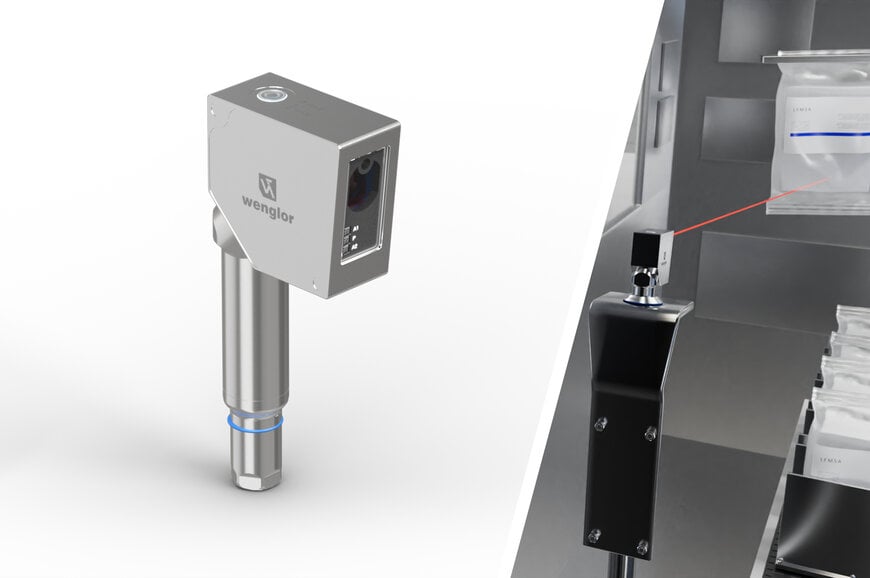
In the food, beverage, and pharmaceutical industries, components positioned directly over open products present a severe contamination risk if their housings harbor bacteria. To address this technical challenge, the wenglor sensoric group has expanded its portfolio with the P2PY111, a laser distance time-of-flight sensor engineered specifically for hygienically sensitive areas. By eliminating structural gaps where dirt typically accumulates, this device delivers reliable measurement and detection capabilities without compromising the strict sanitation protocols required in heavy washdown environments.
Optical performance and material detection
Industrial automation environments frequently present challenging optical conditions, such as reflective stainless steel surfaces, transparent packaging, or objects positioned at extreme angles. The sensor integrates interference-free technology with high reception sensitivity to accurately detect dark, shiny, or transparent materials, including pharmaceutical bags, from operating distances ranging between 50 and 10,000 millimeters. Its high ambient light immunity, tolerating up to 100,000 lux, ensures consistent performance even in intensely illuminated production facilities or areas exposed to natural light.
Hygienic structural design and integration
Conventional sensors often fail due to chemical degradation or moisture ingress during high-pressure cleaning cycles. This device utilizes a gapless seal-to-counter design within a rugged stainless steel housing, systematically avoiding potential dirt nests. Every mechanical detail is optimized for hygiene, including an immovable polymethyl methacrylate (PMMA) optical lens, a cleaning-agent-resistant thermoplastic elastomer (TPE) cable, and an FDA-compliant silicone teach-in key. Featuring IP69K protection, ECOLAB certification, and the IO-Link V1.1 communication protocol, the sensor withstands extreme temperatures from -40 °C to +55 °C and includes angle-compensated mounting brackets for completely aseptic installation.
Additional Context: Time-of-flight technology in aseptic environments
In aseptic manufacturing, maintaining a sterile envelope is critical for consumer safety. Traditional photoelectric sensors often feature microscopic crevices around lenses, buttons, and cable entries that act as reservoirs for microbial growth. High-pressure and high-temperature washdown cycles can degrade standard seals, leading to condensation inside the optics and premature electronic failure. Implementing a truly hermetic architecture protects internal components against harsh chemical ingress. Furthermore, time-of-flight technology measures distance based on the time it takes a light pulse to return, making it independent of an object's color or surface finish. This characteristic is crucial in pharmaceutical and food processing, where packaging materials change frequently and machinery must reliably detect everything from transparent IV bags to metallic wrappers without requiring recalibration downtime.
Edited by Lekshman Ramdas, InduPortals editor – adapted by AI.
www.wenglor.com
