
www.foodpackautomation.com
12
'26
Written on Modified on
Industrial Washdown Motors Moisture Ingress Protection & Power Expansion
ABB expands the Baldor-Reliance White Washdown motor portfolio to 150 horsepower with NEMA Premium efficiency for food processing sanitation.
global.abb
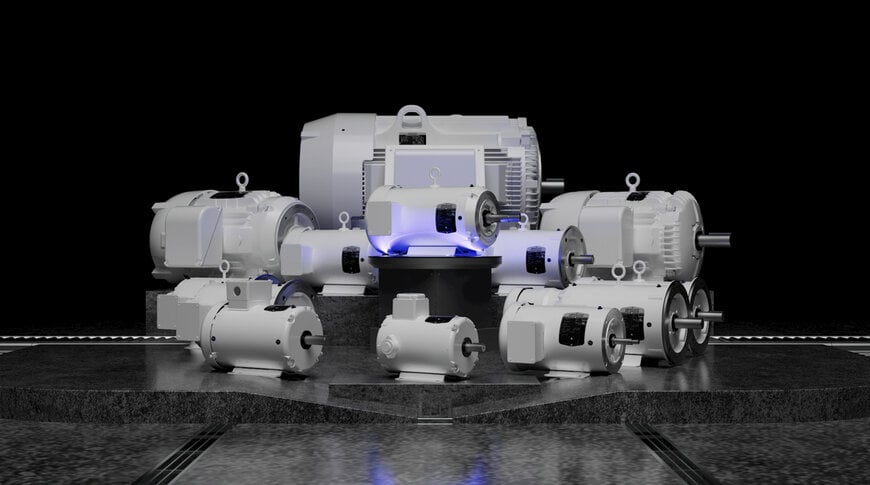
Repeated caustic chemical sanitation, high-pressure fluid impingement, and severe thermal cycling create aggressive operational stresses for electromechanical drives across the food and beverage industry. To mitigate water ingress and mechanical degradation in intensive processing environments, ABB has expanded its Baldor-Reliance White Washdown electric motor portfolio up to 150 horsepower with NEMA Premium efficiency ratings, marking forty years of continuous platform engineering.
Failure Mechanisms in Food and Beverage Processing Drive Systems
Processing facilities operate under strict hygienic protocols requiring frequent chemical sanitization to eliminate biological contaminants such as Listeria, Salmonella, and Escherichia coli. Standard industrial induction motors deployed in these zones face premature failure driven by three primary degradation pathways: surface corrosion from aggressive alkaline and acidic detergents, internal stator winding dielectric breakdown caused by moisture ingress, and bearing failure resulting from emulsification of lubricating grease.
Thermal shock compounds these degradation modes. During washdown cycles, hot sanitizing spray rapidly cools an operating motor housing, creating an internal partial vacuum. This pressure differential pulls moisture through conventional gasket interfaces, shaft journals, and conduit joints. Once moisture enters the motor frame, condensation settles onto the stator windings, causing phase-to-phase shorts, while water in the bearing cavities dilutes the lubricating film, causing boundary friction and premature mechanical seizure.
Multi-Barrier Ingress Protection and Mechanical Sealing Architecture
The expanded White Washdown line prevents fluid intrusion through multiple physical barrier stages across external surfaces and dynamic interfaces. Motor housings feature an electrostatically applied, two-part white epoxy finish engineered with five times the chip resistance of conventional industrial alkyd paint systems, preventing paint flakes from dislodging into processing streams. Underneath the housing, all internal rotor laminations are coated with an epoxy primer to stop oxidation if moisture migrates through condensation cycles.
Dynamic sealing around the drive end and opposite drive end shafts combines a contact lip seal with an elastomeric V-ring slinger. The slinger rotates with the shaft to mechanically deflect fluid jets away from the sealing interface, while the spring-loaded lip seal maintains contact against radial shaft deflection. Deep-groove ball bearings feature double-contact elastomer seals that retain synthetic grease and block water migration under operational pressure.
Static joint sealing replaces conventional fibrous paper and cork gaskets with closed-cell neoprene rubber profiles engineered for consistent compression sets at the terminal box cover and frame-to-endplate junctions. All exposed hardware, motor shafts, and fasteners are machined from 300-series austenitic stainless steel to resist oxidation from chlorine and peracetic acid sanitation regimes. Removable condensation drain plugs positioned at the lowest physical points of the frame allow maintenance personnel to purge internal moisture during preventative maintenance intervals.
Hygienic Motor Topologies Across Food Contact and Splash Zones
Sanitary zoning guidelines define distinct mechanical requirements across food processing facilities, driving specific motor housing topologies:
- Splash and Non-Contact Zones: Operations requiring frequent moisture resistance without direct food contact deploy White Washdown models or paint-free variants. Paint-free configurations combine a 300-series stainless steel stator housing with ball-burnished cast aluminum end shields and non-contact rotating labyrinth seals, eliminating organic coating breakdown while isolating rotating shafts. For demanding heavy-industry tasks, cast iron washdown housings deliver high mechanical impact resistance against physical shock.
- Direct Food Contact and Intensive Washdown Zones: In environments exposed to direct food contact, open product streams, and daily high-temperature cleaning, ABB provides the Baldor-Reliance Food Safe series. These motors feature a fully 300-series stainless steel exterior with smooth cylindrical profiles, elimination of cooling fins that harbor bacterial colonies, fully encapsulated stator windings in solid potting compound, and laser-etched nameplates to eliminate crevices where biological matter can gather. Inverter-driven variants incorporate factory-installed internal shaft grounding rings to discharge parasitic capacitive shaft currents and prevent electrical bearing fluting.
Variable-Speed Compatibility and Synchronous Efficiency Gains
Modern processing machinery demands automated speed adjustment to balance throughput across positive-displacement pumps, mixers, cut saws, evisceration machinery, and feather pickers. The washdown portfolio incorporates inverter-duty and vector-duty winding insulation compliant with NEMA MG1 Part 31 standards, utilizing high-grade magnet wire and moisture-resistant phase separators to withstand rapid voltage rise times (dV/dt) from pulse-width modulated variable frequency drives (VFDs).
To address industrial energy reduction mandates, higher-specification product tiers integrate permanent magnet synchronous motor (PMSM) architectures. The Food Safe SP5+ configuration couples permanent magnet rotor technology with sealed IP69 enclosures to achieve efficiency ratings exceeding the international IE5 Ultra-Premium baseline, reducing operating temperatures, extending bearing lubrication intervals, and lowering electrical power consumption across continuous conveyor and pump lines.
Four Decades of Washdown Platform Engineering Evolution
1986: White Washdown Motor: Introduction of stainless steel fasteners, two-part epoxy exterior coatings, and double-sealed bearing designs for food processing lines.
1995: Paint-Free Motor: Introduction of unpainted stainless steel frames, ball-burnished aluminum end shields, and dynamic labyrinth seals to eliminate coating flaking.
2017: Food Safe Stainless Steel Motor: Fully austenitic stainless steel construction with smooth outer profiles, encapsulated stator windings, IP69 ingress ratings, and laser-etched rating plates.
2020: Cast Iron Washdown Motor: High structural rigidity cast iron construction paired with epoxy coatings and stainless steel hardware for heavy mechanical loads.
2022: Shaft-Grounded Food Safe Motor: Integration of internal shaft grounding rings to mitigate variable frequency drive electrical bearing currents.
2024: Food Safe 3-Lead Motor: Streamlined wiring configuration designed to accelerate electrical installation, reduce field errors, and reinforce terminal box sealing.
2025: Food Safe SP5+ Motor: Integration of permanent magnet synchronous rotor engineering, exceeding IE5 efficiency standards in an IP69 sanitary housing.
2025: Food Safe Feather Picker Motor: Enhanced mounting geometry to optimize mechanical installation clearances within poultry processing evisceration machinery.
2026: White Washdown Motor (100 to 150 Hp): Extension of the core platform into higher horsepower ratings with NEMA Premium efficiency ratings for heavy-duty pumping and grinding.
Additional Context:
This section details technical specifications and competitive benchmarking not included in the original product announcement.
The expanded 100 to 150 horsepower Baldor-Reliance White Washdown motors adhere to NEMA Premium efficiency standards defined under NEMA MG1 Table 12-12, corresponding to international IE3 efficiency classifications in accordance with IEC 60034-30-1. Under these standards, a 150 hp four-pole induction motor must deliver continuous full-load electrical conversion efficiency of at least 95.8%.
Across the food and beverage equipment sector, drive solutions are benchmarked against specific IP (Ingress Protection) codes defined by IEC 60529 and DIN 40050-9/ISO 20653. Standard White Washdown models achieve IP55 to IP56 protection ratings, engineered for moderate hose-down cleaning with operating spray pressures up to 100 kPa. For high-hygiene food contact zones, the Food Safe series meets IP69 standards, which mandate survival under continuous high-pressure stream impingement at pressures between 8,000 and 10,000 kPa, fluid flow rates of 14 to 16 liters per minute, and wash temperatures up to 80 degrees Celsius.
In competitive benchmark environments, alternatives in the sanitary motor sector include the WEG W22 Stainless Steel washdown line and the Nidec Leroy-Somer hygienic series. Standard induction washdown drives generally operate within Class F insulation temperature thresholds (155 degrees Celsius) with Class B temperature rises (80 degrees Celsius), providing thermal margin when variable speed drives cause reduced fan cooling at low operational speeds.
For high-torque, variable-speed applications, synchronous PMSM designs such as the Food Safe SP5+ achieve IE5 efficiency levels, reducing total motor electrical losses by roughly 20% compared to equivalent NEMA Premium (IE3) induction units. This performance reduces operational heat generation, preventing localized heating of products on sensitive packaging and sorting conveyors.
Edited by Natania Lyngdoh, Induportals editor, with AI assistance.
www.abb.com
Modern processing machinery demands automated speed adjustment to balance throughput across positive-displacement pumps, mixers, cut saws, evisceration machinery, and feather pickers. The washdown portfolio incorporates inverter-duty and vector-duty winding insulation compliant with NEMA MG1 Part 31 standards, utilizing high-grade magnet wire and moisture-resistant phase separators to withstand rapid voltage rise times (dV/dt) from pulse-width modulated variable frequency drives (VFDs).
To address industrial energy reduction mandates, higher-specification product tiers integrate permanent magnet synchronous motor (PMSM) architectures. The Food Safe SP5+ configuration couples permanent magnet rotor technology with sealed IP69 enclosures to achieve efficiency ratings exceeding the international IE5 Ultra-Premium baseline, reducing operating temperatures, extending bearing lubrication intervals, and lowering electrical power consumption across continuous conveyor and pump lines.
Four Decades of Washdown Platform Engineering Evolution
1986: White Washdown Motor: Introduction of stainless steel fasteners, two-part epoxy exterior coatings, and double-sealed bearing designs for food processing lines.
1995: Paint-Free Motor: Introduction of unpainted stainless steel frames, ball-burnished aluminum end shields, and dynamic labyrinth seals to eliminate coating flaking.
2017: Food Safe Stainless Steel Motor: Fully austenitic stainless steel construction with smooth outer profiles, encapsulated stator windings, IP69 ingress ratings, and laser-etched rating plates.
2020: Cast Iron Washdown Motor: High structural rigidity cast iron construction paired with epoxy coatings and stainless steel hardware for heavy mechanical loads.
2022: Shaft-Grounded Food Safe Motor: Integration of internal shaft grounding rings to mitigate variable frequency drive electrical bearing currents.
2024: Food Safe 3-Lead Motor: Streamlined wiring configuration designed to accelerate electrical installation, reduce field errors, and reinforce terminal box sealing.
2025: Food Safe SP5+ Motor: Integration of permanent magnet synchronous rotor engineering, exceeding IE5 efficiency standards in an IP69 sanitary housing.
2025: Food Safe Feather Picker Motor: Enhanced mounting geometry to optimize mechanical installation clearances within poultry processing evisceration machinery.
2026: White Washdown Motor (100 to 150 Hp): Extension of the core platform into higher horsepower ratings with NEMA Premium efficiency ratings for heavy-duty pumping and grinding.
Additional Context:
This section details technical specifications and competitive benchmarking not included in the original product announcement.
The expanded 100 to 150 horsepower Baldor-Reliance White Washdown motors adhere to NEMA Premium efficiency standards defined under NEMA MG1 Table 12-12, corresponding to international IE3 efficiency classifications in accordance with IEC 60034-30-1. Under these standards, a 150 hp four-pole induction motor must deliver continuous full-load electrical conversion efficiency of at least 95.8%.
Across the food and beverage equipment sector, drive solutions are benchmarked against specific IP (Ingress Protection) codes defined by IEC 60529 and DIN 40050-9/ISO 20653. Standard White Washdown models achieve IP55 to IP56 protection ratings, engineered for moderate hose-down cleaning with operating spray pressures up to 100 kPa. For high-hygiene food contact zones, the Food Safe series meets IP69 standards, which mandate survival under continuous high-pressure stream impingement at pressures between 8,000 and 10,000 kPa, fluid flow rates of 14 to 16 liters per minute, and wash temperatures up to 80 degrees Celsius.
In competitive benchmark environments, alternatives in the sanitary motor sector include the WEG W22 Stainless Steel washdown line and the Nidec Leroy-Somer hygienic series. Standard induction washdown drives generally operate within Class F insulation temperature thresholds (155 degrees Celsius) with Class B temperature rises (80 degrees Celsius), providing thermal margin when variable speed drives cause reduced fan cooling at low operational speeds.
For high-torque, variable-speed applications, synchronous PMSM designs such as the Food Safe SP5+ achieve IE5 efficiency levels, reducing total motor electrical losses by roughly 20% compared to equivalent NEMA Premium (IE3) induction units. This performance reduces operational heat generation, preventing localized heating of products on sensitive packaging and sorting conveyors.
Edited by Natania Lyngdoh, Induportals editor, with AI assistance.
www.abb.com
