
www.foodpackautomation.com
02
'26
Written on Modified on
GEA at the IDF World Dairy Summit 2026
In Auckland, GEA experts will discuss technologies for resource-efficient milking, inline quality monitoring, hygienic product distribution, energy-efficient spray drying and aseptic transport.
www.gea.com
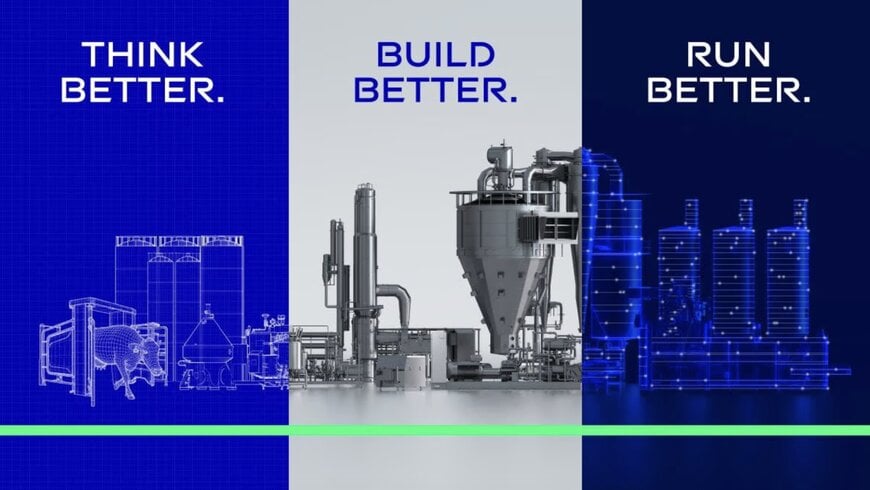
The IDF World Dairy Summit 2026 takes place from November 15 to 20, 2026, at the New Zealand International Convention Centre in Auckland, convening dairy producers, processors, and equipment suppliers. At Booth 11–12, GEA demonstrates cross-process engineering architectures spanning automated milking, inline homogenization analytics, spray drying heat recovery, and bulk aseptic transport for commercial dairy operations.
Core Technology and System Architecture
The engineering approach coordinates thermal and mechanical unit operations under unified supervisory control rather than discrete machine loops. The OptiPartner digital platform dynamically adjusts operational setpoints across spray dryers, chillers, and heat pumps in response to incoming raw milk compositional variance and ambient environmental shifts. In drying circuits, the AddCool system integrates a high-temperature heat pump directly into the spray dryer, capturing low-grade process waste heat and delivering it back to the primary drying air at temperatures up to 130 °C while generating chilled water for upstream cooling. Product delivery is stabilized by the CONTA dual block valve, which eliminates 96 percent of stagnant flow areas upstream of atomizer nozzles, while the SANICIP II cyclonic dedusting system stabilizes pressure drops across exhaust filter stages.
Deployment or Implementation
Thermal and mechanical modules deploy as retrofits or turn-key process installations across dairy processing plants. At Arla Foods in Svenstrup, Denmark, the AddCool heat pump configuration interfaces directly with existing natural gas drying burners. For ingredient distribution, the Mobile Aseptic Solution, developed in collaboration with Oriental Tanks, integrates specialized filling stations with 20,000-liter ISO container tanks using sterile gas overpressure, successfully tested during cross-border liquid milk transport between Japan and Singapore. Inline quality control is executed by NiSoMate ultrasound sensors retrofitted to homogenizer blocks, measuring liquid density, consistency, and dilution in real time without fluid contact.
Industry Applications
The technologies target whole milk powder exporters, specialty nutritional ingredient fabricators, and infant formula manufacturers. Milk powder processing relies on energy-intensive evaporation and spray drying cycles, where product transitions, cleaning-in-place sequences, and unrecovered exhaust heat elevate production costs. Establishing continuous thermal recovery and non-invasive fluid analysis stabilizes product density across high-throughput production lines while maintaining microbiological safety.
Operational Impact and Performance Metrics
Integrating industrial heat pumps into primary drying air cycles reduces natural gas consumption by 59 percent at commercial scale, eliminating approximately 1,500 metric tons of carbon dioxide emissions annually per production site. Redesigned dedusting aerodynamics in exhaust air filtration reduce electrical energy consumption by up to 57 percent and extend filter bag operating life by 50 percent through stable differential pressure control. Non-invasive ultrasound monitoring at homogenizers eliminates mechanical over-pressurization, protecting product consistency while curtailing electrical loads across continuous fluid processing stages.
Edited by Romila DSilva, Induportals Editor, with AI assistance.
www.gea.com
