
www.foodpackautomation.com
08
'26
Written on Modified on
Alfa Laval boosts brewery efficiency with water-saving centrifuge
Centrifugal separation and water optimization technology improve beer yield, reduce losses, and cut water consumption in large-scale brewing operations.
www.alfalaval.com
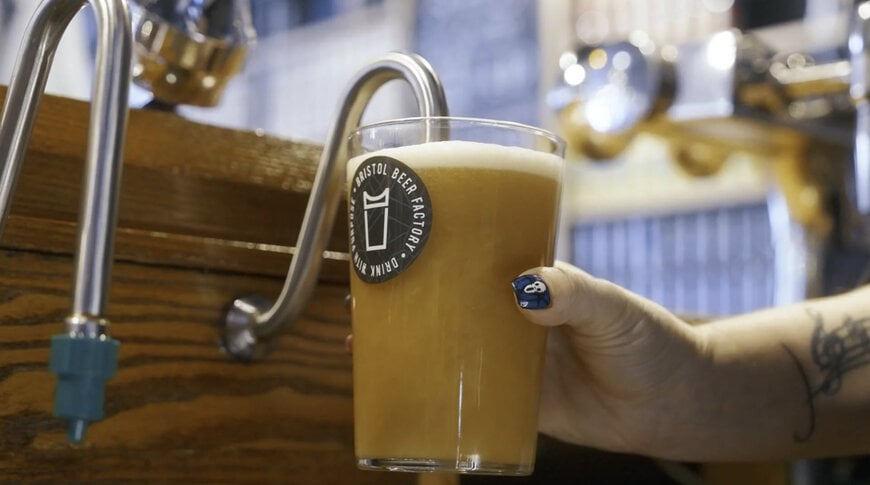
Brewing and beverage production require precise control of separation processes to ensure product quality, yield, and resource efficiency. In this context, Alfa Laval has implemented a centrifugal separation solution combined with water optimization technology at Bristol Beer Factory to address yield losses and resource consumption in large-scale beer production.
As production volumes increased, the brewery faced challenges typical of scaling operations: reduced yield, inconsistent clarity, and rising water usage. Product losses during clarification and separation stages were impacting both efficiency and profitability, particularly in batches with yields as low as 70%.
Centrifugal separation improves yield and product quality
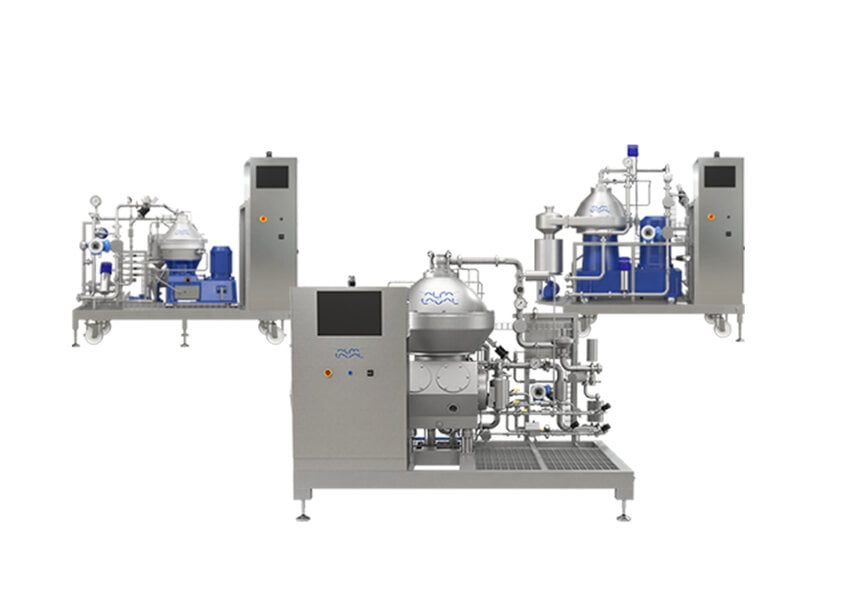
To address these issues, the brewery integrated the Brew 250 centrifuge into multiple stages of the brewing process, including pre-clarification, green beer separation, hot wort separation, and beer recovery. Centrifugal separation enables continuous removal of solids while minimizing oxygen uptake, which is critical for preserving flavor stability and extending shelf life.
This approach improves haze stability and supports consistent product clarity, including for vegan-friendly beer production where alternative clarification methods are required. By recovering more usable product during separation, the system directly increases yield and reduces waste.
Water optimization reduces consumption by up to 70%
Alongside the centrifuge, the Optiwia™ system was implemented to optimize water usage. This upgrade reduces water consumption in centrifuge operation by up to 70%, addressing a key sustainability and cost factor in brewing.
The system compensates for fluctuations in site water pressure, ensuring stable centrifuge performance and protecting uptime. Its design eliminates the need for a dedicated cooling loop, simplifying installation and reducing infrastructure requirements. Recovered water can be reintegrated into the process, improving overall resource efficiency.
Operational efficiency and return on investment
The combined system has led to measurable improvements in production performance. Reduced processing times and increased throughput have enabled higher production capacity, while improved separation efficiency has minimized product losses.
From an economic perspective, the solution achieved a return on investment within one year. The centrifuge alone contributed to a reported 25% increase in production capacity, demonstrating the impact of optimized separation on brewery scalability.
Positioning within brewery separation technologies
Centrifugal separation systems are widely used in industrial brewing, with comparable solutions offered by manufacturers such as GEA Group and Flottweg. These systems similarly focus on improving clarification efficiency and product recovery.
The implementation described here highlights the added value of integrating water optimization directly into the centrifuge system. By combining separation performance with reduced resource consumption, the solution addresses both operational efficiency and sustainability requirements.
Applications in modern brewing operations
Such systems are particularly suited to medium- and large-scale breweries seeking to scale production while maintaining product consistency. Applications include clarification of wort and beer, recovery of residual product, and processing in environments where water efficiency is a priority.
By combining centrifugal separation with water-saving technology, the deployment demonstrates how breweries can reduce losses, improve quality, and lower resource consumption in parallel—key considerations in modern beverage production.
Edited by Natania Lyngdoh, Induportals Editor — Adapted by AI.
www.alfalaval.com
