
AI-driven poultry processing improves yield control
Ishida Europe presents inspection, grading, and monitoring technologies at VIV Europe 2026 to enhance quality control and operational efficiency in poultry processing.
www.ishida.com
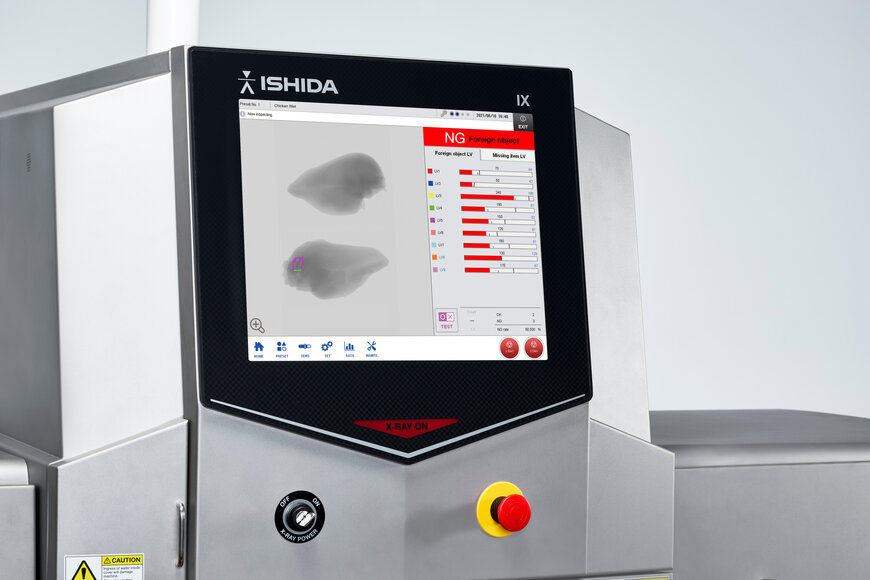
Automation, food inspection systems, and digital monitoring platforms are increasingly integrated in poultry processing to address labour shortages, quality requirements, and cost pressures. At VIV Europe 2026, Ishida Europe is showcasing a set of technologies combining X-ray inspection, robotic grading, and AI-based production monitoring.
Inspection systems for consistent quality control
The IX-PD-Poultry X-ray inspection system is designed to detect contaminants in poultry products, particularly low-density materials such as bone fragments. It integrates dual-energy processing with a Genetic Algorithm-based image analysis approach, enabling improved image clarity compared to conventional X-ray systems.
This allows processors to maintain consistent inspection performance across varying product types and densities. By improving detection accuracy, the system supports compliance with food safety standards while maintaining throughput levels required in high-volume production environments.
Robotic grading and packing automation
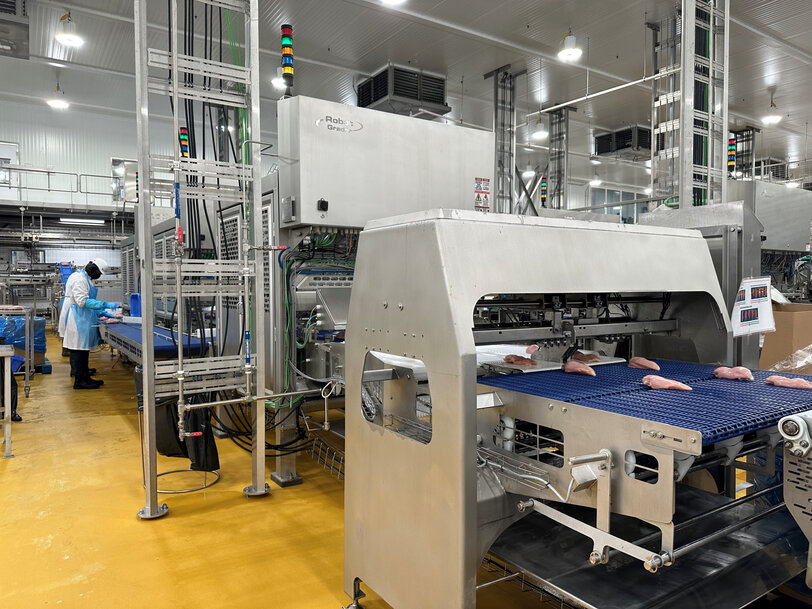
Automation of grading and packing is addressed through the RobotGrader system, which combines robotics with weighing and classification functions. The system automatically selects, grades, and places products into trays or bulk containers.
With a capacity of up to 320 pieces per minute, RobotGrader reduces manual handling requirements and helps stabilize production output. Automated grading also minimizes product giveaway by improving weight accuracy and portion control, which directly impacts yield optimization.
AI-based production monitoring
The Sentinel 5.0 platform provides real-time monitoring of production performance using machine learning algorithms. It aggregates data from multiple machines, including non-native equipment, enabling full-line visibility.
This data-driven approach supports predictive maintenance and faster fault identification, reducing unplanned downtime. By tracking key metrics such as Overall Equipment Effectiveness (OEE), the system enables operators to identify inefficiencies and optimize production processes.
Integration across poultry processing lines
The combined deployment of inspection, grading, and monitoring technologies reflects a shift toward integrated processing lines. By linking quality control systems with automation and digital analytics, processors can improve consistency while reducing reliance on manual labour.
These solutions are particularly relevant in environments where processing speed, product quality, and operational efficiency must be balanced. Integration also enables better traceability and process transparency across the production chain.
Application in poultry and protein processing
The technologies presented target poultry processors and broader protein processing industries. Typical applications include contaminant detection, automated portioning, grading, and line performance monitoring.
By combining advanced inspection methods with robotics and AI-driven analytics, the systems support improved yield, reduced operational risk, and more efficient use of production resources.
Edited by an industrial journalist, Lekshman Ramdas, with AI assistance.
www.ishida.com
