
Hapman's Next-Gen Tubular Drag Conveyors Ensure Gentle Food Handling
Enclosed cable systems protect fragile food ingredients, improve sanitation, and streamline complex processing facility layouts.
hapman.com
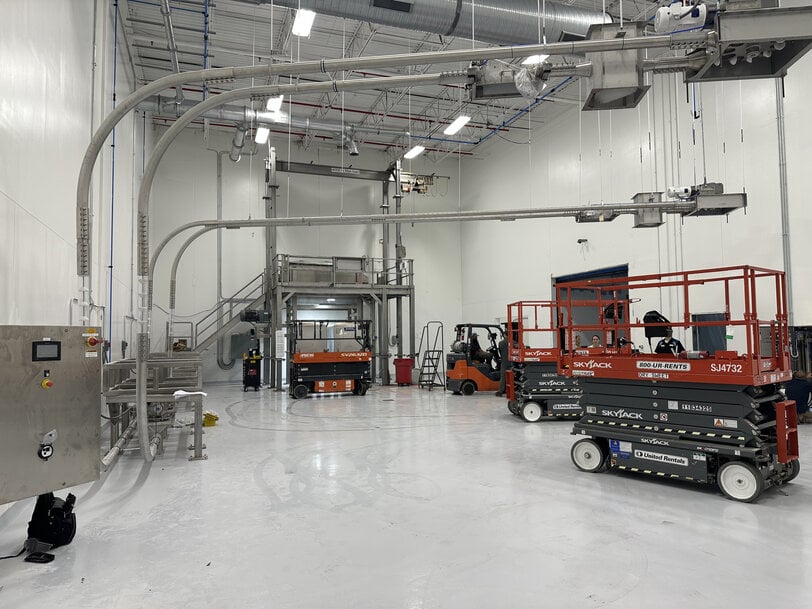
In modern food processing environments, the physical conveyance of fragile ingredients—such as cereals, nuts, frozen foods, and specialty powders—has evolved into a critical point of quality control. Aggressive handling or high-velocity transport can cause product breakage, dust generation, and ingredient segregation, ultimately eroding yield and complicating downstream packaging. To combat this, the industry is increasingly adopting enclosed, cable-driven tubular drag conveyors that maintain steady, controlled motion around bends and elevation changes without relying on abrupt transfers.
Beyond product integrity, these enclosed systems significantly enhance food safety and sanitation. By sealing the product path from inlet to discharge, tubular drag conveyors prevent ingredient loss and eliminate exposure to airborne contaminants. Advanced designs feature integral drains and modular cleaning tools—such as wiper flights, scraper discs, and sponge elements—enabling flexible Clean-In-Place (CIP) protocols for both wet and dry applications. This approach minimizes the need for extensive manual cleaning and significantly shortens changeover times.
Mechanically, modern systems address internal friction and wear through optimized materials and geometry. For instance, Hapman's CablePro™ Tubular Drag Conveyor integrates self-lubricating ultra-high-molecular-weight (UHMW) polyethylene discs and automatic cable tensioning to ensure smooth operation under sustained loads. This combination minimizes component wear and unexpected downtime. Furthermore, the inherent routing flexibility of tubular conveyors allows processors to navigate tight spaces, bypass structural obstacles, and consolidate multiple open belts or bucket elevators into a single continuous loop, simplifying overall plant layouts.
Additional Context
This section provides technological and market background not explicitly detailed in the original text.
In the food manufacturing sector, material degradation during transport—often referred to as "attrition"—can drastically alter bulk density, leading to inaccurate volumetric filling and compromised packaging aesthetics. Traditional pneumatic conveying systems rely on high-velocity air streams that can pulverize delicate agglomerates, while conventional open bucket elevators introduce severe risks of cross-contamination and allergen harborage. Tubular drag conveyors operate on a fundamentally different mechanical principle: they create enclosed "pockets" of material between discs that are pulled slowly through a continuous tube. This low-velocity, volumetric displacement ensures true mass flow without fluidizing the product, virtually eliminating friction-induced heat and particle segregation. Furthermore, the transition to advanced materials, such as nylon-coated stainless steel braided cables and FDA-compliant UHMW discs, prevents metal-on-metal wear, satisfying stringent sanitation standards while eliminating the risk of foreign material contamination in the final food product.
Edited by Lekshman Ramdas, Induportals editor – adapted by AI.
www.hapman.com
