
www.foodpackautomation.com
15
'26
Written on Modified on
Roll-Fed Labelling Systems for High-Speed Beverage Packaging
Sidel launches EvoDECO Next to reduce packaging material consumption through high-speed partial roll-fed container decoration.
www.sidel.com
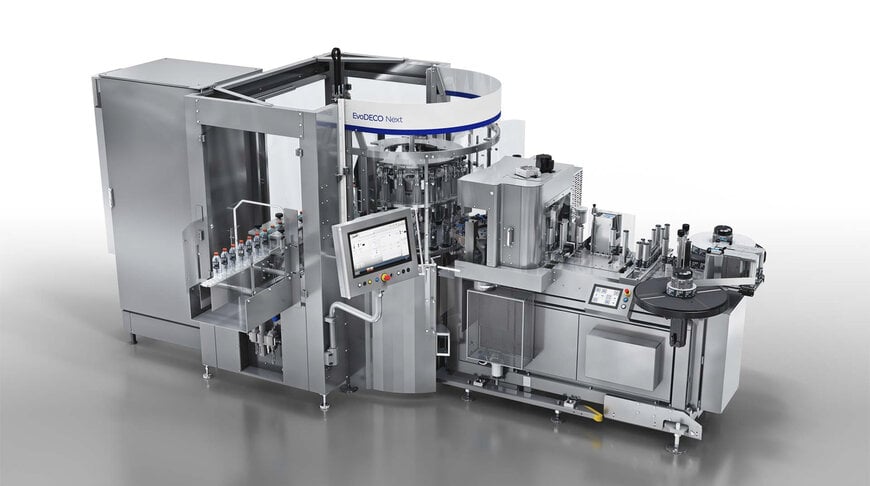
High-throughput beverage bottling operations face increasing pressure to lower packaging material consumption and operational expenditure while maintaining line efficiency and shelf appeal. Sidel addresses this engineering challenge with the launch of EvoDECO Next, an industrial roll-fed labelling platform designed to apply partial labels onto polyethylene terephthalate (PET) containers.
Engineering Mechanics of Partial Roll-Fed Decoration
Lightweighting initiatives in PET bottling lines have historically focused on preform design, reducing resin volume across the neck finish, container sidewalls, and base geometry. Labelling, by contrast, has remained predominantly reliant on 360-degree wraparound biaxially oriented polypropylene (BOPP) film, creating an untapped area for source reduction. EvoDECO Next modifies conventional roll-fed kinematic processes to handle partial labels that cover only a fraction of the container circumference.
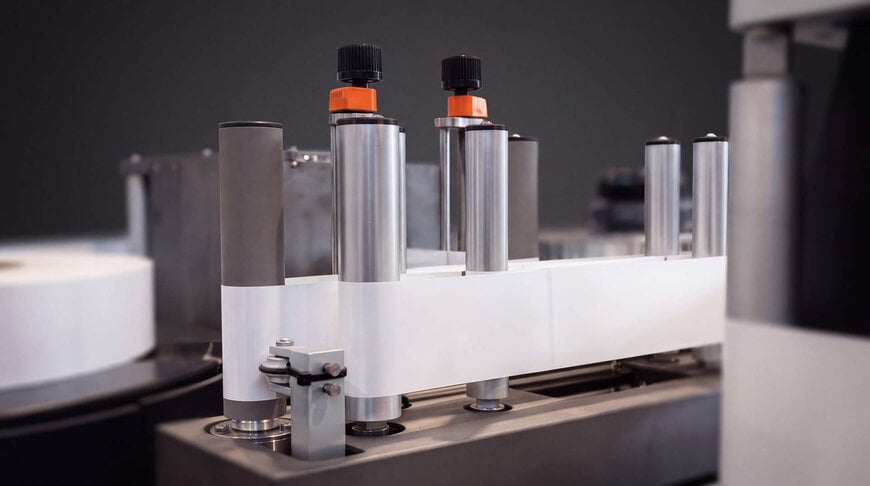
Operating at a 90-degree partial-label configuration reduces label surface area by up to 75 percent compared to full wraparound decoration, while a 180-degree format reduces the required film surface by 50 percent. In a continuous bottling line operating at 61,000 bottles per hour and producing approximately 459 million units annually, transitioning from a full wraparound label with a surface area of 20,160 square millimetres to a 90-degree format measuring 5,040 square millimetres eliminates 208.4 tonnes of BOPP film per year. Under manufacturer modeling parameters, this volume reduction corresponds to an annual raw material expenditure decrease of approximately 723,000 euros and a reduction of 346 tonnes of associated carbon dioxide equivalent emissions.
Rotary Cutting and Web Handling Architecture
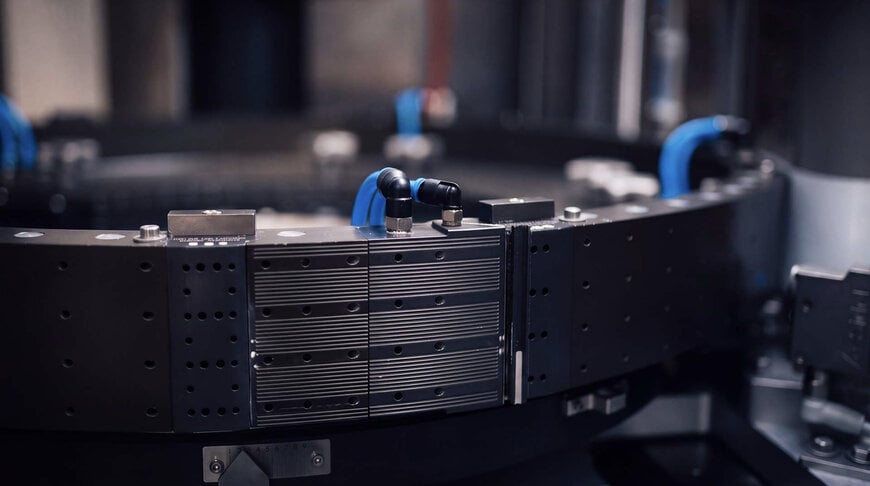
Handling shorter film lengths at high linear velocities introduces web-tension instability, slip, and cut-registration errors. EvoDECO Next resolves these hydrodynamic and mechanical issues via an integrated hardware architecture rather than an adapted legacy framework. The central cutting assembly, designated Cutter 2.0, is integrated directly onto the vacuum transfer drum. This mechanism uses a twin-blade rotary device configured to execute precise transverse cuts on shortened film pitches at elevated cycling speeds.
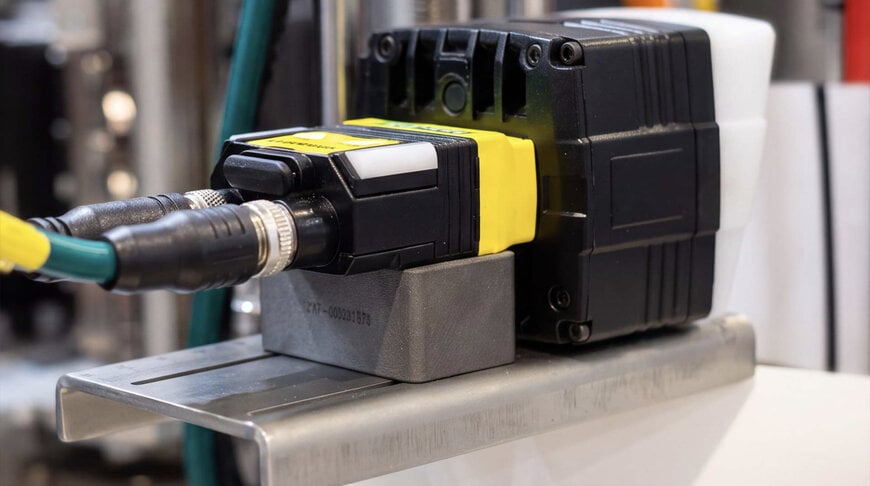
Film web stability during reel transitions is maintained by the Smart Buffer system. The buffer absorbs the linear acceleration and deceleration transients of automatic splicing at nominal line velocities without demanding extra floor space or altering the standard film path. Machine vision integration via a Smart Camera eliminates the need for physical reference registration marks and blank quiet zones on the printed film web. The accompanying machine control system provides real-time position correction, automated homing algorithms, and expanded fault diagnostics directly within the machine control architecture.
Downstream container transfer and adhesive application zones have been redesigned with optimised low-friction sliding surfaces and air-blade dynamic assist profiles. These pneumatic and surface treatments reduce tensile stress on thinner films and prevent hot-melt glue cross-contamination, extending continuous operating autonomy between manual cleanings by up to five times. For facility workflows requiring higher automation, the system links with the CoboREEL robotic web loader, which stages and manages up to 18 reels autonomously to support product traceability and reduce manual intervention.
Additional Context:
This section details technical specifications and competitive benchmarking not included in the original product announcement.
Roll-fed hot-melt labelling remains the benchmark technology for high-speed primary packaging of soft drinks, mineral waters, and functional beverages, typically operating in lines rated between 30,000 and 80,000 containers per hour. In conventional roll-fed configurations supplied by industrial manufacturers like Krones (Contiroll series) and Sacmi (Opera series), machines rely on standard continuous rotary transfer drums optimized for 360-degree wraparound films, where overlapping edges are bonded with hot-melt glue.
Applying partial labels has traditionally fallen under self-adhesive (pressure-sensitive) or cold-glue labelling systems. While pressure-sensitive labelling offers high application accuracy and aesthetic transparency, it requires siliconised backing liners that generate non-recyclable solid waste streams and run at higher per-unit material costs and lower standard linear speeds than roll-fed film webs. Cold-glue labelling systems, typically deployed for paper labels on glass, run at lower throughputs and present adhesive curing limitations on non-porous thermoplastic substrates.
By mechanically stabilizing short-pitch BOPP film on a high-speed vacuum drum, roll-fed partial labelling bridges the gap between the low material cost of reel-fed synthetic films and the targeted surface coverage typical of pressure-sensitive systems. This aligns with Design for Recycling guidelines established by industry bodies such as the Association of Plastic Recyclers (APR) and RecyClass, which advise that reduced label surface area improves the efficiency of near-infrared (NIR) sorting systems at material recovery facilities and lowers contamination rates during optical sorting and PET flaking processes.
Edited by Natania Lyngdoh, Induportals editor, with AI assistance.
www.sidel.com
