
www.foodpackautomation.com
22
'26
Written on Modified on
Edible Oil Net Weight Filling Systems for Precision Packaging
Sidel Group introduces its high-performance weight-based filler to eliminate product giveaway and container deformation in edible oil bottling lines.
www.sidel.com
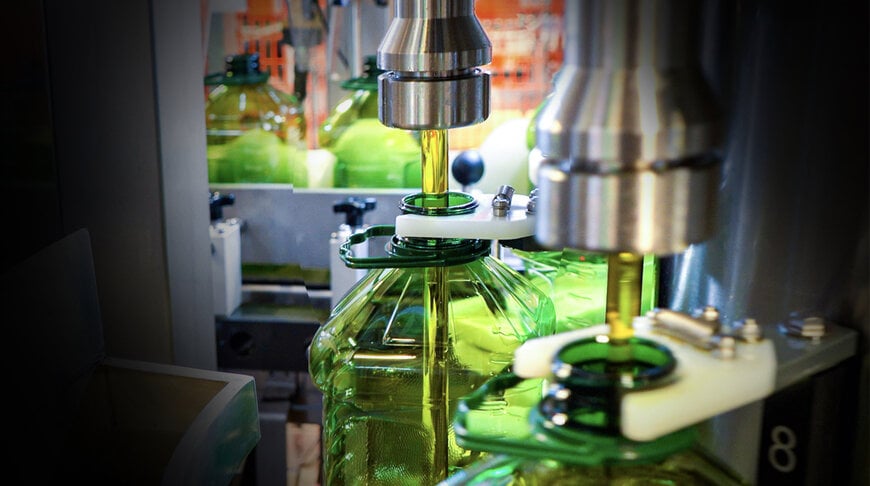
Fluctuating ambient temperatures and fluid viscosity shifts present persistent operational challenges for dosing accuracy and material waste in commercial bottling plants. To resolve these process variations, advanced gravimetric dosing technology provides closed-loop weight feedback to stabilize fill volumes across multi-format liquid packaging operations.
Sidel Group developed a high-performance weight-based filler engineered specifically for edible oil bottling facilities, integrating independent servo-driven components and automated in-flight fluid compensation. The equipment manufacturer scheduled the public demonstration of the system for the CibusTec 2026 exhibition, held from October 27 to 30 in Hall 3 in Parma, Italy, targeting commercial oil producers seeking to minimize product giveaway and reduce maintenance overhead across high-speed packaging lines.
Gravimetric Dosing Mechanics and In-Flight Flow Compensation
Liquid fats and cooking oils exhibit temperature-dependent viscosity and density changes that undermine the precision of traditional volumetric piston systems. The Sidel weight-based filling system addresses this hydrodynamic behavior by measuring container mass dynamically throughout the filling cycle.
Mechanical vibration often interferes with sensitive strain-gauge or load-cell measurements on rotary carousels. To isolate the weighing process, the machine uses brushless motors that dampen mechanical resonance, ensuring that load cells receive stable electrical signals during high-speed rotation. The filling profile is programmed across the full rotational arc of the carousel, optimizing liquid velocity to prevent foaming, splashing, or aeration.
To eliminate overfilling and underfilling, the system incorporates automated in-flight oil measurement routines. These algorithms calculate the mass of the suspended liquid column remaining in mid-air between the filling valve nozzle and the container fluid level at the instant of valve shutoff. By dynamically adjusting valve closure timing based on real-time fluid velocity, the system achieves a dosing precision within 0.5 grams per kilogram of oil, maintaining a standard deviation of 0.8 grams without requiring sacrificial bottle calibration cycles during startup.
Multi-Format Tooling and Decentralized Motion Architecture
Industrial edible oil lines frequently process varying batch sizes across diverse container materials, requiring flexible mechanical handling to avoid neck deformation or surface scuffing.
The machine handles container capacities ranging from 0.5 liters to 5 liters, accommodating polyethylene terephthalate (PET), high-density polyethylene (HDPE), glass bottles, and metal cans on a unified chassis. Format transitions are executed through tool-free mechanical changeovers, reducing line changeover duration between distinct production runs.
Decentralized automation governs the mechanical drives. Each critical operating component is driven by a dedicated brushless servo motor rather than a common mechanical drive shaft or central cam assembly. This independent actuation enables automated predictive maintenance monitoring, where deviations in motor torque or thermal signatures signal component wear before mechanical failure occurs. Real-time electrical consumption tracking allows plant engineers to monitor power demand against factory energy management targets.
Industrial Operations and Exhibition Presentation
Sidel Group will present the technical capabilities of the edible oil filling unit at CibusTec 2026 in Parma, Italy, demonstrating its mechanical synchronization and packaging line integration.
Davide Sighinolfi, Vice-President for Food, Home and Personal Care at Sidel, stated that the filler addresses the technical requirements of edible oil bottlers by delivering precise dosing tolerances, operational accessibility, and reduced energy draw across continuous operating cycles.
Sébastien Sergues, Director of Portfolio for Food, Home, Personal Care, and Wine and Spirits Solutions, stated that the introduction expands Sidel's food equipment portfolio, providing engineering integration across container blowing, filling, and downstream packaging line services.
Additional Context:
This section details technical specifications and competitive benchmarking not included in the original product announcement.
In commercial edible oil packaging, legal metrology frameworks such as the European Prepackaging Directive 76/211/EEC and the International Organization of Legal Metrology recommendation OIML R 87 mandate strict tolerable negative errors (TNE) for nominal batch quantities. For prepackaged goods between 1,000 g and 10,000 g, the permissible negative error is capped at 1.5 percent of nominal quantity or 15 grams. To protect margins, bottlers seek low standard deviations; an operating standard deviation of 0.8 grams allows processors to shift the target mean fill weight closer to the legal minimum without violating the three-packer rules.
The primary technological approaches for high-viscosity edible oil packaging comprise net-weight electronic filling, Coriolis mass flow metering, and traditional rotary piston dosing.
Serac manufactures competing rotary net-weight fillers utilizing patented electronic load cells isolated from mechanical carousels. Serac systems achieve typical standard deviations of 0.5 to 1.0 grams on 1-liter containers and operate specialized double-flow nozzles to suppress product splashing. While net-weight systems like those from Sidel and Serac require mechanical stabilization against centrifugal force, they are entirely independent of product density variations caused by thermal fluctuations.
Krones provides the Modulfill NW series, which uses integrated strain-gauge load cells beneath each container platform, alongside the Modulfill VF system, which relies on Coriolis mass flow meters. Coriolis mass flow systems deliver continuous measurement without physical container contact, avoiding load-cell settling delays. However, mass flow meters introduce significant capital expense per filling valve and require complex piping manifolds that increase cleaning-in-place (CIP) fluid volumes.
Piston-based volumetric fillers remain standard for lower-cost installations but require mechanical stroke adjustments and manual temperature compensation curves, as vegetable oils expand approximately 0.07 percent per degree Celsius. Without dynamic compensation, ambient diurnal shifts of 10 degrees Celsius result in volumetric dosing errors exceeding 6 grams per liter, demonstrating why high-volume packaging plants consistently transition toward closed-loop gravimetric filling architectures.
Edited by Natania Lyngdoh, Induportals editor, with AI assistance.
www.sidel.com
