
www.foodpackautomation.com
20
'26
Written on Modified on
Optimizing Brewery Capacity Through Advanced Process Technology
GEA introduces the GEA AdaptAx orbital tank cleaner alongside water-hydraulic process actuators to expand brewery throughput and reduce media consumption within existing infrastructure.
www.gea.com
Industrial brewing and beverage operations face increasing pressures to expand operational throughput, minimize utility consumption, and introduce diverse product portfolios without expanding physical plant footprints. In large-scale fermentation and cellaring environments, plant capacity is frequently constrained not by brewing volume, but by auxiliary process turnaround times, thermal inefficiencies, and storage limitations. To address these process constraints, engineering approaches focus on upgrading cleaning validation efficiency, implementing late product differentiation, and retrofitting existing thermal systems.
Orbital Mechanical Cleaning Mechanics and Uptime Optimization
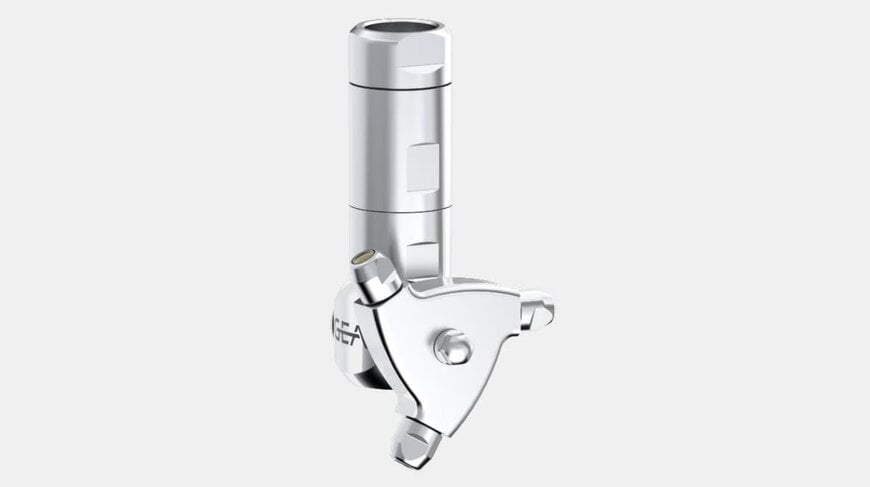
Cleaning-in-place (CIP) turnaround directly governs overall tank availability across large fermentation and maturation tank farms. Standard static spray balls or rotational jet devices often rely on high water volume and chemical contact time to overcome low mechanical shear stress against vessel walls. Orbital cleaners address this operational challenge by utilizing indexed dual-axis rotation to project targeted, high-impact fluid jets in a repeatable grid pattern across the interior surface.
The GEA AdaptAx orbital tank cleaner generates up to 30 percent higher mechanical impact force than previous-generation units. By increasing mechanical shear, the system lowers reliance on prolonged chemical exposure and elevated fluid volume. The mechanical configuration is modular, allowing interchangeable nozzle arrangements configured to match specific vessel geometries, soil characteristics, and batch recipes without replacing the main drive assembly. Routine maintenance is performed using standard mechanical tools.
In a benchmark scenario modeling a tank farm of 50 fermentation and storage vessels subjected to weekly sanitization (2,600 CIP cycles per year under identical soiling and tank volume conditions), cycle times decreased from 60 to 45 minutes per tank. Required cleaning volume fell from 100 cubic meters to 60 cubic meters per cycle, operating at a reduced pressure of 8 bar rather than 10 bar and a lower volumetric flow rate of 80 cubic meters per hour compared to 100 cubic meters per hour. The resulting 15-minute reduction per cycle yields 650 operational tank hours annually (approximately 27 days of restored vessel availability), while cutting annual water use and corresponding effluent discharge by 104,000 cubic meters in total-loss CIP setups.
Precision Flow Modulation and Inline Differentiation
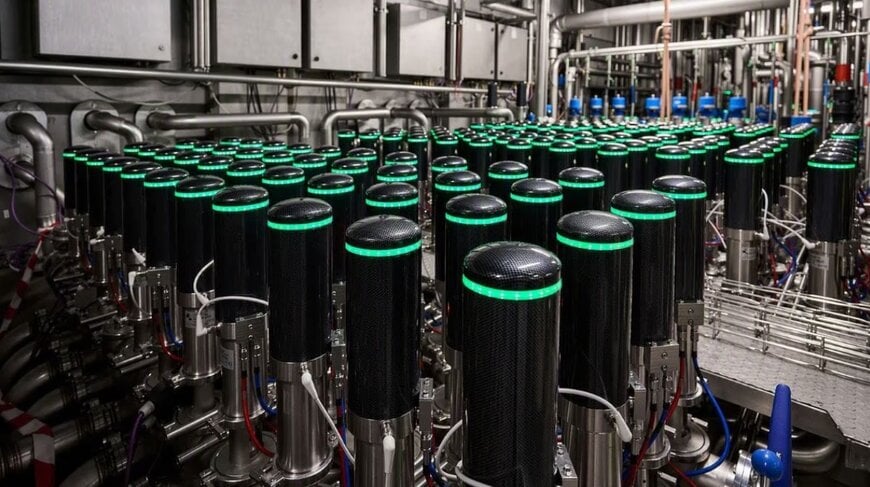
Cellar storage configurations are traditionally sized to store distinct finished product recipes in dedicated bright beer tanks prior to packaging. The GEA Hydract water-hydraulic valve actuator, integrated into the VARIVENT valve portfolio, alters this architecture by replacing pneumatic actuation with a closed-loop water-hydraulic system. Pneumatic actuators are subject to air compressibility, which often restricts valves to binary open-close travel or coarse modulating accuracy. A closed hydraulic system provides rigid, micron-level stem positioning, enabling standard process valves to serve as continuous inline control valves.
This positional stability enables late-stage product differentiation via inline blending immediately upstream of the packaging lines rather than storing finished liquid variants in bulk vessels. In a brownfield implementation at the Carlsberg brewery in Fredericia, Denmark, transitioning to late-stage differentiation using high-precision process control reduced bright beer tank requirements from 26 vessels to 14 vessels. Concurrently, average tank utilization across the remaining storage infrastructure increased from 54 percent to 90 percent.
Thermal Retrofits and Extraction Recovery
In the brewhouse, wort boiling represents one of the most energy-intensive batch phases. Rather than replacing entire vessels, targeted retrofits modify heat transfer kinetics. The GEA QBOIL system integrates fractionated boiling into existing boiling kettles, reducing thermal energy demand in this process stage by up to 35 percent.
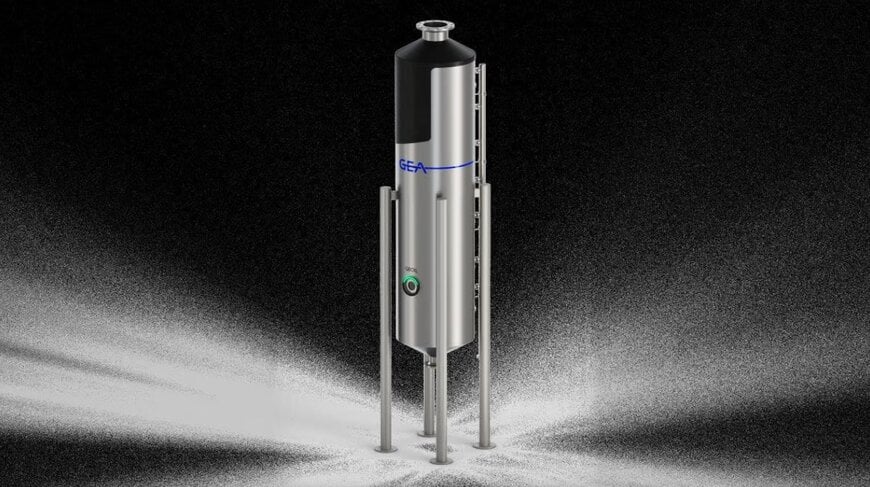
Downstream yield optimization centers on recovering usable product trapped within residual yeast slurries. Integrated centrifugal separation systems, such as the GSX Skid and GEA plug & win Beer Recovery module, separate liquid beer from spent yeast sediment and return the clarified liquid directly into the production line. This continuous mechanical recovery can recover up to two percent of additional product volume without production downtime.
Plant-Wide Decarbonization Audits
Individual machine upgrades deliver optimal utility reductions when coordinated through unified plant utilities. The GEA Add Better Consulting methodology assesses brownfield facilities to identify thermal and fluid losses before defining equipment retrofits. These audits feed into the GEA NEXUS framework, which pairs brewing process thermodynamics with industrial heat pump systems, refrigeration networks, and heat-recovery circuits to structure decarbonization pathways across complex production sites.
Steffen Rathmann, Vice President Business Line Beverage at GEA, stated: "Breweries do not automatically need more equipment. They need more ways to get value from the equipment they already have. That may mean a better-tuned process, a targeted retrofit or a new technology that allows existing capacity to be used differently."
These technical concepts, alongside membrane dealcoholization through GEA AromaPlus, will be exhibited at the BrauBeviale trade fair.
Additional Context
This section details technical specifications and competitive benchmarking not included in the original product announcement.
In large-scale hygienic beverage processing, tank cleaning systems are classified across four mechanical tiers governed by European Hygienic Engineering and Design Group (EHEDG) and 3-A Sanitary Standards: static spray balls (Class I), free-rotating spray devices (Class II), fluid-driven rotary jet heads (Class III), and geared orbital rotary jet heads (Class IV).
Static spray balls rely predominantly on gravity and chemical dissolution, operating at lower supply pressures (1.5 to 2.5 bar) but requiring high fluid volumes (frequently exceeding 15 to 25 cubic meters per hour on medium vessels) to maintain a continuous falling film. By contrast, geared orbital rotary machines utilize integrated gearboxes driven by the CIP fluid to rotate twin or four-nozzle assemblies simultaneously around horizontal and vertical axes. This produces a vector path that sweeps the interior surface in an expanding geometric mesh. Comparable Class IV industrial orbital cleaners—such as the Alfa Laval TJ40G or Toftejorg series—typically operate across a pressure envelope of 3 to 12 bar, generating direct wall impact pressures capable of dislodging persistent dried-on residues like beer stone (calcium oxalate) and trub.
In fluid control, the adoption of closed-loop water-hydraulic actuation represents a shift away from standard 6-bar compressed air infrastructure. Pneumatic networks in manufacturing environments frequently experience 20 to 30 percent parasitic transmission losses from piping leaks and consume non-recoverable electrical energy at compressor stations. Water-hydraulic systems eliminate pneumatic air consumption at the valve and provide high incompressibility, yielding valve positioning repeatability within fractions of a millimeter. This dynamic response enables real-time concentration trim during high-gravity blending and variable-ratio dosing, reducing physical tank requirements while meeting strict food contact safety regulations without oil-hydraulic contamination risks.
Edited by Evgeny Churilov, Induportals Media - Adapted by AI.
www.gea.com
