
www.foodpackautomation.com
19
'26
Written on Modified on
ADI and Moët Hennessy deploy AI for wine production
The chemical signature detection technology predicts defects like Fresh Mushroom Aroma early in the winemaking process.
www.analog.com
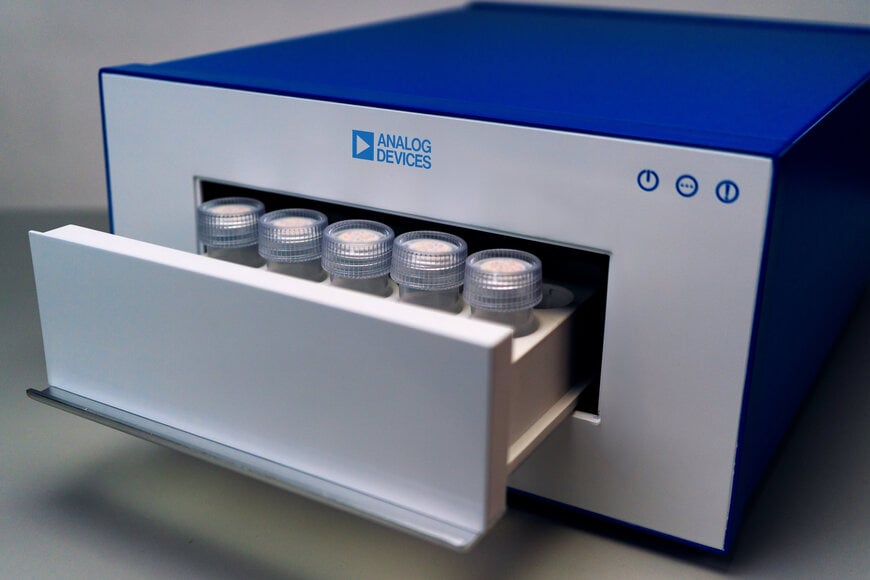
Analog Devices (ADI), Moët Hennessy, and the University of California, Davis (UC Davis) have partnered to deploy artificial intelligence-driven chemical signature detection technology in viticulture and winemaking. Rooted in early research from the Massachusetts Institute of Technology (MIT), ADI’s sensing platform analyzes volatile chemical signatures emitted by grapevines, juice, and wine. This technology provides winemakers with early insights into biological processes, allowing them to proactively anticipate quality risks rather than reacting to them after a defect has fully developed.
Predicting Fresh Mushroom Aroma
The collaboration’s first major achievement addresses Fresh Mushroom Aroma (FMA), a complex quality defect in the wine industry. Using a comprehensive sample library compiled by researchers at Moët Hennessy’s Robert-Jean de Vogüé Research Center, the team trained machine learning algorithms to recognize the specific chemical signatures associated with FMA. The platform successfully identified samples presenting an elevated risk of developing the defect well before traditional detection methods would flag it. By continuously learning from complex chemical data, the AI reveals patterns that indicate emerging quality risks without relying solely on predefined conditions.
Future applications in viticulture
Beyond FMA detection, the partners intend to scale the platform for broader living systems analysis across the grape and wine industry. Ongoing research is exploring additional applications, including the early detection of vine diseases, comprehensive soil assessments, and the identification of wine defects linked to climate change events, such as wildfire smoke taint. The technology operates as a decision-support tool designed to augment the expertise of viticulturists and winemakers. ADI plans to make the underlying technology broadly available for industrial applications, while Moët Hennessy and UC Davis are assessing how shared reference libraries could benefit the wider industry.
Additional Context: Real-time VOC detection versus traditional laboratory analysis
This section details technical specifications and competitive benchmarking not included in the original product announcement.
In modern enology, wine faults such as Fresh Mushroom Aroma (often associated with compounds like 1-octen-3-one or 1-octen-3-ol) or smoke taint (volatile phenols) are traditionally identified through human sensory panels or delayed laboratory analysis using Gas Chromatography-Mass Spectrometry (GC-MS). While highly accurate, GC-MS requires expensive benchtop equipment, meticulous sample preparation, and significant processing time, making real-time intervention difficult during active harvests. AI-driven edge sensing platforms utilize arrays of miniaturized chemical sensors (acting as an "electronic nose") that detect the presence of volatile organic compounds (VOCs) in real time. By running machine learning algorithms at the edge, these systems can instantly cross-reference complex, multi-dimensional sensor data against established defect libraries, allowing production facilities to isolate tainted juice or adjust fermentation parameters immediately upon detection.
Edited by an industrial journalist, Lekshman Ramdas, with AI assistance.
www.analog.com
