
www.foodpackautomation.com
04
'26
Written on Modified on
Close collaboration revolutionizes CIP media savings
Alfa Laval and Tetra Pak are working closely on an effort to radically reduce the volumes of media used for CIP (cleaning-in-place) at dairy plants and similar operations.
www.alfalaval.com
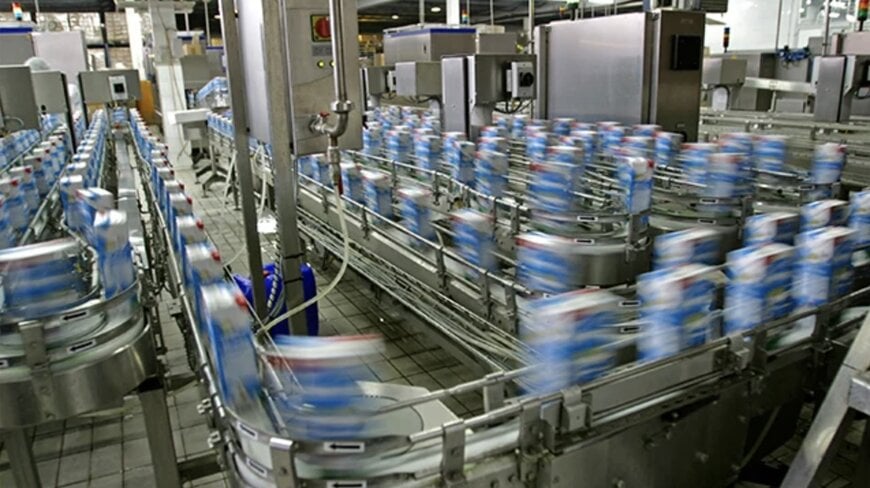
Alfa Laval and Tetra Pak are collaborating to deploy automated valve-seat cleaning technology across dairy processing facilities in Europe, the Middle East, and Africa. The engineering initiative optimizes cleaning-in-place operations by retrofitting and configuring hygienic valve control infrastructure to reduce chemical, water, and thermal energy usage during sanitization cycles.
Process Inefficiencies in Food Sanitization Cycles
Industrial dairy and liquid food operations require rigorous sanitization protocols to maintain biological safety standards. In standard cleaning-in-place regimes, legacy communication latency between remote sensors, programmable logic controllers, and pneumatic actuators often holds valves open for three to seven seconds per seat lift. Continuous high-volume flushing through open orifices provides minimal mechanical shear while discarding large volumes of heated water and chemical agents, escalating post-process wastewater treatment costs. Addressing these inefficiencies requires replacing prolonged volumetric displacement with high-velocity mechanical impact at the valve boundary.
Technical Architecture and Localized Valve Control
The technical solution standardizes on Alfa Laval’s ThinkTop V70 hygienic valve sensing and control units integrated with processing skids engineered by Tetra Pak. Alfa Laval provides the hygienic seat-lifting valve hardware, onboard sensing matrices, and embedded burst-cleaning control logic. Tetra Pak delivers food-processing systems engineering, fluid flow validation, and localized commissioning.
Rather than relying on continuous actuation commands transmitted across plant supervisory networks, the ThinkTop V70 houses dedicated sequencing logic directly on the valve head. Upon receiving a single trigger signal from the plant programmable logic controller, the unit autonomously drives the actuator through an optimized rapid opening and closing sequence. Fluid dynamics analysis demonstrates that more than 90 percent of physical cleaning occurs during this split-second transition, where cleaning fluid reaches peak velocity and impacts contact surfaces with maximum kinetic energy.
Commercial Implementation and Operational Results
Field deployments include a commercial dairy processing plant in Riyadh, Saudi Arabia, where conventional seat lifting was converted to localized burst seat cleaning across the entire valve network.
Operational data measured across active processing cycles demonstrated a reduction in fluid consumption from 2.5 to 2.8 liters per conventional cleaning cycle down to 0.8 to 1.0 liter per burst sequence. This performance parameter delivers an approximate 65 percent reduction in fluid consumption during valve cleaning, eliminating more than 1,330 metric tons of cleaning media annually at the facility while preserving verified microbiological cleanliness.
Resource Efficiency and Process Economics
Automating valve-seat sanitization via edge-level control eliminates transmission latency and reduces the thermal energy required to heat bulk sanitization fluids. Combining Alfa Laval’s valve-top control logic with Tetra Pak’s process integration enables food processors to achieve predictable sanitization standards, accelerate cleaning cycle turnaround, and lower water and wastewater overhead across industrial fluid operations.
Edited by Romila DSilva, Induportals Editor, with AI assistance.
www.alfalaval.com
