
www.foodpackautomation.com
07
'26
Written on Modified on
Fraunhofer Develops Mobile Gas Chromatography for Food Fraud Detection
A Fraunhofer research consortium is developing a portable gas chromatography sensor system to enable rapid, non-laboratory detection of food fraud and material contamination directly at inspection points.
www.fraunhofer.de
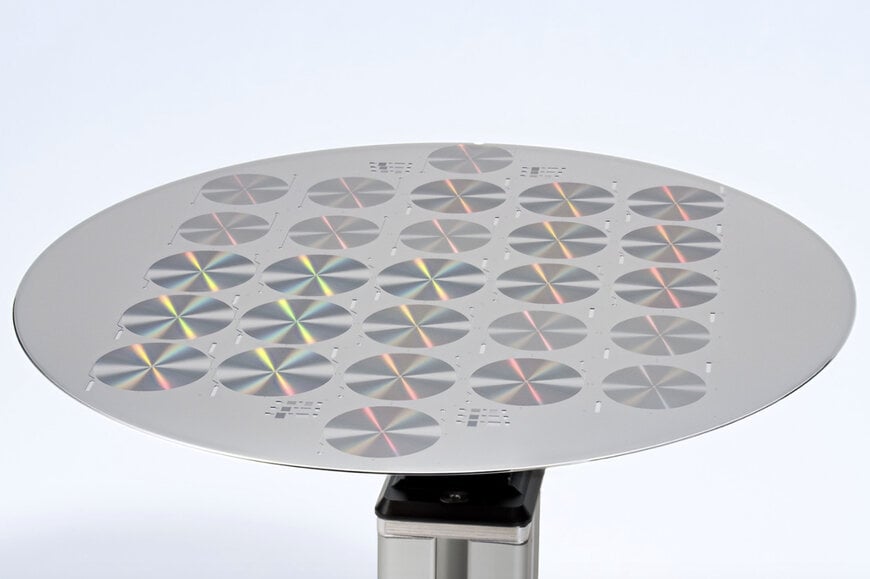
© Fraunhofer IPMS: Micro-gas chromatography columns (µGC columns) etched into a 200-mm silicon wafer. The columns are sealed with a second wafer using a wafer-bonding process and then separated. They are subsequently coated with a stationary phase, similar to conventional GC columns.
Food fraud continues to challenge regulators, producers, and inspectors as global supply chains grow more complex and cost pressures increase. Identifying counterfeit or mislabelled products—such as adulterated olive oil—typically requires laboratory-based gas chromatography systems operated by trained specialists. To address this gap, several Fraunhofer institutes are jointly developing a compact, mobile gas chromatography sensor system designed for rapid on-site analysis by non-experts.
Joint development within the PUMMEL project
The system is being developed under the Fraunhofer PREPARE project PUMMEL, which brings together expertise from Fraunhofer IPMS, Fraunhofer IME, and Fraunhofer IVV. The collaboration combines microfabricated gas chromatography columns, chemical sensing technologies, and application-oriented data analysis to create an affordable and modular solution for volatile organic compound (VOC) detection.
VOCs provide characteristic chemical fingerprints that can reveal information about product composition, contamination, aging, or falsification. Their detection is relevant not only for food quality and safety, but also for healthcare, agriculture, civil security, and the chemical industry.
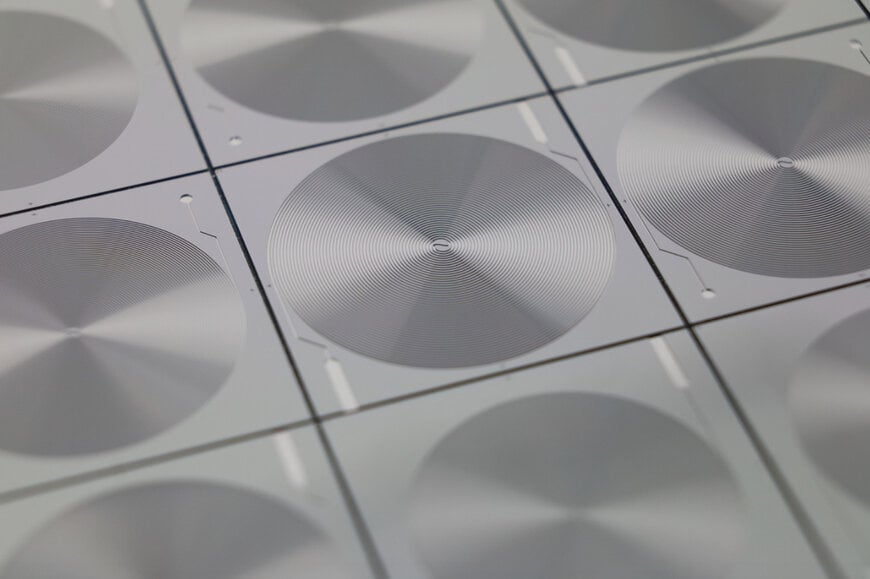
© Fraunhofer IPMS: Unsealed µGC column
Focus on two industrial use cases
Within the project, development efforts are currently concentrated on two application-driven demonstrators. The first addresses the detection of counterfeit olive oil, one of the most frequently falsified food products worldwide. The second targets contaminated plastic recyclates that may be introduced into packaging materials, a growing concern as recycling rates increase and material streams become more heterogeneous.
By tailoring the sensing configuration to specific VOC profiles, the system is designed to provide actionable results without the complexity of universal laboratory instruments.

© Fraunhofer IPMS: Scanning electron microscope (SEM) image of the center of a sawn-open µGC chip showing the reversal point of the column in the center.
Miniaturised gas chromatography architecture
The mobile system, expected to be approximately the size of a shoulder bag, integrates a silicon-chip-based gas chromatography column, a detector, sample preparation components, control electronics, data processing, and a power supply. Unlike conventional laboratory GC systems that use columns exceeding 30 meters in length, the Fraunhofer approach relies on microstructured silicon columns that can be rapidly heated and cooled.
As a sample is transported through the polymer-coated column by a carrier gas, VOCs are separated based on their interaction with the coating. A detector at the column outlet records the separated compounds, generating a chromatogram that reflects the chemical composition of the sample. Data interpretation and application-specific evaluation are handled by Fraunhofer IME.
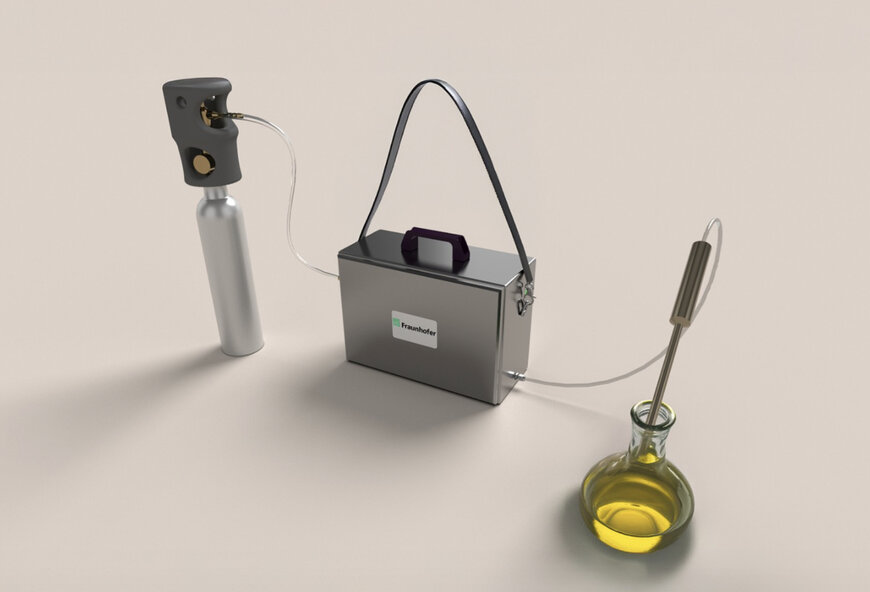
© Fraunhofer IVV: Portable analyzer for rapid olive oil authenticity assessment
Designed for non-specialist operation
Initial tests using shorter GC columns have demonstrated reliable VOC separation suitable for quality assessment tasks. Ongoing work focuses on optimizing miniaturized column designs to balance separation performance with portability and energy efficiency.
The system is explicitly designed for use by non-specialists, such as incoming-goods inspectors or bottlers, following minimal training. Its modular design allows adaptation to different inspection scenarios, including food products and recycled materials, and supports future customization in collaboration with industry partners.
Results from the PUMMEL project will be presented at Analytica 2026, taking place March 24–27, 2026, at the Messe München exhibition center in Munich, Germany. The system will be shown at the Fraunhofer joint stand, Hall 3, Stand 312.
www.fraunhofer.com
Food fraud continues to challenge regulators, producers, and inspectors as global supply chains grow more complex and cost pressures increase. Identifying counterfeit or mislabelled products—such as adulterated olive oil—typically requires laboratory-based gas chromatography systems operated by trained specialists. To address this gap, several Fraunhofer institutes are jointly developing a compact, mobile gas chromatography sensor system designed for rapid on-site analysis by non-experts.
Joint development within the PUMMEL project
The system is being developed under the Fraunhofer PREPARE project PUMMEL, which brings together expertise from Fraunhofer IPMS, Fraunhofer IME, and Fraunhofer IVV. The collaboration combines microfabricated gas chromatography columns, chemical sensing technologies, and application-oriented data analysis to create an affordable and modular solution for volatile organic compound (VOC) detection.
VOCs provide characteristic chemical fingerprints that can reveal information about product composition, contamination, aging, or falsification. Their detection is relevant not only for food quality and safety, but also for healthcare, agriculture, civil security, and the chemical industry.
© Fraunhofer IPMS: Unsealed µGC column
Focus on two industrial use cases
Within the project, development efforts are currently concentrated on two application-driven demonstrators. The first addresses the detection of counterfeit olive oil, one of the most frequently falsified food products worldwide. The second targets contaminated plastic recyclates that may be introduced into packaging materials, a growing concern as recycling rates increase and material streams become more heterogeneous.
By tailoring the sensing configuration to specific VOC profiles, the system is designed to provide actionable results without the complexity of universal laboratory instruments.
© Fraunhofer IPMS: Scanning electron microscope (SEM) image of the center of a sawn-open µGC chip showing the reversal point of the column in the center.
Miniaturised gas chromatography architecture
The mobile system, expected to be approximately the size of a shoulder bag, integrates a silicon-chip-based gas chromatography column, a detector, sample preparation components, control electronics, data processing, and a power supply. Unlike conventional laboratory GC systems that use columns exceeding 30 meters in length, the Fraunhofer approach relies on microstructured silicon columns that can be rapidly heated and cooled.
As a sample is transported through the polymer-coated column by a carrier gas, VOCs are separated based on their interaction with the coating. A detector at the column outlet records the separated compounds, generating a chromatogram that reflects the chemical composition of the sample. Data interpretation and application-specific evaluation are handled by Fraunhofer IME.
© Fraunhofer IVV: Portable analyzer for rapid olive oil authenticity assessment
Designed for non-specialist operation
Initial tests using shorter GC columns have demonstrated reliable VOC separation suitable for quality assessment tasks. Ongoing work focuses on optimizing miniaturized column designs to balance separation performance with portability and energy efficiency.
The system is explicitly designed for use by non-specialists, such as incoming-goods inspectors or bottlers, following minimal training. Its modular design allows adaptation to different inspection scenarios, including food products and recycled materials, and supports future customization in collaboration with industry partners.
Results from the PUMMEL project will be presented at Analytica 2026, taking place March 24–27, 2026, at the Messe München exhibition center in Munich, Germany. The system will be shown at the Fraunhofer joint stand, Hall 3, Stand 312.
www.fraunhofer.com
