
www.foodpackautomation.com
05
'26
Written on Modified on
Centrifuge Technology for High-Density Fermentation Separation
Alfa Laval introduces the PureFerm 750 N centrifuge to improve separation efficiency and product recovery in precision fermentation processes for alternative protein production.
www.alfalaval.com
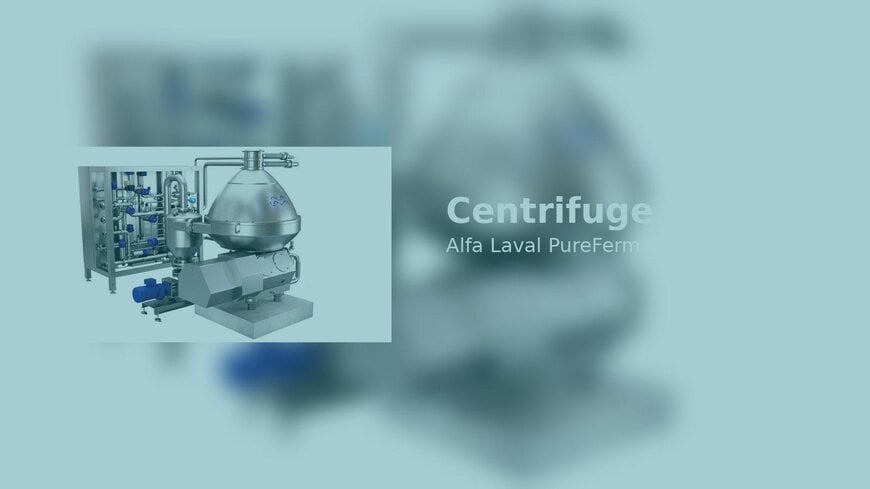
High-density fermentation used in alternative protein production generates complex fluids with elevated solids content and viscosity. Alfa Laval has developed the PureFerm 750 N centrifuge to improve separation efficiency and product recovery in these bioprocessing environments.
Separation Challenges in Precision Fermentation
Precision fermentation has become a key production method for alternative proteins such as casein used in dairy substitutes. In these processes, microorganisms are engineered to produce functional proteins that can replicate the structure and nutritional characteristics of conventional dairy ingredients.
After fermentation and cell disruption, the resulting fluid typically contains high concentrations of biomass and proteins, creating a feed stream with significant viscosity and solids density. These properties complicate separation processes because conventional centrifuges often struggle to maintain efficiency when solids loading increases.
The PureFerm 750 N centrifuge was developed to address these process conditions. The system is designed to operate in high-density fermentation environments where high product recovery and efficient solids separation are required before downstream purification steps.
Improved Separation Efficiency in Casein Fermentation
The centrifuge was tested in an industrial application involving precision-fermented casein production at a European contract manufacturing facility supporting an alternative dairy start-up. Casein produced through fermentation is used in products such as plant-based milk alternatives, cheese analogues, yoghurt formulations, and protein-enriched foods.
In this application, the fermentation broth contained a high concentration of solids after cell disruption. When the PureFerm 750 N was deployed, the producer achieved a ten-fold reduction in solids carry-over compared with results from pilot-scale processing.
Lower solids carry-over reduces fouling in downstream purification stages such as filtration and drying. Reduced fouling can limit the need for frequent equipment cleaning and stabilize operating conditions, which in turn helps maintain consistent ingredient quality.
Hermetic Centrifuge Design for Sensitive Bioprocessing
The centrifuge incorporates Alfa Laval’s Hermetic Design, which is intended to improve product handling in bioprocessing environments. The system uses a bottom-fed inlet and hermetically sealed flow path to limit shear stress on biological materials.
Lower shear levels are particularly relevant in fermentation processes where sensitive cells or protein structures can be damaged by high mechanical stress. The design also minimizes foaming and limits temperature increases during separation, which can affect protein stability.
In addition to improving separation efficiency, the centrifuge achieved a high concentration factor, allowing the heavy phase to be processed with fewer washing cycles. In the case study application, this reduced the number of washing steps required in downstream processing by half, decreasing process time and fresh-water consumption.
Capacity and Process Performance
During industrial trials, the PureFerm 750 N delivered 30–40 % higher processing capacity than initially expected by the development team. Increased separation capacity is important in fermentation facilities where throughput is often limited by downstream processing stages.
The improved solids separation also reduced product losses in side streams, an issue frequently encountered in fermentation-based protein production when separation systems cannot efficiently recover target proteins.
Role in the Emerging Alternative Protein Industry
As the alternative protein sector expands, fermentation processes are being scaled from laboratory environments to industrial production. This transition introduces operational challenges, including higher biomass concentrations, larger processing volumes, and stricter requirements for yield recovery.
Centrifuge systems designed specifically for high-density fermentation can help producers maintain efficiency as production volumes increase. By improving separation performance and reducing the load on filtration and drying systems, such technologies contribute to more stable downstream processing and improved resource efficiency.
www.alfalaval.com
