
www.foodpackautomation.com
19
'26
Written on Modified on
Centrifugal Clarifying Separator for High-Capacity Citrus Juice Processing
GEA Group introduces a high-performance clarifying separator designed to increase essential oil recovery and juice yield in large-scale citrus processing facilities.
www.gea.com
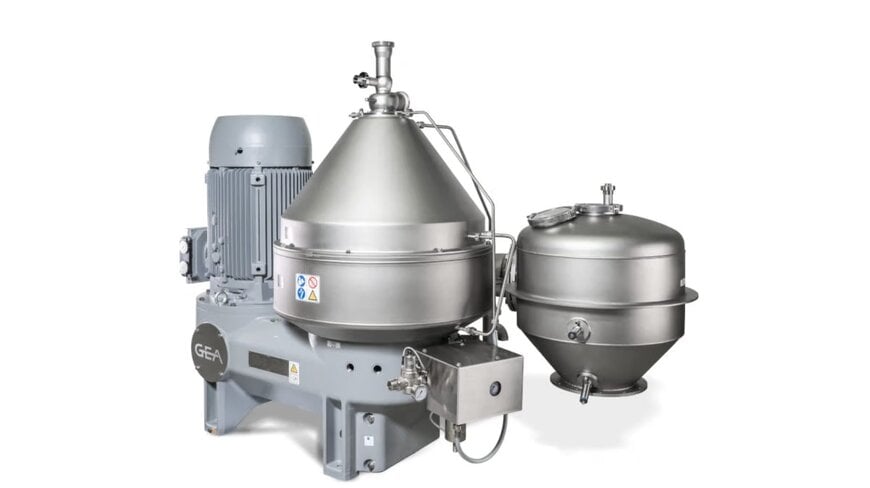
The GSE 150 CPR is a centrifugal separator designed for the continuous clarification of pulp-rich citrus juices, specifically engineered to handle the fluctuating solids loads common in modern fruit processing. By employing a dual-pump configuration, this technology maintains process stability in the production of orange, grapefruit, and lemon juices, as well as in pulp washing and cloudy peel extract applications.
Continuous Pulp Removal for Process Stability
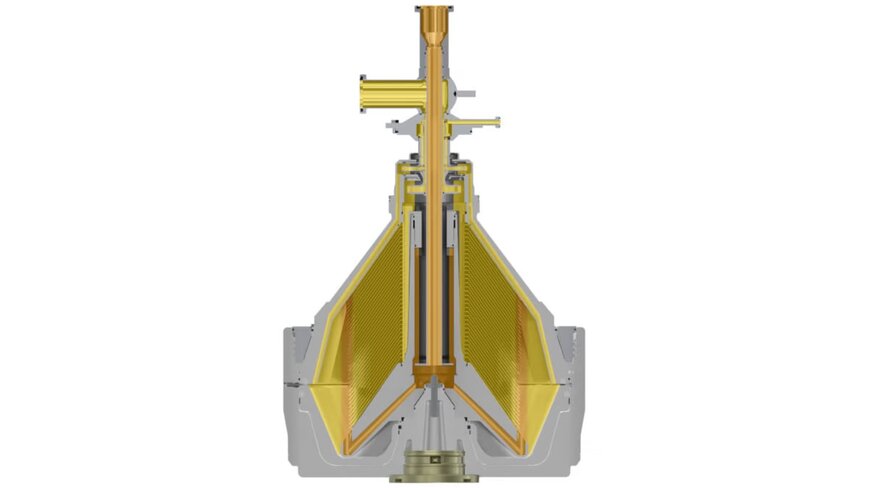
The technical core of the GSE 150 CPR is the Constant Pulp Removal (CPR) system, which utilizes a specialized separating disc and a second centripetal pump. Unlike conventional separators that rely on intermittent bowl ejections to clear solids, the CPR mechanism continuously conveys pulp out of the machine under pressures up to 4 bar.
This continuous discharge addresses specific challenges in the digital supply chain of raw materials. In 2025, data from Fundecitrus indicated that 48% of the Brazilian Citrus Belt was affected by Huanglongbing (HLB), or citrus greening. This disease results in smaller fruit with lower juice content and highly variable solids. Because the GSE 150 CPR discharges a portion of the flow continuously, the internal solids-holding volume does not dictate process limits. This allows the unit to process approximately 50% more product than conventional separators of a similar footprint.
Efficiency Metrics and Pulp Control
Operational data suggests the GSE 150 CPR requires only two to four full solids discharges per hour. In contrast, standard clarifying separators facing high solids loads may require up to 30 discharges per hour. Reducing discharge frequency minimizes process interruptions and limits product carryover, leading to a more consistent output.
Precision in texture profiles is managed via two control tiers:
- Time-Controlled: A standard configuration for predictable loads.
- Viscosity-Based: An advanced option that measures discharge viscosity in real-time to adjust pulp flow, which reduces juice loss and shortens changeover times between different product batches.
The machine achieves throughput capacities of up to 17,000 liters per hour for orange juice and 12,000 liters per hour for lemon juice, depending on the specific solids concentration of the feed.
Mechanical Specifications and Hygiene
The GSE 150 CPR is constructed with stainless steel product-contact parts and food-grade seals, ensuring full compatibility with Cleaning-in-Place (CIP) protocols.
Mechanical Specifications and Hygiene
The GSE 150 CPR is constructed with stainless steel product-contact parts and food-grade seals, ensuring full compatibility with Cleaning-in-Place (CIP) protocols.
- Drive System: A 30-kilowatt three-phase motor powers the bowl via a low-maintenance flat belt.
- Rotational Speed: The bowl operates at 5,300 revolutions per minute.
- Maintenance: The system can be equipped with GEA InsightPartner Separation Monitoring, an online condition-based tool that records vibration data to predict service intervals.
According to Rüdiger Flocke, Area Sales Manager at GEA, the continuous discharge of pulp under pressure makes clarification processes more robust against raw fruit volatility, directly impacting economic margins by reducing waste.
Market Context and Capacity Positioning
The global citrus industry currently faces supply constraints, with Brazilian orange juice concentrate stocks reaching a low of 146,300 tons in 2025 following significant rainfall deficits. In this environment, maximizing yield from available raw materials is critical.
The GSE 150 CPR fills a gap in the medium-capacity range of the GEA portfolio, positioned between entry-level models and the larger GSI 300 CPR. It is targeted at processors in emerging markets—such as Egypt, Turkey, and Southeast Asia—where the USDA has noted a significant increase in orange processing volumes. The technology provides a scalable solution for producers moving toward premium, 100% juice products that require defined pulp content and high technical reliability.
Edited by Evgeny Churilov, Induportals editor - Adapted by AI.
www.gea.com
Market Context and Capacity Positioning
The global citrus industry currently faces supply constraints, with Brazilian orange juice concentrate stocks reaching a low of 146,300 tons in 2025 following significant rainfall deficits. In this environment, maximizing yield from available raw materials is critical.
The GSE 150 CPR fills a gap in the medium-capacity range of the GEA portfolio, positioned between entry-level models and the larger GSI 300 CPR. It is targeted at processors in emerging markets—such as Egypt, Turkey, and Southeast Asia—where the USDA has noted a significant increase in orange processing volumes. The technology provides a scalable solution for producers moving toward premium, 100% juice products that require defined pulp content and high technical reliability.
Edited by Evgeny Churilov, Induportals editor - Adapted by AI.
www.gea.com
