
www.foodpackautomation.com
17
'26
Written on Modified on
Color indicator labels enable seafood cold chain monitoring
Vitsab develops visual temperature tracking labels to support digital supply chain compliance and quality assurance in seafood logistics.
vitsab.com
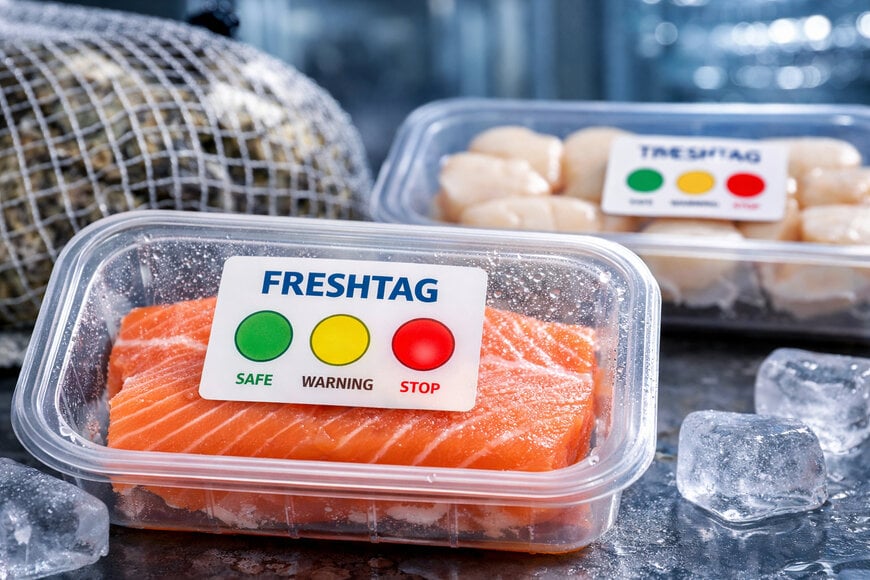
A color-changing time-temperature indicator label has been introduced to monitor seafood freshness throughout handling, storage, and transport. The solution enables continuous visual verification of cold chain integrity without requiring electronic systems or specialized equipment.
Visual monitoring of temperature exposure
The label system is designed for seafood products such as caviar, crab, oysters, salmon, scallops, and tuna, where temperature deviations directly affect safety and shelf life. It tracks cumulative time-temperature exposure across the full logistics chain, from processing facilities to end consumers.
At the core of the technology is a color-based progression mechanism. The indicator remains green under defined safe conditions, shifts to yellow as exposure thresholds approach limits, and turns red when temperature conditions exceed product-specific tolerances. This mechanism reflects cumulative thermal exposure rather than single-point measurements, aligning with spoilage kinetics in perishable goods.
Integration into seafood processing and distribution
The labels are designed for deployment across multiple stages of seafood operations, including processing plants, distribution centers, retail packaging, and direct-to-consumer delivery. Their use does not require calibration tools, external power sources, or digital integration, enabling rapid adoption across diverse operational environments.
Such systems support a digital supply chain indirectly by providing standardized, human-readable data points that can be incorporated into broader quality assurance workflows. The universal color logic enables consistent interpretation across multilingual and distributed supply networks.
Compliance with food safety standards
The indicator system complies with FDA and EU food safety requirements and aligns with HACCP-based monitoring frameworks and ISO9001 quality management systems. These standards require traceability and control of temperature-sensitive products, particularly in high-risk categories such as seafood.
By providing a continuous visual record of temperature exposure, the labels support verification processes during audits and inspections, reducing reliance on manual documentation or intermittent data logging.
Operational and economic impact
Temperature excursions during transport or storage are a primary cause of spoilage and product rejection in seafood logistics. By identifying exposure events in real time, the label system enables earlier intervention, reducing unnecessary product disposal and associated financial losses.
The approach also supports decision-making in cases of delayed shipments or fluctuating storage conditions, where visual confirmation of product integrity can determine whether goods remain within acceptable limits.
Role in cold chain transparency
The adoption of visual time-temperature indicators reflects a broader trend toward increased transparency in perishable goods logistics. By making quality status immediately visible at every stage, the system bridges gaps between producers, distributors, retailers, and consumers.
This approach is particularly relevant in high-value seafood markets, where product quality, regulatory compliance, and consumer trust are closely linked.
Edited by an industrial journalist Sucithra Mani with AI assistance.
www.vitsab.com
