
www.foodpackautomation.com
08
'26
Written on Modified on
Decarbonization Mechanisms and Automation Systems in Aseptic Food Packaging
Tetra Pak reports a 34 percent reduction in value chain greenhouse gas emissions alongside the deployment of its scalable factory automation ecosystem.
www.tetrapak.com
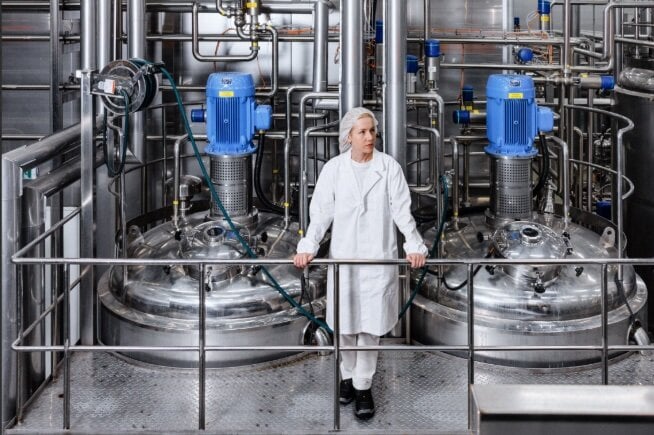
In 2025, Tetra Pak recorded a 34 percent decrease in greenhouse gas (GHG) emissions across its value chain compared to a 2019 baseline. This operational metric corresponds with a 56 percent reduction in the company's internal operational emissions and a transition to 97 percent renewable energy consumption. The data reflects a strategic shift within the food and beverage manufacturing sector toward optimizing lifecycle equipment costs and reducing dependence on fossil-based polymers in packaging systems.
Quantitative Emissions Tracking and System Assessment
Adolfo Orive, President and CEO at Tetra Pak, stated: "With clear, measurable targets in place, 2025 marked a year of tangible progress, including passing the milestone of a one-third reduction in greenhouse gas emissions across our value chain." To quantify these parameters, the company implemented an integrated climate and nature risk assessment framework in 2025. This assessment identifies systemic vulnerabilities, evaluates resource dependency across the supply chain, and dictates capital allocation for mitigating operational losses. Long-term technical targets include achieving a 46 percent reduction in value chain GHG emissions by 2030 and reaching net-zero emissions by 2050.
Digital Integration and Total Cost of Ownership
To support equipment efficiency and process stability, the company introduced Factory OS, a modular digital and automation platform. This software architecture integrates with industrial hardware to measure equipment effectiveness and isolate operational losses. By embedding a total cost of ownership methodology, the system monitors utility consumption, material waste, and energy use over the hardware lifecycle. This allows facility operators to execute targeted maintenance protocols and limit resource expenditure during continuous manufacturing processes.
Material Engineering and Aseptic Packaging Development
Through an ongoing capital allocation of €100 million for packaging research and development, Tetra Pak engineers developed a paper-based barrier layer designed to replace traditional aluminum foil and fossil-based polymers in aseptic juice packaging. Technical assessments indicate this structural modification reduces the package’s carbon footprint by 43 percent while maintaining the necessary barrier properties required for ambient product distribution. In conjunction with product engineering, the company expanded the Araucaria Conservation Project by adding 1,600 hectares of land in 2025 to offset material extraction impacts.
Infrastructure Expansion and Decarbonization Agreements
The development of these packaging and digital technologies is supported by localized infrastructure deployments initiated in 2025. This includes a Product Development Centre in Cholet, France, a Customer Innovation Centre in Bangkok, Thailand, and a New Food Technology Development centre in Karlshamn, Sweden. At the operational integration level, Tetra Pak signed a Memorandum of Understanding with the United Nations Industrial Development Organization (UNIDO) at the COP30 climate conference, held in November 2025 in Belém, Brazil, to establish and scale standard practices for decarbonizing global food processing infrastructure.
Additional Context: This section details technical specifications and competitive benchmarking not included in the original product announcement.
The transition from aluminum barriers to fiber-based alternatives represents a primary technical challenge in the aseptic packaging industry due to the stringent oxygen and light barrier requirements of ambient liquid foods. Competitors such as SIG Combibloc and Elopak have similarly developed aluminum-free structures to lower carbon footprints and improve fiber recovery yields in standard paperboard recycling streams. In the software domain, Factory OS operates as an industrial Internet of Things (IIoT) architecture. While it functionally competes with standard factory automation software like Siemens MindSphere and Rockwell Automation’s FactoryTalk, the Tetra Pak system is specifically calibrated for the fluid dynamics, pasteurization cycles, and aseptic filling parameters unique to its proprietary processing hardware.
Edited by an industrial journalist, Lekshman Ramdas, with AI assistance.
www.tetrapak.com
