
www.foodpackautomation.com
12
'26
Written on Modified on
Powder Mixing and Dry Cleaning System Capabilities
Tetra Pak U.S. and Canada has introduced new powder mixing and air-jet cleaning testing infrastructure at its facility in Winsted, Minnesota.
www.tetrapak.com
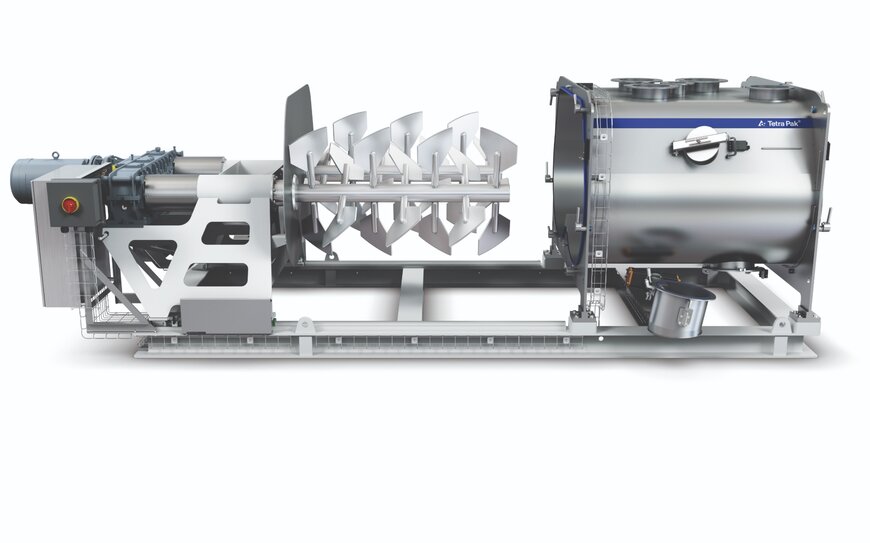
Tetra Pak® Powder Mixer B3500
Twin-Shaft Fluidisation and Cycle Time Reduction
In traditional batch blending, cohesive dry formulations, micro-additives, and density-sensitive components routinely demand up to 20 minutes of blending, along with offline premixing stages to achieve uniform ingredient dispersion. The Tetra Pak Powder Mixer B eliminates these mechanical bottlenecks by using a counter-rotating twin-shaft paddle mechanism that creates a fluidised mixing zone.
Within this fluidised environment, the mechanical interaction disperses particles without shear-induced heat build-up or structural degradation of sensitive ingredients. This fluidised action shortens typical blending times from the standard 15 to 20 minutes down to one to two minutes, while maintaining blend homogeneity. Across approximately 90% of target applications, the mixing dynamics distribute micro-ingredients directly within the primary batch, completely eliminating separate premixing steps and increasing overall batch line throughput.
Waterless Pneumatic Cleaning and Changeover Optimisation
Sanitising dry powder blenders using conventional wet clean-in-place (CIP) protocols introduces extensive mechanical downtime, requiring washing, chemical application, and drying phases to prevent bacterial proliferation and water-induced powder caking. The Tetra Pak Air Jet Cleaning System for Powder resolves this problem by implementing an automated dry-cleaning cycle based on high-velocity compressed air and vacuum extraction.
Pneumatic nozzles dislodge clingy residues from internal mixer surfaces, allowing a coordinated vacuum loop to capture suspended particles without introducing moisture or chemical cleaning detergents. Standard dry sanitisation cycles finish in 30 minutes, preventing product contamination while preserving water resources. When processing distinct allergen classes requiring supplemental manual wipe-downs, the total changeover cycle concludes within approximately one hour. This allows processors running high-mix, low-volume product schedules to switch formulations quickly without prolonged equipment downtime.
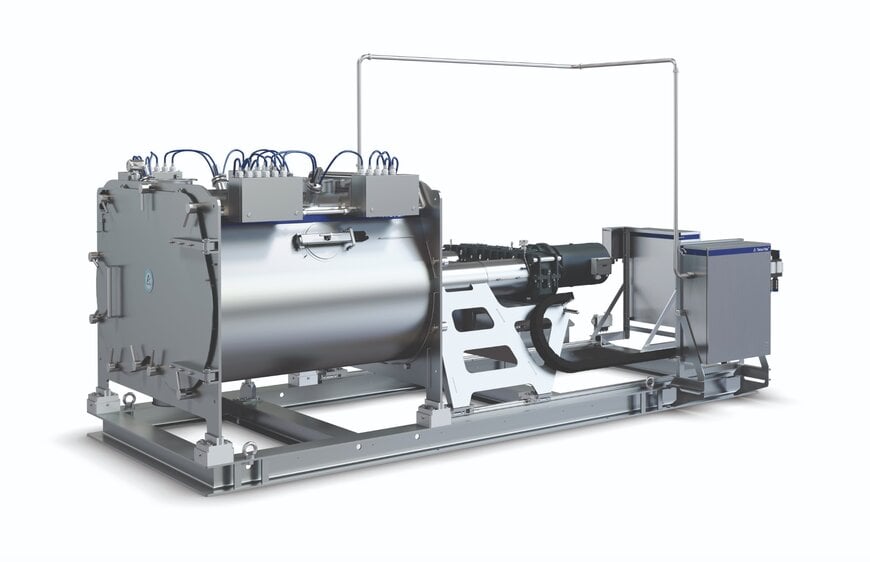
Tetra Pak® Air Jet Cleaning System
Formulation Pilot Validation for High-Value Powders
The facility installation provides dedicated pilot-scale validation for process development in functional nutrition, dietary supplements, infant nutrition, and specialty food ingredients. Product development teams can pilot proprietary powder recipes with engineering personnel to benchmark particle dispersion, quantify residual product recovery, and verify cleaning parameters under industrial conditions.
These validation trials allow manufacturers to determine exact throughput ceilings and energy efficiency metrics before commissioning large-scale processing lines. By providing empirical data on blend homogeneity and pneumatic cleaning performance, the testing setup mitigates integration risks for complex powder matrices requiring strict hygiene compliance.
Additional Context
This section details technical specifications and competitive benchmarking not included in the original product announcement.
Pneumatic dry-cleaning and high-speed paddle mixing represent critical operational shifts toward water reduction and allergen management under FSMA preventive control mandates and EHEDG hygienic design guidelines. Twin-shaft fluidised blenders are common across the industry, with systems such as the GEA Batch Formula Mixer and amixon twin-shaft paddle blenders also offering short one-to-three-minute blending cycles for sensitive powders. The integration of high-velocity air-jet nozzle rings inside the mixer vessel directly addresses the primary disadvantage of dry powder mixing: mechanical cleaning access. By cutting total dry-turnaround windows to between 30 and 60 minutes, pneumatic dry-cleaning technology eliminates the four- to eight-hour drying cycles typical of aqueous CIP installations, protecting against microbial growth in water-sensitive dairy and infant formula environments.
Edited by Romila DSilva, Induportals Editor, with AI assistance.
www.tetrapak.com
