
www.foodpackautomation.com
16
'26
Written on Modified on
Comotomo Introduces Next-Generation Baby Bottle Using BASF's Ultrason
Avient’s color-matched PPSU solution combines safety, durability and sterilization resistance for advanced infant feeding applications.
www.basf.com
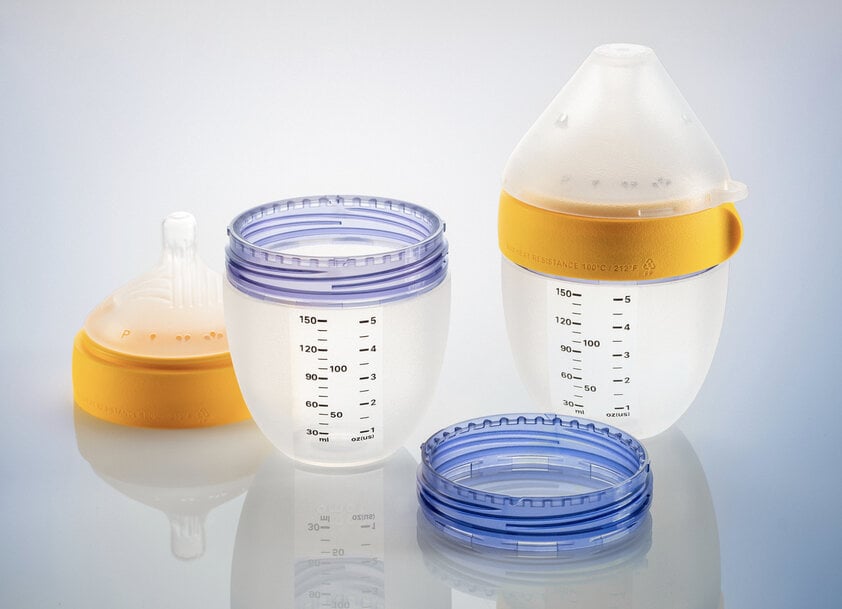
Comotomo has integrated Avient and BASF high-performance polymer technologies to manufacture an over-molded ring for its next-generation baby bottles. This material solution combines mechanical rigidity with certified chemical safety for consumer digital infrastructure and household manufacturing applications.
Operational Challenge and Material Requirements
Infant care manufacturing requires raw materials that maintain structural integrity under high temperatures while meeting stringent global food-contact safety standards. Comotomo faced the technical challenge of producing a colored, rigid structural ring over-molded onto a flexible silicone bottle body. This component must withstand repeated high-temperature sterilization cycles without material degradation, color fading, or chemical leaching. The complexity of balancing mechanical durability, aesthetic requirements, and precise color formulation led Comotomo to combine the polymer synthesis and color masterbatch expertise of BASF and Avient.
Technical Solution and Material Properties
The structural ring is manufactured using Ultrason P 2010, a high-performance polyphenylsulfone (PPSU) thermoplastic produced by BASF. This base polymer provides high heat resistance, dimensional stability, and impact strength required to survive the temperatures and pressures of the silicone over-molding production phase.
Avient provides the custom blue color formulation using its Colorant Chromatics high-temperature color concentrates. This specialized formulation integrates into the PPSU matrix without degrading the physical properties of the polymer. The resulting colored compound complies with international food-contact regulations, including the United States Food and Drug Administration (FDA) standards, European Food Contact (FC) regulations, and Chinese National Standards (GB). The molecular structure of the PPSU material resists superheated steam and chemical degradation from detergents, enabling continuous sanitation.
Manufacturing and Deployment
The next-generation baby bottles are manufactured at Comotomo's production facility located in South Korea. The production workflow involves over-molding the pre-colored Ultrason P 2010 thermoplastic compound directly onto the silicone bottle body, establishing a robust mechanical and chemical bond between the dissimilar materials.
The finished components are deployed in consumer markets, with initial commercial distribution established in China. The material integration allows the final product to be processed in standard residential environments, including dishwashers, microwave ovens, boiling water, and dedicated steam sterilizers, without risk of mechanical deformation or micro-cracking.
Anticipated Process and Functional Impact
The collaborative material engineering ensures long-term process stability during the molding phase and maintainability during consumer use. The chemical resistance of the polymer prevents environmental stress cracking, which extends the operational lifespan of the product compared to standard consumer plastics. By using a pre-stabilized color formulation, the manufacturing process avoids the material variances often introduced by manual color mixing, stabilizing yield rates at the South Korean production plant.
Edited by Natania Lyngdoh, Induportals editor, assisted by AI.
www.basf.com
