
www.foodpackautomation.com
18
'26
Written on Modified on
Carton Packaging for Shelf-Stable Tuna Products
Tetra Pak and Jealsa introduce the Tetra Recart paper-based packaging alternative to traditional metal cans.
www.tetrapak.com
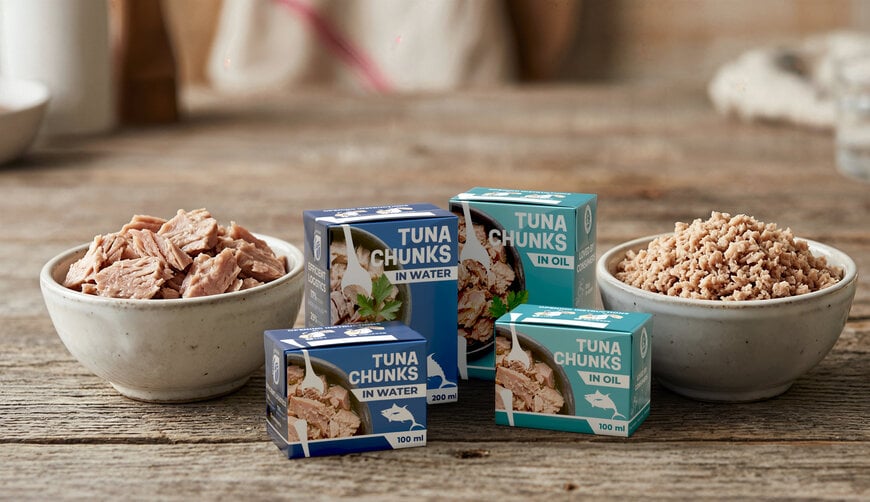
Tetra Pak and Jealsa have jointly introduced the industry's first carton packaging solution for shelf-stable tuna. Utilizing the Tetra Recart platform, the paper-based packaging format was launched in Sweden with retailer Axfood in a 200 ml Mini format and is designed as a scalable alternative to traditional metal cans for global food producers.
Packaging Architecture and Logistics
The Tetra Recart format utilizes a rectangular, paper-based structure that provides flat printable surfaces for product information. The compact, flat-packed design allows empty cartons to be fed directly into filling lines, reducing inbound storage space. Once filled, the rectangular shape enables efficient stacking, improving retail shelf efficiency and maximizing product volume per cubic meter compared to standard cylindrical cans. This robustness and structural stackability make the format suitable for e-commerce, automated warehouse handling, and home delivery logistics.
Environmental Impact and Material Sourcing
The packaging solution utilizes up to 71% Forest Stewardship Council (FSC) certified paper sourced from responsibly managed forests. The paper-based architecture achieves a carbon footprint that is 85% lower than steel cans and 83% lower than glass jars. At industrial scale, transitioning to the carton format equates to a reduction of 21,000 tonnes of carbon dioxide emissions per one million units produced. The packaging is currently compatible with various shelf-stable preparations, including flakes, shredded tuna, spreads, and chunks.
Additional Context: This section details technical specifications and competitive benchmarking not included in the original announcement
In food science and packaging engineering, replacing metal cans with paper-based cartons for shelf-stable seafood requires overcoming significant thermal and barrier challenges. Tuna processing relies on "retorting"—a sterilization process where the sealed package is subjected to high-pressure steam (typically around 121°C) to eliminate Clostridium botulinum spores. Traditional aseptic cartons (such as standard beverage cartons) cannot survive the retort process without structural failure or delamination. The Tetra Recart architecture utilizes a specialized multi-layer structure incorporating paperboard, aluminum foil, and high-temperature-resistant polymers (such as cast polypropylene) that withstand extreme autoclave conditions while maintaining an absolute oxygen and moisture barrier. In the retortable carton market, Tetra Pak's primary competitor is SIG, which offers the combiSafe format. Both companies target the replacement of energy-intensive tinplate and aluminum packaging in the heavy-duty, shelf-stable food sector.
Edited by Lekshman Ramdas, Induportals editor – adapted by AI.
www.tetrapak.com
