
www.foodpackautomation.com
17
'26
Written on Modified on
BOBST MASTERFLUTE TOUCH Delivers Long-Term Productivity and Precision
High-speed litho-laminator combines advanced registration, efficient gluing technology and proven durability to maximize productivity, quality and return on investment.
www.bobst.com
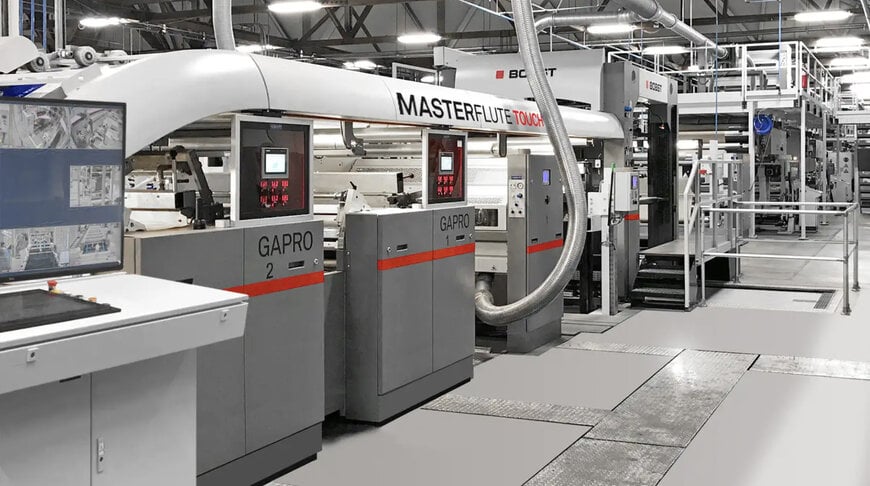
The Bobst litho-laminator utilizes optical sensor technology and automated glue application to optimize high-volume corrugated board manufacturing. This equipment serves the packaging industry by integrating precision sheet alignment into the broader digital supply chain, accommodating high-speed board production for box converters.
Operational longevity and production throughput
The equipment is engineered for continuous, intensive use within demanding converting environments. One operational unit has processed over half a billion sheets during 15 years of continuous service. The system processes materials at speeds of 220 meters per minute, equating to 12,000 sheets per hour. Depending on the sheet format, the machinery maintains an annual production rate ranging from 30 million to 50 million sheets. Markus Zimmermann, Area Sales and Product Marketing Manager at Bobst Grenchen, notes that the litho-laminators can function continuously for 24 hours a day, maintaining long-term performance through a combination of structural robustness and advanced technology.
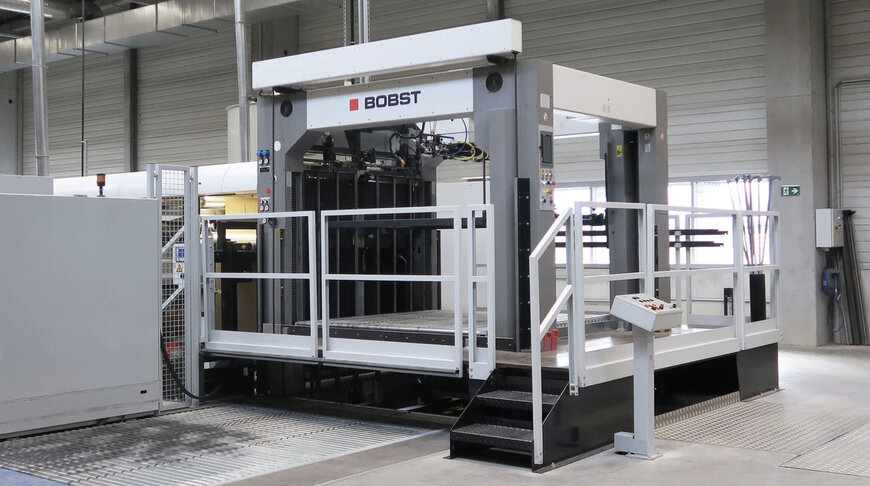
Optical sheet alignment and sensor integration
The system utilizes a proprietary sheet alignment mechanism that eliminates the requirement for a mechanical front stop and side lay. By deploying optical sensors to detect sheet edges, the mechanism removes physical stops entirely. This approach reduces mechanical wear on the equipment, eliminates the risk of sheet damage, and allows for the processing of lighter sheets. Operating in conjunction with a newly designed sheet feeder equipped with a direct-driven bridge conveyor, the optical system positions sheets with exact accuracy at peak operational speeds, resulting in consistent output and significantly improved registration accuracy.
Automated adhesive control and material efficiency
A specialized gluing mechanism automatically regulates the glue gap to apply the absolute minimum necessary amount of adhesive. Applying less adhesive reduces moisture absorption, improves board flatness, and minimizes total glue consumption. This precision reduces the necessity for intermediate stock levels and lowers overall material waste. Utilizing lighter cover sheets and minimizing adhesive usage yields considerable long-term economic advantages for operators seeking to control raw material costs.
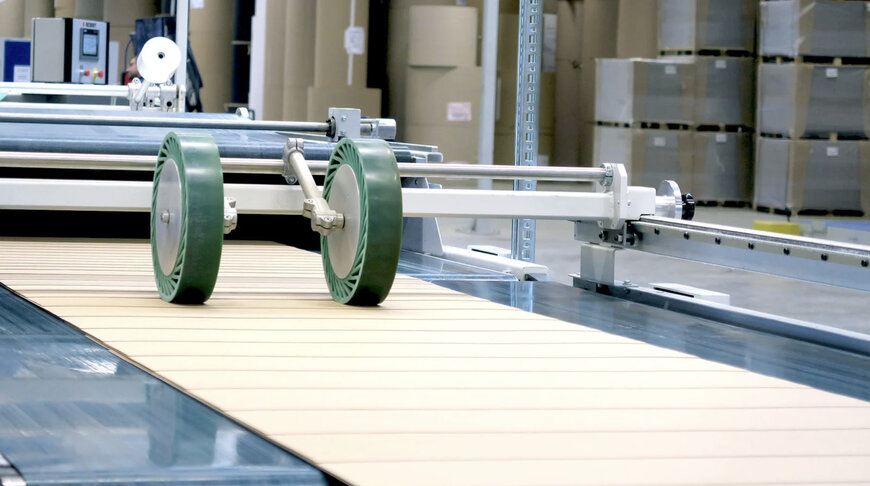
Central processing unit and workflow automation
To further enhance drive control and motion precision, the litho-laminator integrates a custom central processing unit (CPU). Daniel Müller, Site Manager at Bobst Grenchen, explains that this CPU monitors electronic zero points, allowing the system to automatically correct sheet positions both laterally and in the machine direction. This continuous correction increases running accuracy, minimizes the adjustments required at the alignment stage, and compensates for setup variations, thereby reducing setup time and material waste. The CPU technology is backward compatible and can be retrofitted into existing litho-laminators. Müller indicates that ongoing development will focus on increasing automation and digitizing the workflow to support continuous quality and productivity improvements.
Additional Context:
This section details technical specifications and competitive benchmarking not included in the original product announcement
Within the high-speed flute lamination sector, equipment is evaluated based on maximum sheets per hour, registration accuracy, and automated material handling capabilities. In the 12,000 sheets-per-hour performance class, the Bobst litho-laminator competes with automated platforms such as the SAGLIN DX-series and Innovo high-speed laminators. While competing machines typically rely on servo-driven mechanical registration to achieve a standard ±1.0 millimeter to ±1.5 millimeter fitting precision, the Bobst system replaces mechanical stops with optical edge-detection sensors to prevent physical sheet damage and allow for lighter cover sheets. The integration of automated minimum-gap adhesive control further differentiates the system from conventional laminators that use manual or semi-automated glue regulation, ensuring flatter boards and reduced moisture content in high-volume corrugated packaging production.
Edited by Natania Lyngdoh, Induportals editor, assisted by AI.
www.bobst.com
