
www.foodpackautomation.com
29
'26
Written on Modified on
GEA shows future perspectives for dairy farming at EuroTier 2026
From November 10–13, Hanover, Germany, GEA Farm Technologies and the German Agricultural Society showcase automated milking systems, optical identification tools, and cloud platforms for modern dairy farming.
www.gea.com
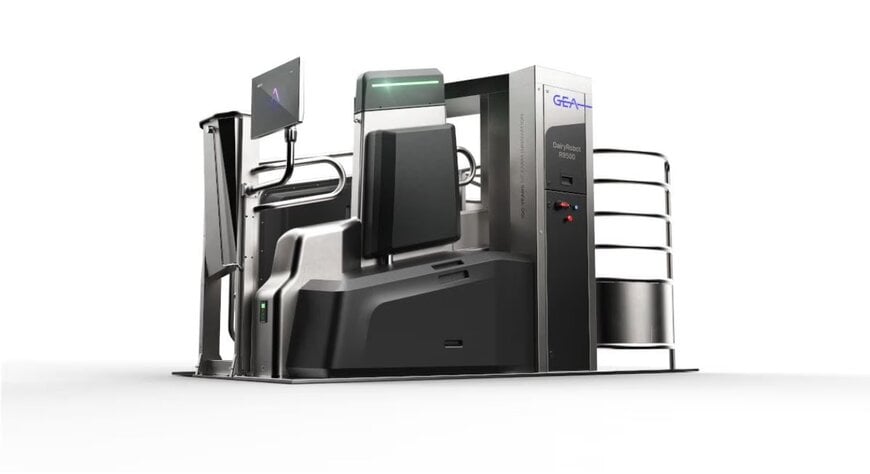
Modern dairy operations face structural labor shortages and stringent operational documentation demands. Conventional milking systems often suffer data corruption during herd entry when transponder or radio-frequency identification (RFID) tags fail or overlap in high-density corridors. In addition, transitioning legacy barns to automated milking infrastructure frequently demands significant civil engineering work, limiting technical modernization.
Integrated Automation and Computer Vision Architecture
To address these mechanical and computational challenges, GEA provides modular milking automation linked with computer vision:
- Optical Cow Identification: The DairyNet Cow Verification system uses machine learning and camera-based pattern recognition to identify individual cattle at rotary stall entry points. The visual analysis verifies or overrides missing RFID transponder signals in real time, preventing sensor data misallocation across animal records.
- Semi-Subway Milking Systems: The DairyRobot R9600 semi-subway configuration automates cluster handling and cluster cleaning routines with reduced basement foundation requirements, enabling integration into retrofitted barn infrastructure.
- In-Liner Automation: For conventional facilities, the DairyProX mechanism maintains manual cup attachment while automating stimulation, teat sanitation, dipping sequences, and post-milking sanitizing backflushing within the liner assembly.
- In-Line Flow Measurement: The Digital Flow Meter sensor interfaces directly into milk transport pipelines, recording real-time volume yields at high flow rates without mechanical flow disruption.
Comparative Testing and Data Infrastructure Deployment
Evaluation and benchmarking take place within the DLG Spotlight Barn Robot Event platform at EuroTier 2026. Under standardized operational scenarios organized by DLG, automated milking equipment undergoes comparative evaluation against three specific production cases: conversion of existing parlors, greenfield barn installations, and large-herd routing.
Sensor telemetry and milking metrics route into CowScout Cloud, an operational database that centralizes individual animal performance histories across decentralized multi-site operations. The software architecture links directly with existing farm network controllers and third-party livestock applications through standardized software interfaces.
Operational Performance and Maintenance Optimization
The deployment of combined optical recognition and automated liner hygiene stabilizes milk processing times and eliminates identity mismatches during mass herd throughput. Automated cluster flushing routines prevent cross-contamination between milking cycles without increasing technician labor. The integration of high-throughput flow sensors and centralized data logging supports longitudinal herd performance analysis and operational equipment maintenance scheduling across distributed commercial sites.
Edited by Evgeny Churilov, Induportals Media - Adapted by AI.
www.gea.com
Evaluation and benchmarking take place within the DLG Spotlight Barn Robot Event platform at EuroTier 2026. Under standardized operational scenarios organized by DLG, automated milking equipment undergoes comparative evaluation against three specific production cases: conversion of existing parlors, greenfield barn installations, and large-herd routing.
Sensor telemetry and milking metrics route into CowScout Cloud, an operational database that centralizes individual animal performance histories across decentralized multi-site operations. The software architecture links directly with existing farm network controllers and third-party livestock applications through standardized software interfaces.
Operational Performance and Maintenance Optimization
The deployment of combined optical recognition and automated liner hygiene stabilizes milk processing times and eliminates identity mismatches during mass herd throughput. Automated cluster flushing routines prevent cross-contamination between milking cycles without increasing technician labor. The integration of high-throughput flow sensors and centralized data logging supports longitudinal herd performance analysis and operational equipment maintenance scheduling across distributed commercial sites.
Edited by Evgeny Churilov, Induportals Media - Adapted by AI.
www.gea.com
