
www.foodpackautomation.com
16
'26
Written on Modified on
Non-Destructive Leak Detection Systems for Automated Packaging Workflows
WITT Gas Controls is presenting a vacuum-based inspection technology designed to verify seal integrity for food and pharmaceutical manufacturing without product destruction.
www.wittgas.com
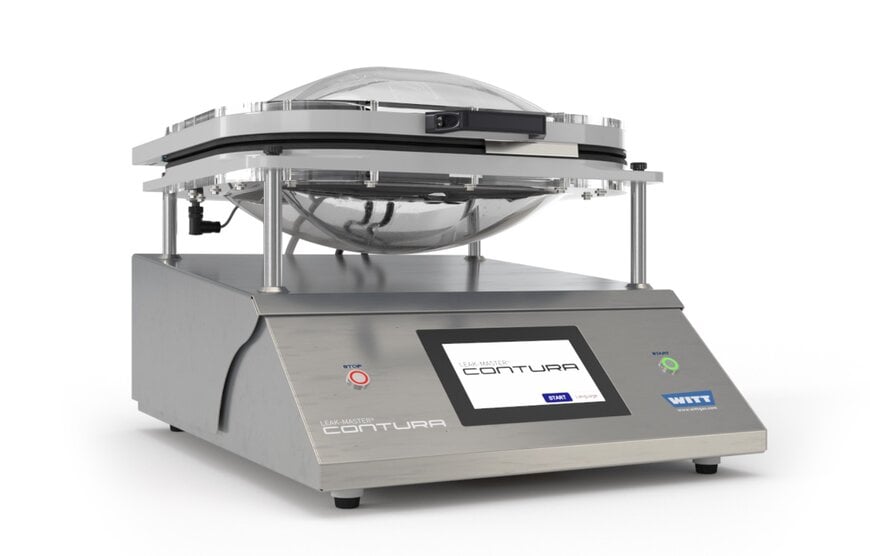
WITT Gas Controls is showcasing its LEAK-MASTER CONTURA non-destructive leak detection system at the PACK EXPO International 2026 trade show, held October 18–21 in Chicago, Illinois. This technology enables food and pharmaceutical manufacturers to perform rapid, non-invasive package integrity checks on gas-filled or air-filled packaging formats to prevent product spoilage.
Principles of Pressure Differential Testing
The inspection system utilizes a patented testing method based on pressure differentials to detect volume changes within a sealed package. Unlike traditional water bath tests or methods requiring specific tracer gases like carbon dioxide, this approach relies on a flexible membrane test chamber that creates a vacuum around the product. The equipment can detect micro-leaks smaller than 10 micrometers (µm) as well as gross leaks within seconds. By measuring the membrane deflection and pressure decay, the system identifies compromised seals before the products advance further into the automated packaging workflow, mitigating the risk of downstream contamination or costly rework.
Application Across Diverse Packaging Formats
Engineered for the strict hygiene standards required in food and pharmaceutical production, the stainless-steel unit accommodates various formats, including capsules, pouches, and modified atmosphere packaging (MAP). The test chamber's highly flexible membrane adapts to different product shapes, allowing facilities with diverse product lines to utilize a single testing apparatus. The hardware operates independently of external compressed-air connections due to an integrated vacuum pump, which simplifies its physical integration into existing production environments. Operators interface with the unit via a 7-inch touchscreen that displays a color-coded status indicator for seal integrity and stores test cycle data for ongoing evaluation.
Traceability and Compliance Standards
To meet regulatory documentation requirements, the system supports comprehensive inspection logging. The underlying technology aligns with established industrial testing standards, including DIN EN 1779, and shares operational principles with the ASTM F2338-09 standard for the non-destructive detection of leaks. Quality control operators can maintain traceable quality assurance protocols using available calibration kits specifically designed for leak-rate and internal volume verification.
Additional Context
This section details technical specifications and competitive benchmarking not included in the original news release.
In the industrial leak detection sector, non-destructive vacuum decay and membrane deflection systems compete directly with alternative methodologies such as destructive water bath testing, trace gas detection, and ultrasonic seal inspection. The showcased system competes with comparable vacuum decay technologies from manufacturers such as PTI (Packaging Technologies & Inspection) and Inficon. PTI's VeriPac series also utilizes vacuum decay mechanisms compliant with ASTM F2338 to detect micro-leaks in the single-digit micrometer range. While dedicated trace gas systems can achieve higher sensitivity for sub-micrometer leaks by detecting helium or hydrogen emissions, the membrane-based differential pressure approach provides a faster, gas-independent alternative. This mechanical testing method lowers ongoing operational costs by completely eliminating the need to supply and manage consumable test gases during the quality assurance process.
Edited by Aishwarya Mambet, Induportals Editor, with AI assistance.
www.wittgas.com
