
www.foodpackautomation.com
09
'26
Written on Modified on
Compact Motion Control for Packaging Machines
Lenze presents drive and automation solutions to enable flexible, energy-efficient packaging systems under evolving regulatory and performance requirements.
www.lenze.com
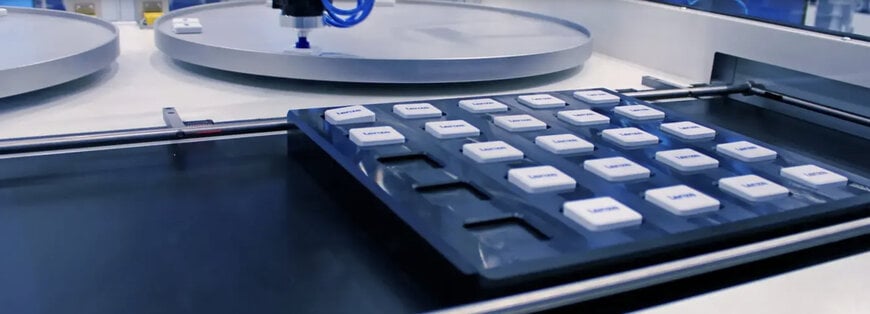
Lenze is introducing motion control and drive technologies aimed at supporting next-generation packaging machines, addressing increasing demands for compact design, energy efficiency, and compliance with regulations such as the Packaging and Packaging Waste Regulation (PPWR).
Engineering implications of packaging sustainability
The transition toward material-efficient and sustainable packaging formats is reshaping machine design requirements across the packaging industry. Reduced packaging size and increased variability require higher precision, flexible machine architectures, and optimized energy consumption.
These changes directly impact mechanical engineering, where machine builders must balance compact layouts with high throughput and reliability. Lenze’s approach combines drive technology, intelligent electrification, and engineering tools to manage this complexity in high-performance packaging environments.
The solutions will be presented at Interpack 2026, held in Düsseldorf from May 7 to 13.
Motion control for high-speed packaging applications
Lenze’s motion control portfolio targets applications such as form-fill-seal systems, pick-and-place units, and tray forming machines. The system architecture supports a range of configurations, from sensorless control systems to high-performance servo-driven setups for high cycle rates.
Key technical features include open interfaces, integrated safety functions, and end-to-end engineering tools. These elements contribute to reduced commissioning times, improved system availability, and adaptability to changing production requirements.
Energy-efficient decentralized drive systems
A central component is the Motor Drive System combined with the i650 motec frequency inverter. This decentralized drive architecture achieves IE5/IE6 energy efficiency classes and integrates regenerative energy capability.
The system enables sensorless positioning, reducing reliance on additional hardware while maintaining precise motion control. This is particularly relevant for processing lightweight and variable packaging materials, where consistent positioning and reduced energy consumption are critical.
Inline robotics and reduced cycle times
Lenze is also demonstrating delta robot applications designed for continuous operation. Using rotary tracking, the system synchronizes pick-and-place movements with rotating tables, eliminating the need for intermittent stops.
This functionality is supported by the Lenze FAST (Feasible Application Software Toolbox), a modular engineering framework that replaces traditional programming with parameterization. The approach reduces development time and supports consistent implementation of robotic functions across machine platforms.
Modular machine architectures and system integration
The solutions emphasize modular machine design through standardized interfaces across controllers, human-machine interfaces (HMIs), and I/O systems. This architecture enables parallel execution of motion, logic, and visualization tasks, even under high-speed operating conditions.
A demonstration system highlights how compact servo inverter technology can replace complex mechanical assemblies, reducing system footprint while maintaining performance.
High-speed tray forming as an application example
A tray forming system developed in collaboration with Mpac demonstrates the application of these technologies in production environments. The machine processes up to 200 trays per minute using a rotary infeed mechanism instead of conventional push systems.
This design ensures continuous operation and stable product handling at high speeds. Combined with synchronized drive control, the system maintains consistent performance and supports the use of cardboard materials as an alternative to plastic trays, aligning with sustainability targets.
Positioning within the digital supply chain
Lenze’s solutions contribute to the digital supply chain in packaging by integrating motion control, automation, and software into a unified engineering framework. This approach supports faster machine development, improved operational efficiency, and adaptability to evolving packaging formats.
By combining energy-efficient drives, modular software, and flexible machine architectures, the technologies address both regulatory requirements and the need for scalable, high-performance packaging systems.
Edited by an industrial journalist Sucithra Mani with AI assistance.
www.lenze.com
