
www.foodpackautomation.com
08
'26
Written on Modified on
High-Speed Delta Robotics Integration for Continuous Rotary Tracking
Lenze and participating machine manufacturers integrate modular software templates and servo-driven rotary axes to eliminate mechanical stop cycles in pick-and-place applications.
www.lenze.com
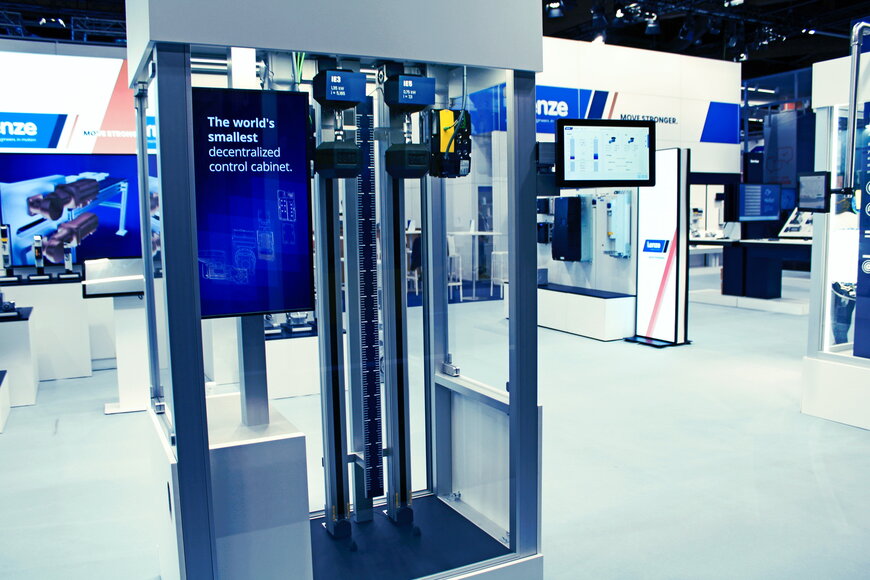
The cooperation focuses on the deployment of inline robotics within packaging and industrial automation lines. By utilizing synchronized motion control, the system enables continuous product handling on rotating tables, addressing throughput bottlenecks in high-speed manufacturing environments.
Operational Context and Technical Challenge
In traditional pick-and-place operations, cycle interruptions often occur when the mechanical feed must stop to allow for robotic intervention. This "stop-and-go" logic increases wear on mechanical components and limits total line throughput. Lenze, acting as the drive and automation specialist, provides the control architecture and software framework required to synchronize robot kinematics with continuous mechanical motion. Machine builders integrate these components to create systems where the robot and the production line operate as a single, synchronized unit.
Rotary Tracking and Real-Time Synchronization
The technical solution centers on rotary tracking, a motion control concept where the robot computationally offsets its coordinate system to match the movement of the rotary table.
- Data Acquisition: High-precision encoders and servo drives capture position, velocity, and acceleration data from the rotating axes.
- Processing: The central controller processes this data in real time to calculate dynamic target paths.
- Execution: The delta robot "locks" into the rotation, performing pick-and-place tasks without decelerating the feed mechanism.
This integration relies on the Lenze FAST Robotics Template, a modular software toolkit based on PLCopen standards. By using predefined technology modules, engineers can parameterize robotic movements rather than writing custom code, reducing the complexity of integrating diverse kinematics such as delta, SCARA, or gantry systems.
Implementation and Digital Infrastructure
The implementation process utilizes a digital twin to conduct virtual commissioning. This allows for the testing of motion sequences and the optimization of collision avoidance protocols before physical assembly. The system architecture is designed for digital infrastructure compatibility, hosting motion, logic, and robotics on a single control platform. This eliminates the need for dedicated robot controllers or separate programming environments, reducing cabinet space and system discontinuities.
Industrial Applications and Impact
The solution is demonstrated at Interpack 2026 (Düsseldorf, Hall 6, Stand D50) from May 7–13, 2026. Target industries include food and beverage, pharmaceuticals, and consumer goods packaging.
By transitioning from programmed to parameterized robotics, machine builders achieve:
Implementation and Digital Infrastructure
The implementation process utilizes a digital twin to conduct virtual commissioning. This allows for the testing of motion sequences and the optimization of collision avoidance protocols before physical assembly. The system architecture is designed for digital infrastructure compatibility, hosting motion, logic, and robotics on a single control platform. This eliminates the need for dedicated robot controllers or separate programming environments, reducing cabinet space and system discontinuities.
Industrial Applications and Impact
The solution is demonstrated at Interpack 2026 (Düsseldorf, Hall 6, Stand D50) from May 7–13, 2026. Target industries include food and beverage, pharmaceuticals, and consumer goods packaging.
By transitioning from programmed to parameterized robotics, machine builders achieve:
- Reduced Engineering Effort: Standardization through PLCopen ensures manufacturer-independent compatibility.
- Increased Stability: Continuous motion reduces mechanical stress caused by rapid deceleration and acceleration.
- Higher Throughput: The elimination of dwell times directly increases the units-per-minute (UPM) capability of the packaging line.
