
www.foodpackautomation.com
13
'26
Written on Modified on
Inline OCR inspection for expiry date verification
Machine vision systems with OCR and NIR-enhanced imaging enable automated inline verification of expiry dates and batch codes in high-speed packaging lines.
www.baslerweb.com
Application Area: Packaging Automation / Quality Control
Industry Sector: Food & Beverage / Machine Vision
In food and beverage production, expiry dates are typically printed at high speeds during the final packaging stages. While printing systems are generally reliable, many manufacturers lack integrated verification, instead relying on periodic manual spot checks by operators. This creates a significant quality control gap where missing, incorrect, or unreadable date codes often go undetected until products reach the market.
The manual inspection of every item is functionally impossible in high-speed environments, leading to potential compliance issues and production waste. If labeling defects are discovered downstream, the resulting product recalls and brand damage can be extremely costly for the manufacturer.
Vision-based character recognition for real-time validation
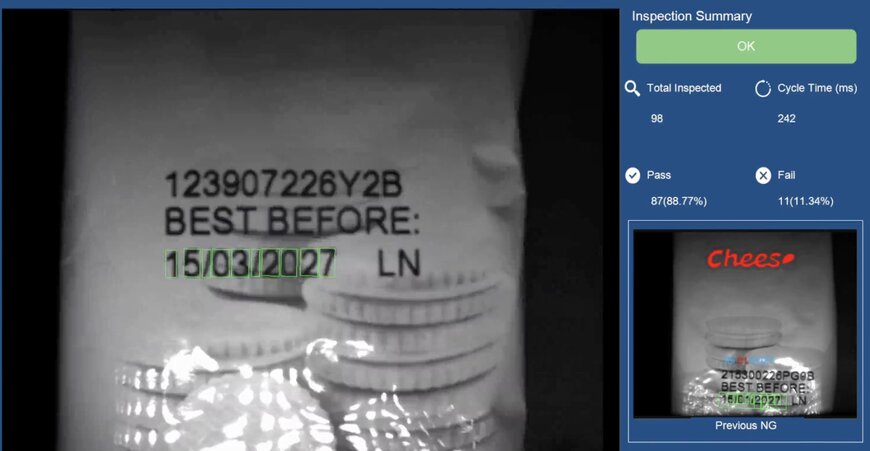
To resolve these challenges, manufacturers are deploying machine vision systems equipped with Optical Character Recognition (OCR). This technical solution converts printed characters into machine-readable data directly on the production line, allowing for continuous and autonomous validation of every product.
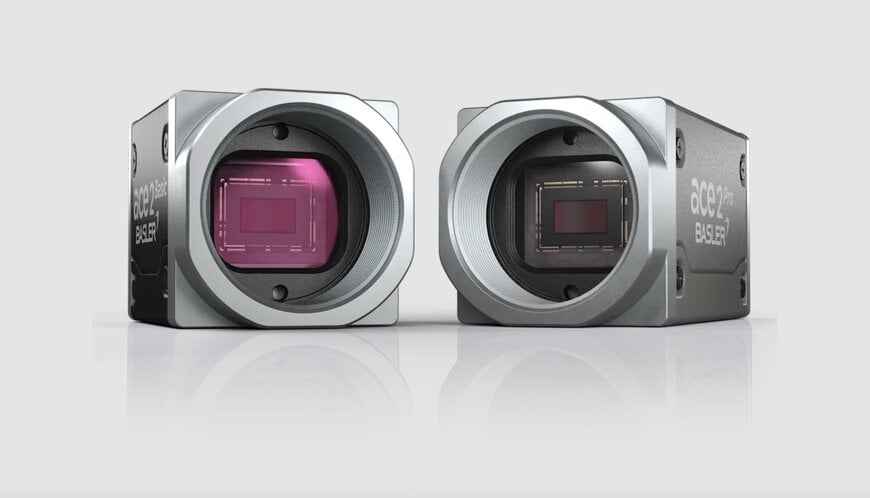
The chosen system utilizes specialized cameras featuring Near-Infrared (NIR) enhanced sensors to improve character visibility. This specific technology was selected because it increases contrast between the printed code and the packaging surface while simultaneously reducing glare and reflections from uneven or reflective materials. The integration of high-speed image acquisition and automated software ensures that the system distinguishes between correctly printed dates and defective labels without slowing down production throughput.
Deployment and technical integration
The implementation process involves installing the vision hardware directly onto existing packaging lines to capture images in real-time. Advanced OCR software modules then process these images to verify the accuracy of the batch codes and expiry dates against pre-defined parameters. This automated workflow removes the subjectivity and inconsistency associated with human inspection.
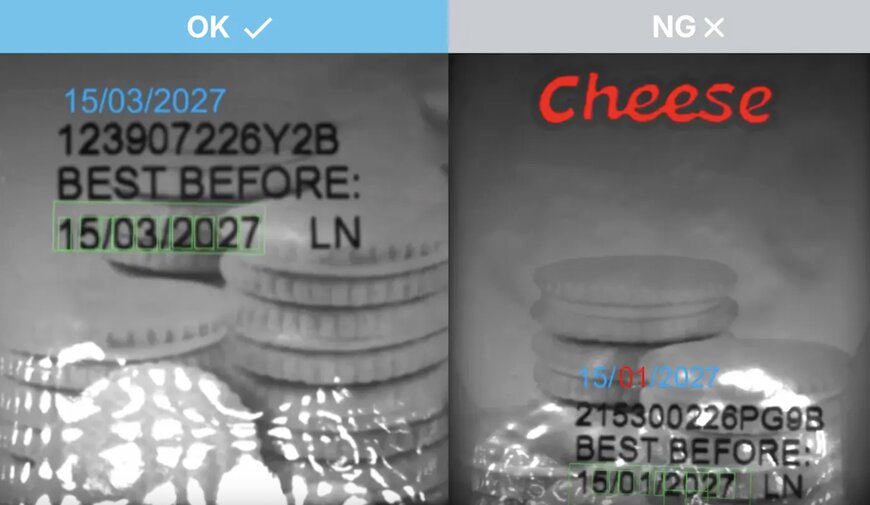
By utilizing software tools specifically designed for inline environments, the solution provides stable performance even across varying packaging conditions. This level of integration allows for immediate rejection of non-conforming products from the line, ensuring that only correctly labeled items leave the factory.
Operational benefits and quality improvements
The transition from manual checks to automated vision-based inspection provides several objective benefits for production facilities:
- Improved Labeling Accuracy: The system reliably detects incorrect, missing, or unreadable codes on every single package.
- Regulatory Compliance: Automated verification helps manufacturers consistently meet strict food labeling regulations and traceability requirements.
- Risk Mitigation: Early detection of errors prevents the significant financial and reputational risks associated with product recalls.
- Increased Efficiency: Reducing dependence on manual operator checks allows personnel to focus on other high-value tasks while maintaining stable production throughput.
Additional Context
The integration of NIR-enhanced sensors provides a distinct technical advantage over standard visible-light cameras, which often struggle with the highly reflective plastics and foils common in food packaging. By shifting to the near-infrared spectrum, the system bypasses visible color distractions on the packaging artwork to focus strictly on the contrast of the ink. In competitive benchmarking, this approach demonstrates a significantly lower "false reject" rate compared to conventional vision systems, ensuring that high-speed lines maintain maximum uptime without unnecessary interruptions.
Edited by Romila DSilva, Induportals Editor, with AI assistance.
The integration of NIR-enhanced sensors provides a distinct technical advantage over standard visible-light cameras, which often struggle with the highly reflective plastics and foils common in food packaging. By shifting to the near-infrared spectrum, the system bypasses visible color distractions on the packaging artwork to focus strictly on the contrast of the ink. In competitive benchmarking, this approach demonstrates a significantly lower "false reject" rate compared to conventional vision systems, ensuring that high-speed lines maintain maximum uptime without unnecessary interruptions.
Edited by Romila DSilva, Induportals Editor, with AI assistance.
