
www.foodpackautomation.com
12
'26
Written on Modified on
Tetra Pak Launches New Large Carton Format for Premium Beverages
The new 48 ounce Tetra Brik Aseptic Edge carton expands the company portfolio, offering enhanced shelf presence and supply chain efficiency across North America.
www.tetrapak.com
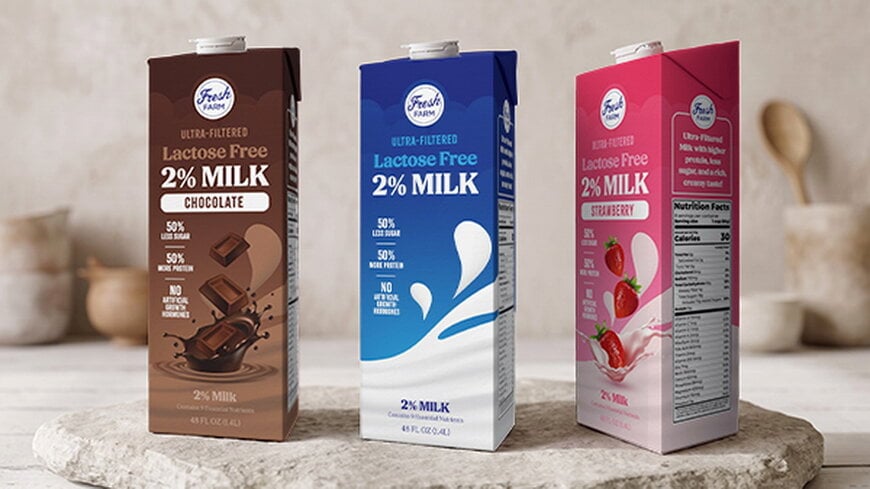
The introduction of a 1,420-milliliter fluid capacity option within the aseptic carton portfolio expands packaging options for the dairy, juice, plant-based, and ready-to-drink coffee segments in the United States and Canada. This technical solution relies on a geometric design featuring a sloped top and a rectangular front panel, which allows for ambient distribution and extended product shelf life without the need for chemical preservatives.
Structural Design and Closure Functionality
Manufactured at the Denton, Texas facility, the carton incorporates specific structural elements to balance pouring mechanics with manufacturing throughput. The package utilizes a specialized closure system featuring a one-step, hinged flip cap that remains permanently attached to the structural neck after opening. This design complies with modern waste-reduction standards by preventing closure separation and subsequent littering. The front-facing panels maximize the printable surface area, enabling high-resolution flexographic or custom digital printing directly onto the outer polyolefin-coated paperboard layer.
Supply Chain Optimization and Material Composition
The base dimensions of the 1,420-milliliter format are engineered to align with standard North American pallet dimensions, maximizing volumetric utilization during transport and warehousing. By optimizing the stackability and packing density of the rectangular units, the format reduces per-liter logistics costs compared to traditional round plastic containers. Structurally, the composite material consists primarily of renewable wood fibers sourced from Forest Stewardship Council certified forests, laminated with thin polymer and aluminum barrier layers to block light and oxygen.
Additional Context
This section details technical specifications and competitive benchmarking not included in the original product announcement.
In the North American fluid beverage market, the 48-ounce volume has historically been dominated by high-density polyethylene jug formats and polyethylene terephthalate carafes, particularly within the premium refrigerated juice and dairy alternatives segments. Aseptic paperboard cartons differentiate themselves from these monolithic plastics through a lower carbon footprint during the manufacturing lifecycle, owing to a material composition that is more than 70 percent bio-based.
From a logistical standpoint, the rectangular footprint of the carton format yields a higher cube utilization rate in shipping containers compared to PET carafes, which feature tapered necks and wasted interstitial space. This geometric efficiency allows for an increase of up to 20 percent more product volume per standard pallet. However, unlike PET which provides total product visibility, paperboard laminates require opaque barriers to maintain product stability under ambient storage conditions, shifting consumer evaluation entirely to the external printed graphics.
Edited by Evgeny Churilov, Induportals Media - Adapted by AI.
www.tetrapak.com
