
www.foodpackautomation.com
08
'26
Written on Modified on
Fibre-Based Packaging Solution for Water Treatment Filtration Systems
DS Smith and BWT collaborate to develop an integrated corrugated packaging architecture to transport industrial and domestic filtration units.
www.dssmith.com
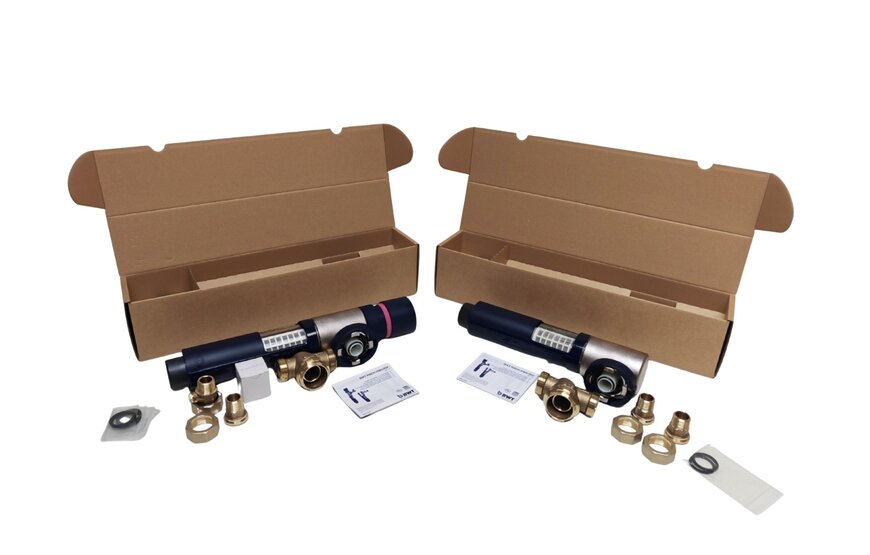
DS Smith and Best Water Technology (BWT) partnered to engineer a standardized, fibre-based transport infrastructure for automated backwash water filters. This packaging system applies to supply chain operations for components utilized in industrial automation, commercial plumbing, and smart building systems.
Collaboration Rationale and Industrial Challenge
Best Water Technology (BWT) manufactures water treatment hardware, while DS Smith provides industrial packaging frameworks. The operational challenge involved developing a protective transport enclosure for mechanical filters and associated accessories without relying on expanded plastic inserts. Cooperation was required to integrate packaging engineering with existing manufacturing parameters. BWT supplied the dimensional and logistical specifications for the filtration units, and DS Smith applied structural design analytics to engineer a standardized enclosure capable of accommodating multiple product variations.
Application Areas and Operational Benefits
The packaging architecture is deployed in the global distribution of water filtration hardware. The primary technical use case involves securing sensitive mechanical components, such as rotary impulse filtration mechanisms, during transit. The resulting operational benefits include improved process stability on the assembly line, reduced material volume, and the prevention of shock damage to critical infrastructure components during logistics operations.
Structural Engineering and System Integration
The technical solution consists of a double-wall corrugated cardboard framework designed to form a rigid external casing. DS Smith engineered an integrated, triangular-shaped corrugated insert. This dividing piece creates a flexible internal compartment that secures both the primary filtration unit and supplementary accessories. The internal architecture functions by separating the hardware from the base of the packaging casement, elevating the components to isolate them from floor-level kinetic impacts and supply chain vibrations. DS Smith utilized Circular Design Metrics (CDM) to calculate material utilization, recyclability parameters, and structural performance.
Deployment and Manufacturing Integration
The transport enclosure is deployed within the existing manufacturing facilities of BWT in Austria. Integration into the factory infrastructure required the packaging to be compatible with current end-of-line systems. The structural design allows the packaging to be processed through a single converting machine following corrugated board production. BWT managed the integration of the packaging into the final assembly lines, adjusting operational protocols to ensure that the volume of void space within each unit was minimized before final dispatch.
Measurable Impact and Operational Results
The implementation of the fibre-based system eliminates the necessity for internal plastic cushioning components. The compact double-wall structure limits empty internal volume, optimizing the dimensional footprint for transport and increasing pallet density. The structural elevation mechanism measurably reduces the transmission of kinetic energy to the filter housing during drop events or logistical handling. In 2026, the structural design parameters and material reduction capabilities of the system were recognized with a WorldStar Global Packaging Award in the household hardware category.
Edited by Aishwarya Mambet, Induportals Editor, with AI assistance.
www.dssmith.com
