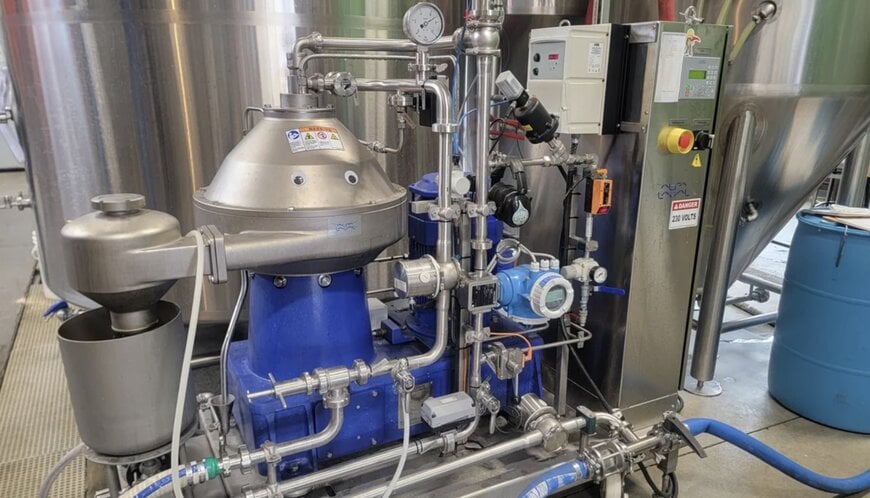
Let the Alfa Laval Fluid Handling Application & Innovation Centre conduct trials under near-actual operating conditions to determine how to achieve the best outcomes.
A new NOVACUT 106 ER Autoplaten® die-cutter is the latest investment in BOBST technology by Bangkok-based Thung Hua Sinn Group. Installed at the company’s TPN Packaging division, the flatbed machine has helped increase productivity and efficiency in the production of folding cartons for global brand owner customers.
Emerson will showcase intelligent industrial controls and automation technologies that enable manufacturers to adapt to changing market demands, realise greater production efficiency and meet sustainability goals at SPS Fair 2022 November 8-10 in Nuremberg, Germany. At stand 490, Hall 7,.
Investment in people and technology has always been a key part of packaging producer Emibra Embalagens’ DNA. Today, with around 200 employees, the traditional family-owned business’ graphic park is state-of-the-art and one of the most modern in Brazil.
A hygienic protection packaging with a second skin appearance that facilitates bulk selling. The second skin packaging confers to the product glossy and excellent aesthetics, guaranteeing food safety.
Reflecting on the company’s success over the past 16 years, Simply Cartons Managing Director, Craig Mather, credits technological innovation combined with a skilled team of people as key performance drivers, and the root of its excellent reputation for managing complex projects.
BOBST has announced the DIGITAL MASTER series 3D CONFIGURATOR, a new online tool that allows customers to create and visualize the exact press configuration they need for their business.
ULMA's packaging machines have been designed with and for our customers. Its outstanding operating performance and advanced features ensure high productivity rates with the highest quality and safety of packaging.
Faster programming and commissioning are achieved with five-minute assembly time reduction, improved safety and easier service in the field from the use of Siemens drives.
Aluminium foil rolling and converting company Symetal is truly delighted with the MASTER CO 5000 coating machine which was put into service during the first quarter of 2022 in its production facility in Mandra, Greece.